


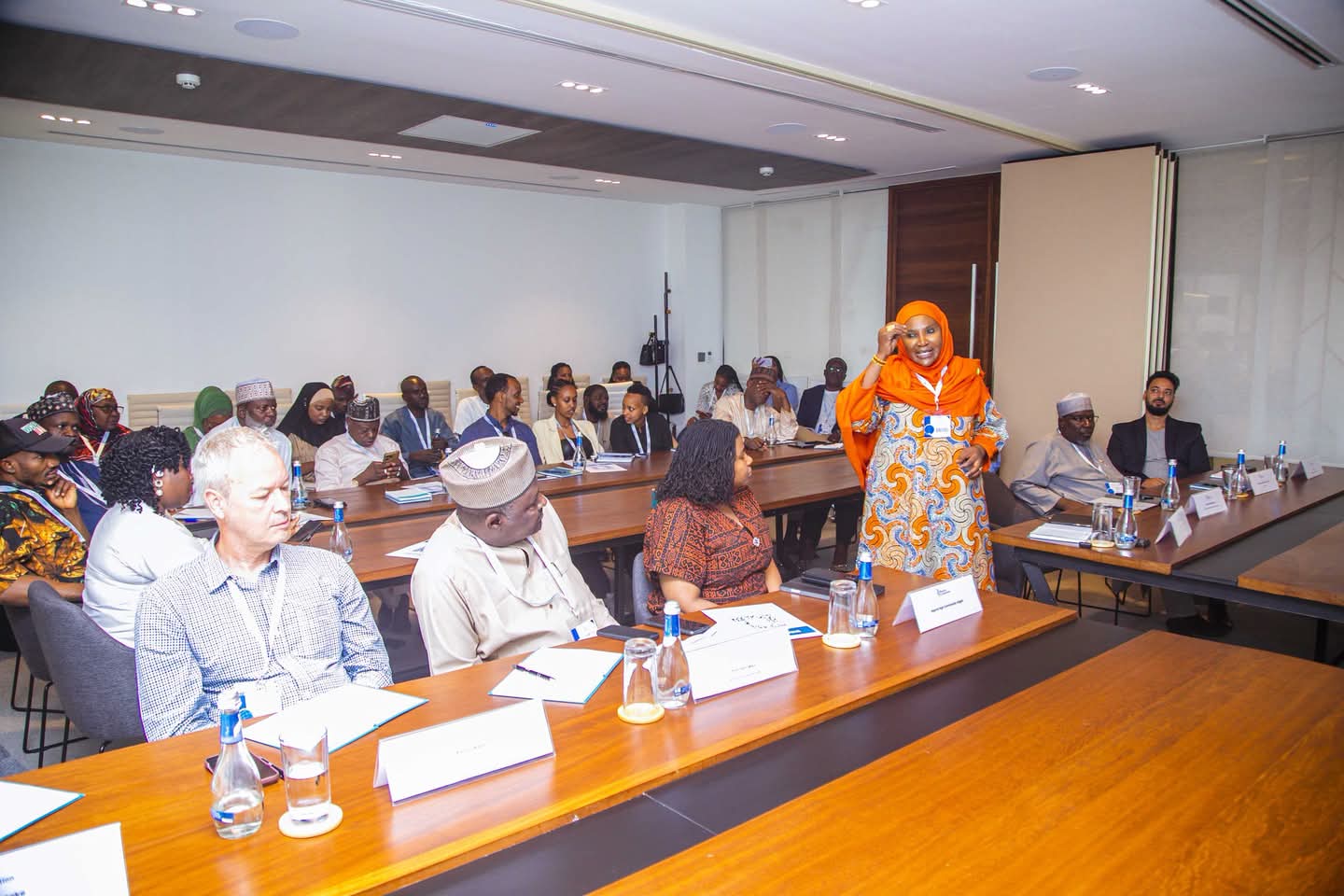
A Nigerian delegation comprising policymakers, academics, media professionals, chief executives and other stakeholders has examined Rwanda’s post-genocide recovery, national unity and digital governance strategies during a study visit to Kigali.
The delegation, organised as part of an international training programme by Women Farmers Advancement Network (WOFAN), in collaboration with Prospects Development Services (PDS)-UK, spent the second day of the programme at the Rwanda Cooperation Initiative (RCI).
The training, titled “Strategic Communication: Integrating Digital and AI-Driven Innovation for Sustainable Leadership and Peacebuilding,” is designed to expose participants to Rwanda’s experience in mindset transformation, inclusive governance, strategic communication, institutional reform and post-conflict reconstruction.
During the visit, officials of the Ministry of National Unity and Civic Engagement (MINUBUMWE) outlined the policies and institutions adopted by Rwanda to rebuild national cohesion following the 1994 Genocide against the Tutsi.
They identified justice reforms, inclusive governance, a shared national identity, citizenship education and efforts to prevent genocide ideology as key pillars of the country’s peacebuilding and reconciliation process.
Programmes including Ndi Umunyarwanda, Itorero civic education, community dialogue initiatives and the Gacaca courts were highlighted as important instruments used to rebuild trust, promote social cohesion and strengthen national unity.
Speaking during the engagement, Unity and Social Cohesion Promotion Analyst, Donatien Nikuze, attributed Rwanda’s progress to political will, inclusive leadership and sustained investment in peacebuilding and good governance.
Nikuze disclosed that Rwanda recorded a 95.3 per cent National Unity Barometer score in 2025, while acknowledging that challenges such as genocide ideology, hate speech, trauma and the pursuit of fugitives remained.
He urged the participants to draw practical lessons from Rwanda’s experience and adapt them to the realities of their respective countries.
Welcoming the delegation, RCI Chief Executive Officer, Richard Niwenshuti, said Rwanda’s recovery had been anchored on three principles: moving beyond the country’s darkest chapter, strengthening institutional accountability and thinking at scale.
Niwenshuti said the country’s reforms had contributed to about 92 per cent health insurance coverage, universal access to primary and secondary education, and the digitisation of more than 240 public services through the Irembo platform.
The delegates also received presentations on Rwanda’s governance architecture, decentralisation, institutional coordination, accountability mechanisms and digital transformation agenda.
The briefings were delivered by officials from MINUBUMWE, the Ministry of Justice (MINIJUST), the Ministry of ICT and Innovation, and the Rwanda Information Society Authority.
In a goodwill message delivered on behalf of the Acting High Commissioner of Nigeria to Rwanda, Ambassador Ibrahim Zanna, the Nigeria High Commission encouraged the participants to translate lessons from the study visit into practical initiatives capable of strengthening institutions and promoting development in Nigeria.
The mission described the engagement as a practical demonstration of how strategic communication, digital innovation and sustainable leadership could contribute to national development.
It also reaffirmed its commitment to strengthening institutional collaboration and partnerships between Nigeria and Rwanda.
Founder and Global Advocate of WOFAN, Hajia Dr. Salamatu Garba, commended RCI and the Rwandan authorities for sharing their experiences openly with the Nigerian delegation.
Garba observed that many of the challenges discussed during the engagement were similar to those confronting Nigeria, stressing the importance of mindset change, accountability, policy reform and responsible followership in achieving sustainable development.
She explained that teachers were deliberately included in the delegation to ensure that lessons from the study visit could be transmitted to younger generations.
The WOFAN founder expressed optimism that collaboration between WOFAN, the Nigeria High Commission in Rwanda and RCI would help translate the knowledge gained into practical policy interventions and sustainable strategies.
She emphasised the need for a step-by-step approach to implementation to ensure that lessons from Rwanda produced measurable and lasting impact in Nigeria.
Speaking on behalf of the participants, WOFAN Technical Board Member, Professor Mahmoud Daneji, expressed appreciation to RCI, the facilitators, Nigeria High Commission, PDS-UK, WOFAN and fellow delegates for the successful second-day engagement.
The study visit forms part of efforts to equip Nigerian professionals and institutional leaders with practical knowledge on strategic communication, digital transformation, peacebuilding and sustainable leadership, with a view to applying relevant lessons to Nigeria’s development challenges.