


Kabiru Haruna
In a bold move to democratize access to tertiary education in Nigeria, the Federal Government, through the Federal Ministry of Education, has announced a significant overhaul of admission requirements into universities, polytechnics, and colleges of education across the country.
Read also: Nine Schools Shut as Kano Begins Crackdown on Private Institutions
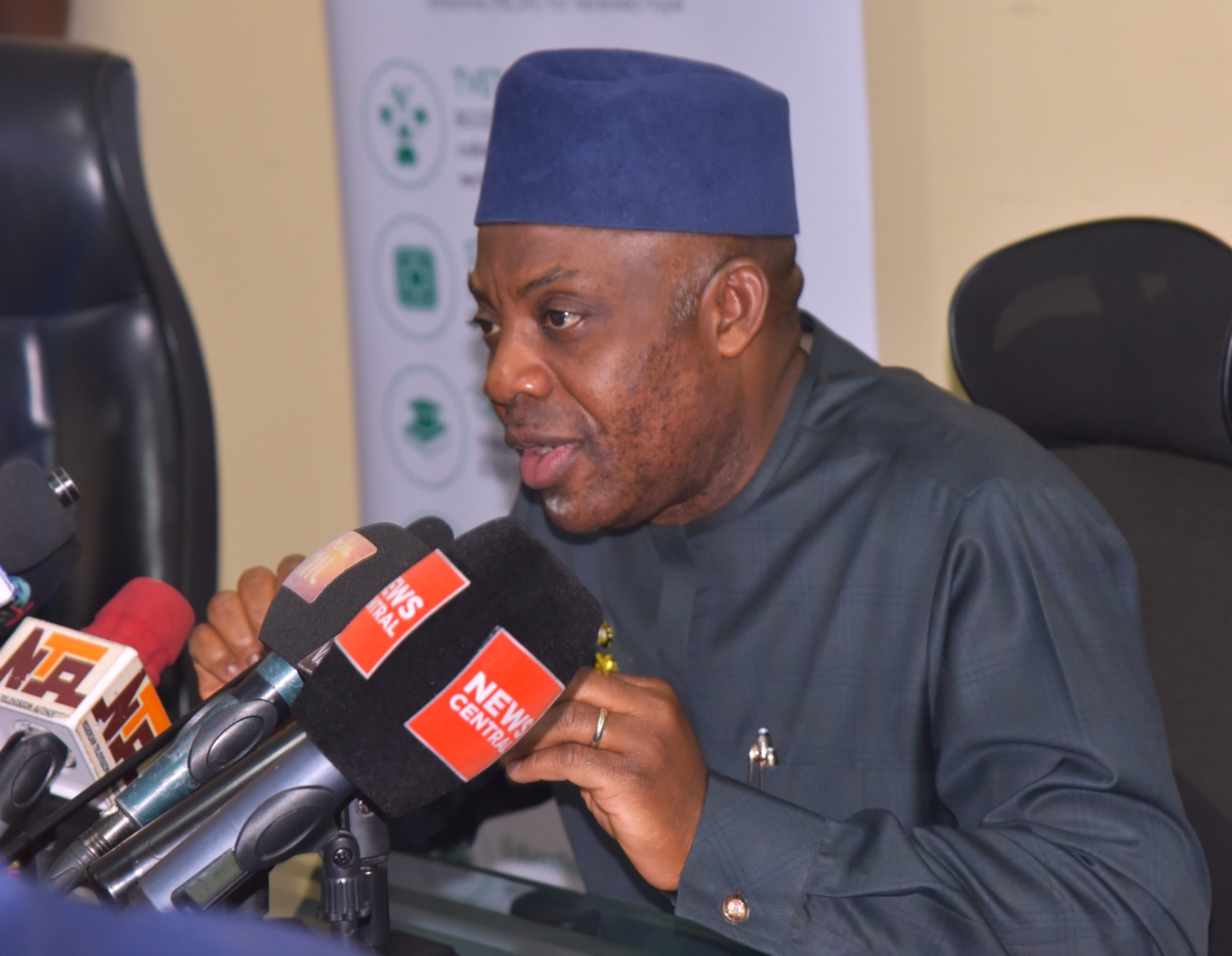
The Minister of Education, Dr. Maaruf Olatunji Alausa, made this announcement while unveiling new reforms aimed at streamlining the admission process and providing more opportunities for Nigerian youths.
KNSG Distributes Admission Letters to Senior Secondary Students
Dr. Alausa described the policy shift as “Renewed Hope in Action,” emphasizing that the youth are at the heart of national development and deserve greater access to education and skill-building opportunities.

According to data from the Joint Admissions and Matriculation Board (JAMB), over 2 million candidates sit for the JAMB examination annually.
However, only about 700,000 of them secure admission into various institutions due to the stringent and, in many cases, outdated entry requirements.
This leaves a significant number of qualified and eager students without access to further education, contributing to the growing number of out-of-school youth in the country.
To address this imbalance, the Federal Ministry of Education has approved revised minimum admission requirements across all tertiary education categories.
For university and Higher National Diploma (HND) programs, candidates are now required to have a minimum of five (5) O’Level credits.
These must include English Language for all courses, while Mathematics is compulsory for all science, technology, engineering, and mathematics (STEM) programs.
JAMB’s Credibility Boosts Nigeria’s Admission Process-Minister
Read also: Minister Defends Tinubu’s Economic Reforms, Promises Relief for Nigerians
For admissions into National Diploma (ND) programs in polytechnics and the Nigeria Certificate in Education (NCE) in colleges of education, the requirement has been reduced to four (4) O’Level credits.
English Language is mandatory for social science and arts-related programs, while Mathematics is required for those in science and technology disciplines.
This change is intended to widen the pool of eligible applicants and reduce unnecessary barriers for students from various backgrounds.
Another major reform involves the Innovation Enterprise Institutions (IEIs). Under the new policy, IEI diplomas will now be phased out as independent qualifications unless they are accredited by the National Board for Technical Education (NBTE).
This move is designed to ensure that all diploma holders from IEIs can transition smoothly into mainstream tertiary institutions and are not limited by the non-accredited status of their previous programs.
The NBTE will begin reaccrediting all IEI diplomas to validate them as eligible qualifications for further education and career progression.
Dr. Alausa emphasized the Federal Government’s commitment to ensuring that no willing and qualified Nigerian youth is left behind due to rigid or outdated admission policies.
“This is not just a policy change; it is a national investment in our future. We are removing artificial barriers and giving our youth a renewed chance at achieving their dreams. This is renewed hope in action,” he said.
The impact of this reform is expected to be far-reaching. It is anticipated that the changes will significantly increase the number of students admitted annually, reduce the number of out-of-school youths, and align Nigeria’s education system more closely with industry demands and national development goals.
It will also strengthen the technical and vocational education pathways, offering students more flexible and credible options to advance their education and careers.
Read also: Kebbi Begins 34km Road Projects to Boost Rural Connectivity
The Federal Ministry of Education, in collaboration with JAMB, NBTE, the National Commission for Colleges of Education (NCCE), and the National Universities Commission (NUC), will release detailed implementation guidelines and ensure full compliance across all institutions.
This landmark policy shift reflects the government’s recognition that education is a right, not a privilege, and that access must be broadened to give every Nigerian youth the opportunity to thrive.