


Khadijah Aliyu -Nigeria
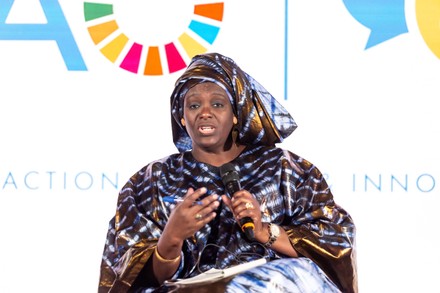
The Permanent Secretary of the National High Council for One Health Public Health Security in Senegal, Dr. Adjaratou Diakhou, has emphasized the need for stronger multisectoral collaboration to address emerging global health challenges.
She made this known during a panel discussion at a webinar titled “From Declaration to Action: Toward Integrated Health, Environment, and Nutrition Systems to Address Global Crisis,” organized by Galien Africa and REMAPSEN.
Dr. Diakhou noted that Senegal’s One Health approach integrates human, animal, and environmental health systems, while also addressing the economic and social dimensions of public health security.
Satellite Data Key to Improving Health in Africa-Stakeholders
Reflecting on lessons from the COVID-19 pandemic, she said the country has strengthened its prevention and detection mechanisms, recognizing their critical role in safeguarding national development and economic stability.

She explained that governance is central to Senegal’s strategy, with the establishment of a High Council under the Prime Minister’s leadership, supported by a Technical Committee that brings together stakeholders from government, private sector, civil society, and financial institutions.
According to her, the country has also set up a multidisciplinary scientific committee to guide decision-making, a move informed by the experience gained during the COVID-19 response.

“At the country level, we have learned that without strong intersectoral coordination, our actions will be weakened,” she said.
Dr. Diakhou further disclosed that Senegal has decentralized its One Health implementation through regional committees, ensuring effective coordination across national and subnational levels.
She added that civil society organizations, universities, and advisory groups play key roles in research, policy implementation, and community engagement.
African Experts Call for Innovation, Health Sovereignty
On funding, she revealed that Senegal has secured both international support and created a dedicated national budget line to sustain its One Health initiatives.
Despite these gains, she identified key challenges, including the need to strengthen legal frameworks, improve resource mobilization, enhance data management systems, and increase funding for research and innovation.
She also stressed the importance of integrating climate change considerations into health security planning and expanding public and civil society participation.
Looking ahead, Dr. Diakhou said Senegal is working toward greater policy convergence and the establishment of multidisciplinary platforms to address interconnected issues such as health, environment, and nutrition.
The webinar brought together stakeholders across Africa to discuss practical pathways for translating One Health commitments into actionable strategies capable of addressing complex global crises.