


Hamman Abdulkareem
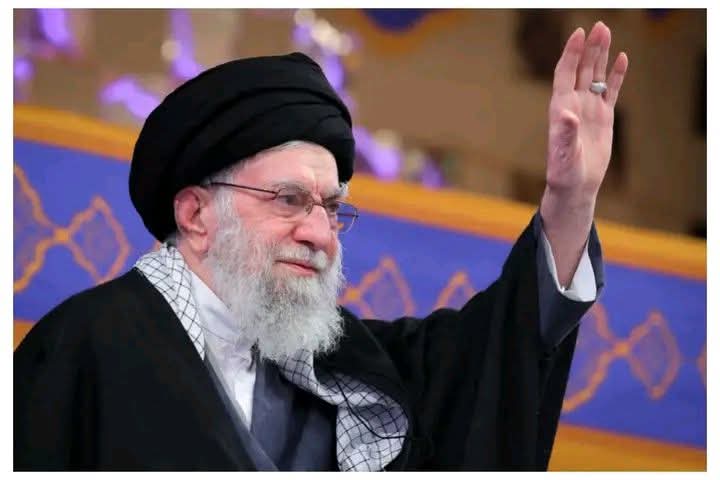
A dramatic and dangerous escalation has engulfed the Middle East after the United States and Israel launched coordinated strikes on Iran, igniting retaliatory missile attacks across the Gulf region and reportedly killing Iran’s Supreme Leader, Ayatollah Ali Khamenei.
Read also: APC Presents Governorship Flag to Yusuf at 2027 Campaign Flag-Off
U.S. President Donald Trump warned earlier that American casualties were possible as “major combat operations” unfolded. Speaking about the unfolding conflict, Trump described the mission as “noble,” emphasising that it was aimed at securing the future despite potential losses of “courageous American heroes.”
Death of Iran’s Supreme Leader
In a stunning development reported by Reuters and later echoed by CNN, Israeli sources and U.S. officials confirmed that Ayatollah Ali Khamenei had been killed during the strikes. President Trump publicly stated that the Iranian leader died during the joint U.S.-Israeli assault.

Khamenei, 86, had ruled Iran for decades and was widely regarded as a staunch opponent of Western influence. Under his leadership, Iran expanded support for proxy forces across the Middle East while suppressing domestic opposition. His death marks a seismic shift in Iran’s political and religious structure, leaving uncertainty about succession and internal stability.
Iran’s Swift Retaliation
Iran responded quickly, launching missiles targeting U.S. and Israeli military installations across the region. Several Gulf Arab states hosting American bases reported missile interceptions within their airspace.
Explosions were reported in multiple cities, including Doha—home to the largest U.S. military base in the Middle East—as well as Abu Dhabi and Dubai in the United Arab Emirates. UAE state media confirmed at least one fatality in Abu Dhabi, though further details were not immediately released.
In Dubai, verified social media footage showed a drone descending into the upscale Palm Jumeirah district before exploding near the Fairmont Hotel, setting part of the structure ablaze.
Aviation and Regional Shutdown
The conflict has severely disrupted air travel. Flight tracking maps showed airspace over Iran, Iraq, Kuwait, Israel, and Bahrain nearly empty. Approximately 1,600 flights across a broad Middle East corridor were cancelled in a single day.
Read also: Islamic Summit in Kano Urges FG to Address Insecurity, Economic Hardship
Major airports were forced to shut down, including Dubai International Airport and Ben Gurion Airport. Airlines reportedly cancelled nearly 40% of flights to Israel as fears of further escalation intensified.
Political Shockwaves in Washington
Back in the United States, the strikes sparked immediate political debate. Lawmakers on Capitol Hill expressed alarm, with top Democrats and a small number of Republicans criticising President Trump for launching a major military operation without explicit congressional approval.
Opinion writers, including W.J. Hennigan of The New York Times, have noted that warnings of U.S. military involvement—once reserved for dire emergencies—have now become increasingly frequent, raising concerns about the normalisation of sustained foreign interventions.
Implications of the War
The reported death of Iran’s Supreme Leader dramatically raises the stakes of this conflict.
1. Leadership Vacuum in Iran:
Khamenei’s death could trigger internal power struggles among Iran’s political elite, the Revolutionary Guard, and the clerical establishment. This instability may either temporarily weaken Iran or provoke a more aggressive retaliation to consolidate authority.
2. Risk of Regional War:
Missile strikes on Gulf states indicate that the conflict is no longer confined to Iran and Israel. Nations hosting U.S. bases are now directly involved, whether willingly or not. A broader regional war is increasingly possible.
3. Global Economic Shock:
The Middle East remains central to global oil supply. Escalation could disrupt shipping routes and energy production, driving oil prices upward and affecting global markets.
4. U.S. Political Consequences:
Domestically, the operation could deepen political divisions in the United States, particularly over presidential war powers and congressional oversight.
5. Security Threat Expansion:
Iran-backed groups across the region may intensify asymmetric attacks, including drone warfare and cyber operations.
Read also: Gombe Trains 104 Health Workers to Reduce Newborn Deaths
A Turning Point in Middle East History
If confirmed beyond dispute, the death of Ayatollah Ali Khamenei would represent one of the most significant geopolitical events in decades. It would reshape Iran’s political future, alter power dynamics in the Middle East, and redefine U.S.–Iran relations for generations.
As retaliatory strikes continue and diplomatic channels appear strained, the region stands at a crossroads—between rapid escalation into full-scale war or urgent international efforts to prevent further catastrophe.