


The Charismatic Bishops Conference of Nigeria (CBCN) has endorsed President Bola Ahmed Tinubu for the 2027 presidential election, with the Minister of Information and National Orientation, Mohammed Idris, calling on religious leaders to use their influence to promote peace, national unity and responsible democratic participation.
Idris made the call on Wednesday in Abuja while delivering the keynote address at the grand finale of the 2026 Synod of the CBCN and the International Communion of Charismatic Archbishops, Bishops and Apostles (ICCABA), held at the National Christian Centre.
Read also: Yari Seeks Royal Blessings Ahead of Tinubu’s 2027 Campaign
The Minister said Nigeria’s diversity required responsible leadership from all sectors of society, stressing that the responsibility of preserving national unity could not be left to government alone.
He said religious leaders had an important role to play in strengthening social cohesion, guiding young people away from radicalisation and criminality, and promoting peaceful dialogue as the country approaches the 2027 general elections.
“Keeping this country united requires more than government action. It requires responsible leadership across society, including religious leadership,” Idris said.
He reaffirmed the Federal Government’s commitment to protecting religious freedom, saying Christians, Muslims and adherents of other faiths should be able to worship and live peacefully without discrimination.
Idris also cautioned against portraying Nigeria’s security challenges as a religious conflict, noting that terrorists and criminal groups had attacked Nigerians across religious, ethnic and social backgrounds.
According to him, the Tinubu administration has strengthened intelligence gathering, inter-agency cooperation, military operations and the broader national security architecture.
He said about 1,000 terrorist elements, including dozens of their leaders, were eliminated in the first quarter of 2026, while security agencies also rescued 308 abducted Nigerians in Niger and Kwara States in August.
The Minister urged religious institutions to support community early-warning mechanisms and use their platforms to promote truth, peace and responsible citizenship rather than incitement and division.
“No election should be allowed to turn Christian against Muslim, Muslim against Christian, North against South, or one ethnic group against another. Nigeria belongs to all of us,” he said.
On the economy, Idris said the Federal Government was implementing reforms while creating opportunities for young Nigerians through programmes including NELFUND, 3MTT, NYIF, NATEP, SVCG, SUPA and iDICE.
Read also: Gombe Trains 104 Health Workers to Reduce Newborn Deaths
He described Nigeria’s human capital as one of the country’s greatest assets, urging churches and other faith-based organisations to expand their contributions to education, healthcare, skills development, youth empowerment, humanitarian services and community development.
In a major political development at the event, the President-General of the CBCN, Archbishop Professor Leonard Bature Kawas, announced the Conference’s endorsement of President Tinubu for the 2027 presidential election.
Kawas said the Conference had reviewed the administration’s record and was prepared to support the President through prayers, advocacy and public engagement.
“We support him now. We support him today, we support him tomorrow, and we support him for as long as he’s willing to be our president,” he said.
He subsequently declared: “This house has endorsed him for 2027 presidency.”
Representing President Tinubu at the event, the Secretary to the Government of the Federation, Senator George Akume, commended the Church for its prayers, humanitarian interventions and contributions to peace, national cohesion and moral development.
Akume acknowledged the sacrifices Nigerians had made in the course of the ongoing economic reforms, assuring citizens that the government remained committed to improving household incomes, reducing hardship and ensuring that the benefits of the reforms were increasingly felt across the country.
He commended Nigerians for their patriotism and resilience, assuring them that their sacrifices would not be in vain.
The SGF also called for stronger collaboration between government and the Church in addressing the country’s security and development challenges, particularly in youth empowerment, education, peacebuilding, civic responsibility and humanitarian services.
He said government needed the moral reach of religious institutions, while the Church required an enabling civic environment to contribute effectively to national development.
Read also: CDA Demonstrates Improved Groundnut Varieties to Farmers
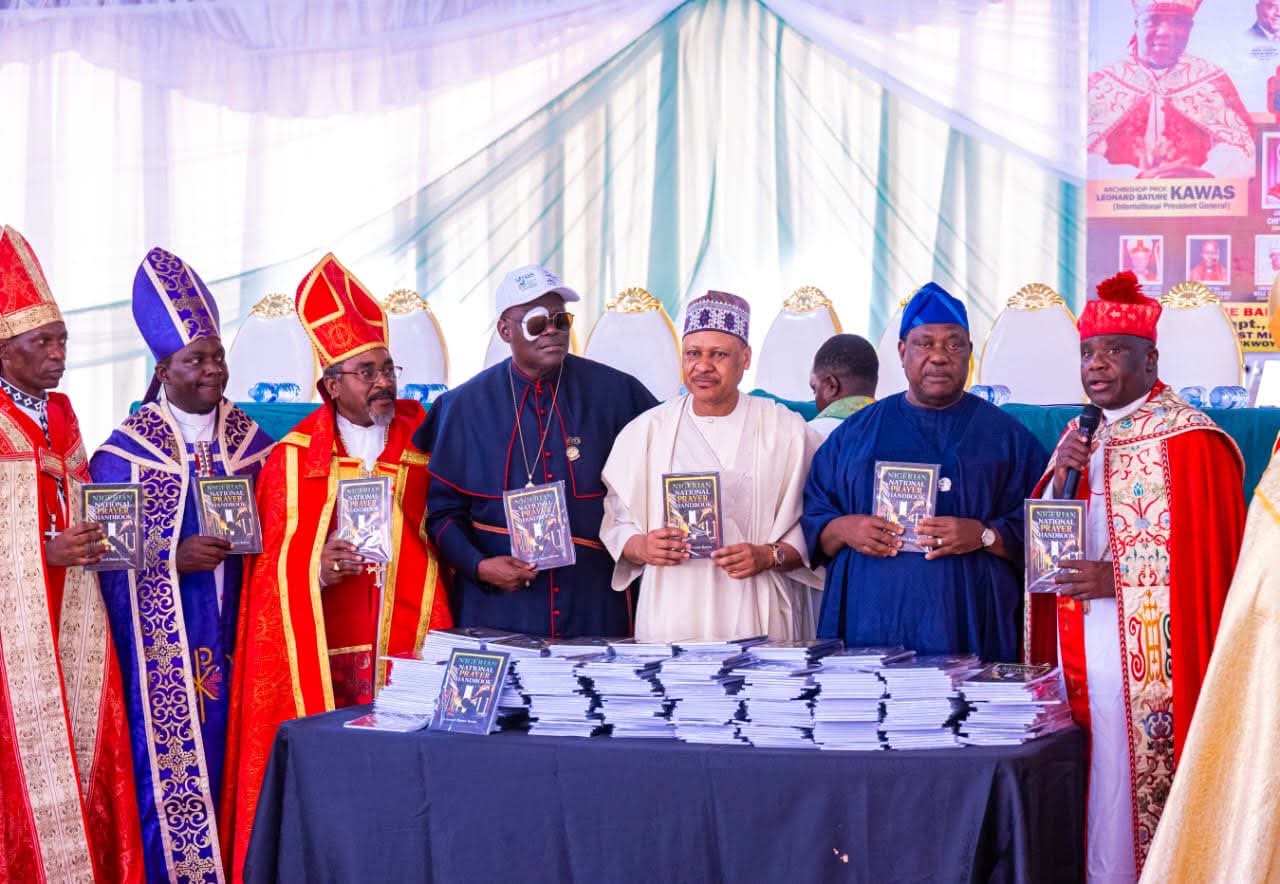
The event also featured the unveiling of the Nigerian National Prayer Handbook, authored by Archbishop Professor Leonard Bature Kawas.
The grand finale brought together religious leaders, government representatives and other stakeholders to discuss issues of national unity, peace, development and the role of faith-based organisations in Nigeria’s democratic process.