


Jamilu Abubakar
About 35 per cent of babies admitted to the Federal Teaching Hospital, Gombe, are born prematurely, highlighting the burden of preterm births and their contribution to neonatal deaths.
Read also: Gombe Trains 104 Health Workers to Reduce Newborn Deaths
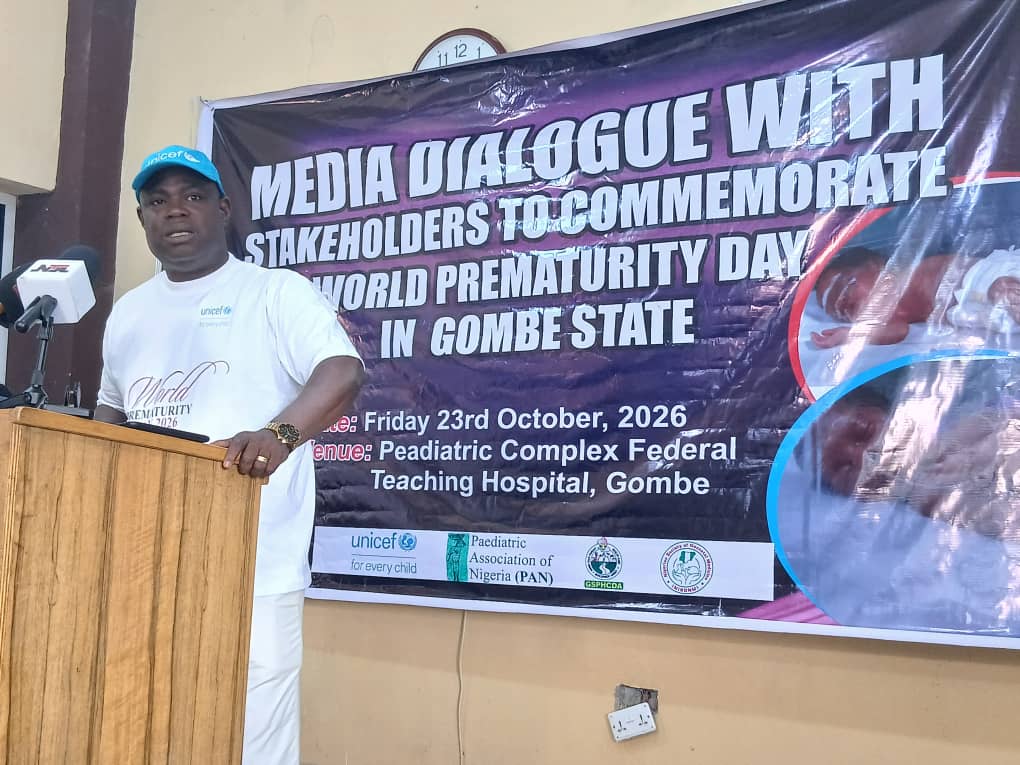
A neonatologist at the hospital, Dr Rabo Adejiji, disclosed this during a media dialogue with stakeholders in Gombe to commemorate World Prematurity Day.
The event was organised by the United Nations Children’s Fund (UNICEF), the Gombe State Government and the Paediatric Association of Nigeria (PAN) to promote interventions aimed at improving the survival and healthy development of premature babies.
Dr Adejiji identified hypertensive disorders during pregnancy, particularly pre-eclampsia and chronic hypertension, as the leading causes of premature deliveries at the hospital.

She listed other risk factors as multiple pregnancies, malaria, urinary tract infections, diabetes and abnormalities of the uterus or cervix.
According to her, premature babies are more susceptible to infections and other life-threatening complications because their brains, immune systems and other vital organs are not fully developed.
The neonatologist explained that the hospital’s statistics represented only part of the burden, as some premature babies receive treatment at primary and secondary healthcare facilities, while others die before reaching tertiary hospitals.
UNICEF Public Health Specialist at the Bauchi Field Office, Dr Seyi Olusunde, described prematurity as a major contributor to neonatal deaths in Nigeria.
Read also: UNICEF Seeks Increased Funding for Child Nutrition in Adamawa
He said reducing under-five mortality required greater investment in newborn survival through specialised care, adequately trained health workers and appropriate medical equipment.
Dr Olusunde reaffirmed UNICEF’s commitment, alongside other development partners, to supporting the government in building health workers’ capacity, providing essential equipment and strengthening healthcare infrastructure for the management of premature babies.
He also emphasised the need to support affected families and intensify public awareness of the causes of preterm births and the importance of seeking early medical attention during pregnancy.
The Programme Manager of the Gombe State Primary Health Care Development Agency, Dr Maryam Abubakar, said the state government was strengthening newborn healthcare services through the training and deployment of health workers to urban and rural health facilities.
She explained that healthcare providers were also receiving training in neonatal resuscitation and Kangaroo Mother Care, a method involving prolonged skin-to-skin contact between a caregiver and a newborn, to improve the survival of premature babies.
Dr Abubakar added that the state government, in collaboration with UNICEF and other development partners, had provided medical equipment for distribution to primary healthcare facilities across the state.
She said efforts were also underway to strengthen the referral system to ensure that babies requiring specialised treatment were transported from rural communities to secondary and tertiary healthcare facilities.
A mother of premature twins, Esther Victor, who shared her experience at the dialogue, described caring for premature babies as emotionally and physically challenging, particularly after losing one of her twins.
Read also: CDA Demonstrates Improved Groundnut Varieties to Farmers
She commended health workers for their support and called for greater attention to the needs of premature babies and their mothers.
World Prematurity Day is observed annually to raise awareness of preterm births and promote interventions that improve the survival, health and development of babies born before 37 weeks of pregnancy.