


For millions of girls in Northern Nigeria, childhood can end before they have the opportunity to complete their education, develop their potential or make decisions about their future.
Child marriage remains a significant challenge in the region, exposing girls to early pregnancy, health complications, interrupted education and limited economic opportunities.
Read also: Minister Defends Tinubu’s Economic Reforms, Promises Relief for Nigerians
Despite ongoing interventions by governments, development partners and civil society organisations, the practice continues to affect communities across the North-West and North-East, where poverty, insecurity, gender inequality and harmful social norms contribute to the vulnerability of adolescent girls.
Against this backdrop, the Federal Government has launched the National Strategy and Costed Action Plan on Ending Child Marriage in Nigeria (2025–2030), covering the North-West and North-East geopolitical zones, as part of efforts to protect girls’ rights and improve their access to education.
The strategy was unveiled in Kano during activities marking the 2026 International Day of the Girl Child, bringing together government officials, development partners, traditional and religious leaders, civil society organisations and young people to discuss measures to end the practice.
However, beyond the launch and the commitments made, a fundamental question remains: how effectively will the strategy translate into concrete action that protects girls and enables them to complete their education?
The Scale of the Challenge
The figures presented by the United Nations Children’s Fund (UNICEF) at the launch illustrate the magnitude of the problem.
According to UNICEF Chief of Field Office in Kano, Mr Shafeeq Ur-Rehman, the 2024 Nigeria Demographic and Health Survey shows that approximately one in three young women nationally, and nearly one in two in the North-West and North-East, were married before the age of 18.
He cited prevalence figures of 74 per cent in Bauchi, 72 per cent in Jigawa, 69 per cent in Katsina and 39 per cent in Kano, compared with the national average of 33.4 per cent.
These figures highlight the disparities between states and the continuing challenges confronting efforts to protect girls from early marriage.
Behind the statistics are girls whose education may be interrupted, whose health may be compromised and whose opportunities to pursue their ambitions may be restricted.
For many, marriage before the age of 18 can mean taking on adult responsibilities before they have acquired the education, skills and resources needed to navigate adulthood independently.
UNICEF says addressing the problem requires confronting poverty, gender inequality, harmful social norms and inadequate services while ensuring that girls remain in school and families have access to healthcare, social protection and child protection services.
A National Strategy, but Implementation Is Key
In her keynote address, the Minister of Women Affairs, Hajiya Imaan Sulaiman-Ibrahim, said protecting the girl child required clear policies, effective laws, accessible services, adequate funding, reliable data and accountable institutions.
She explained that the Federal Government was implementing policies and programmes aimed at protecting children, promoting gender equality, strengthening families and improving the welfare of vulnerable groups.
The Minister noted that President Bola Tinubu had declared 2026 the Year of the Family and Social Development, stressing that the vision could not be fully realised if girls were denied the opportunity to complete secondary education because of child marriage.
She identified poverty, insecurity, gender discrimination, harmful traditional practices, school exclusion and inadequate social protection as factors contributing to the practice.
According to her, the 2026 International Day of the Girl Child theme, “End Child Marriage and Invest in Girls’ Rights!”, calls on governments, families, communities and development partners to confront harmful practices while investing in girls’ education, health, protection and leadership.
The strategy is expected to provide a framework for coordinating interventions and identifying the resources required to address the problem.
However, the effectiveness of the initiative will depend on whether the commitments are reflected in state-level programmes, annual budgets and services that directly benefit vulnerable girls and their families.
UNICEF Calls for Funding and Measurable Results
For UNICEF, the launch represents an important step, but the organisation says the real test will be implementation.
Mr Shafeeq Ur-Rehman commended the Federal Government for launching the costed national strategy and acknowledged Kano State for hosting the event.
He called on participating states to sustain political leadership, provide domestic financing and strengthen education, healthcare and child protection systems.
He also stressed the need for measurable outcomes, including more girls completing school, fewer girls being married before 18 and greater participation of girls in decisions affecting their lives.
A costed action plan is intended to identify the resources required to implement interventions, alongside responsibilities and timelines.
Yet, without adequate funding and effective monitoring, even well-designed policies risk remaining commitments on paper.
The challenge therefore extends beyond developing a national framework. State governments must determine how to incorporate its priorities into their budgets, strengthen service delivery and measure progress over the five-year implementation period.
UNICEF says it is ready to work with governments, development partners, civil society organisations, communities and girls themselves to translate the strategy into lasting change.
Save the Children: From Policy to Action
Save the Children Nigeria has also called for a coordinated response involving governments, communities, development partners and young people.
Speaking on behalf of the organisation’s Country Director, Duncan Harvey, its Director of Finance, Mr James Ameh, commended the Federal Ministry of Women Affairs for its leadership in developing the strategy.
He cited findings from the State of the Nigerian Girl Report II, which the organisation supported, indicating that national child marriage prevalence had declined from 44 per cent in the 2016–2020 period to 28.6 per cent in 2025.
The figures presented by Save the Children suggest that progress is possible when governments, civil society organisations, development partners and communities work towards a common objective.
Nevertheless, the organisation warned that millions of girls remain at risk of being married before their 18th birthday.
Mr Ameh stressed the need to expand access to safe, inclusive and quality education, strengthen social protection programmes and provide adolescent-responsive healthcare and child protection services.
Read also: Kano Stars Centre Installs Solar Streetlights, Renovates Vigilante Office
He also called for the enforcement of laws and policies that protect children from violence, abuse and exploitation.
For Save the Children, the success of the strategy will depend on the extent to which it produces measurable results, including improved school completion rates, stronger child protection systems and greater participation of girls in decisions affecting their futures.
The organisation further urged state governments to develop and implement costed action plans aligned with the national framework, supported by clear targets and dedicated resources.
Kano’s Approach to Protecting the Girl Child
As host of the launch, Kano State highlighted several initiatives intended to improve girls’ access to education and protect their rights.
The State Commissioner for Women Affairs, Children and People with Special Needs, Hajiya Amina Sani, described the gathering as a collective commitment to safeguarding children and securing their future.
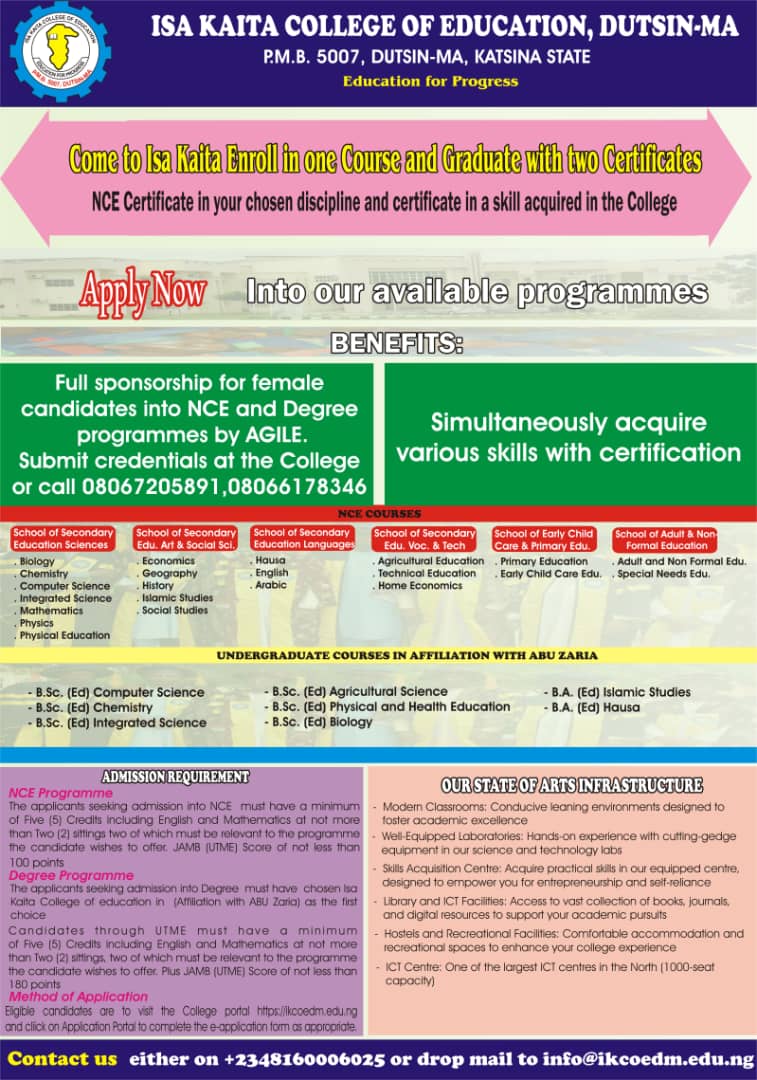
She identified the Adolescent Girls Initiative for Learning and Empowerment (AGILE) Project, the Girl Child Initiative, the Free and Compulsory Education Policy and the state’s budgetary allocation to education as measures designed to expand learning opportunities for girls.
The Federal Minister also commended Kano for interventions that support girls’ education, including scholarships, free bus transportation for girls and the domestication of school re-entry guidelines for married adolescent girls.
These measures are significant because access to education can help girls acquire knowledge and skills, expand their opportunities and reduce some of the barriers that contribute to early marriage.
However, sustaining school attendance and completion also requires attention to household poverty, safety, access to sanitation and other conditions that influence whether girls can remain in education.
The Kano State Commissioner called on parents, traditional and religious leaders, civil society organisations and the private sector to support government efforts to end child marriage and violence against children.
Her appeal reflects the understanding that government interventions alone cannot eliminate a practice influenced by social expectations, economic pressures and community attitudes.
Engaging Families, Traditional and Religious Leaders
Ending child marriage requires more than legislation and public campaigns. It also demands sustained engagement with the people and institutions that influence decisions about girls’ lives.
Parents and caregivers have a central role in ensuring that girls are supported to continue their education and pursue their ambitions.
Traditional and religious leaders can help communities understand the consequences of child marriage, challenge harmful practices and promote the protection, dignity and welfare of children.
In her remarks, Hajiya Amina Sani linked efforts to end early marriage with the Islamic principle of Maslahah, which emphasises public interest and the prevention of harm.
She also referred to the higher objectives of Islamic law, known as Maqasid al-Shariah, particularly the protection of life, intellect, dignity and posterity.
She argued that child marriage undermines these values by exposing girls to harm, denying them educational opportunities and limiting their future prospects.
Such community engagement is important in developing locally appropriate approaches that protect girls while addressing the social and economic circumstances of families.
Development partners and civil society organisations also have a role in supporting community-based interventions, strengthening child protection systems and ensuring that girls can safely report abuse or seek assistance.
Investing in Girls Beyond Awareness
The 2026 International Day of the Girl Child provides an opportunity to draw attention to the rights, aspirations and challenges facing adolescent girls.
But for organisations working to end child marriage, awareness must lead to sustained investment and practical interventions.
Save the Children has called for greater access to education, healthcare, social protection and livelihood skills, alongside stronger enforcement of laws protecting children.
These interventions can help address some of the underlying factors that make girls vulnerable to early marriage.
Ensuring that girls complete secondary education is particularly important. Schools provide opportunities to acquire knowledge, build social connections and develop skills that can improve their prospects in adulthood.
Families facing economic hardship may also require social protection and other forms of support to reduce pressures that can contribute to early marriage.
At the same time, governments need reliable data to identify communities where girls face the greatest risks, monitor interventions and assess whether policies are producing the intended results.
The national strategy therefore needs to be supported by coordinated investments across education, health, social welfare, justice and child protection.
The Road Ahead
The launch of the National Strategy and Costed Action Plan on Ending Child Marriage in Nigeria (2025–2030) marks a renewed effort to address a challenge that continues to affect girls across Northern Nigeria.
The commitments made by the Federal Government, Kano State Government, UNICEF and Save the Children point to the need for stronger coordination, adequate financing, effective laws and sustained community engagement.
Yet, the ultimate measure of success will not be the launch ceremony or the number of commitments announced.
It will be whether more girls remain in school, whether families can access the support they need, whether child protection systems respond effectively to violations and whether communities increasingly reject marriage before the age of 18.
For the ten northern states brought together under the initiative, the coming years will require translating the strategy into funded programmes, clear responsibilities and measurable progress.
As UNICEF and Save the Children have emphasised, girls must also have a meaningful role in shaping decisions that affect their lives.
Read also: Girls’ Education: Kano SUBEB, AGILE Distribute 11 Laptops
Every girl deserves the opportunity to learn, grow, make informed choices and realise her potential.
Ultimately, ending child marriage will require more than a national strategy. It will demand sustained investment, accountability and a collective commitment to ensuring that a girl’s future is not determined by poverty, harmful social norms or circumstances beyond her control.