


Nasiru Waziri
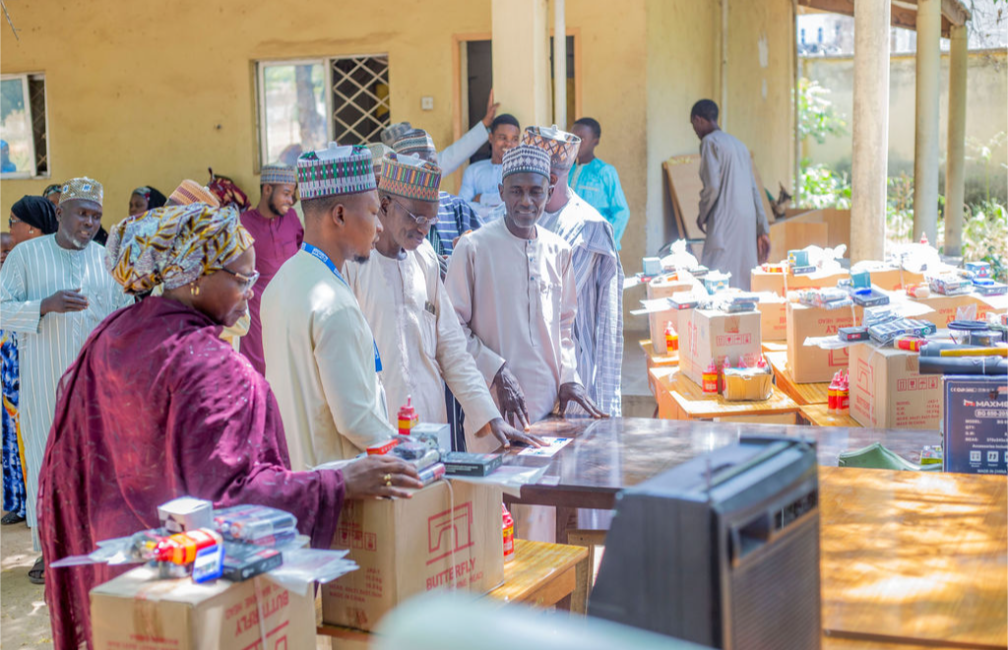
Sixty graduates of the European Union-funded Accelerating Basic Education and Livelihood Opportunities for Children and Youth in Northwest Nigeria Project (ABEP) in Kano State have received livelihood start-up kits to enable them to establish businesses, generate income and improve their livelihoods.
Read also: NIESV Charts New Course for Kano’s Real Estate Sector
The items were distributed during a graduation ceremony organised by the Kano State Agency for Mass Education (SAME) in collaboration with Plan International Nigeria, with funding from the European Union.
The initiative aims to promote vocational skills development, economic empowerment and self-reliance among young people and other beneficiaries of the programme.
The graduates acquired various vocational and entrepreneurial skills, including tailoring, fashion design, cosmetology, computer operation and shoemaking, to prepare them for employment and business opportunities.
Speaking at the event, the Livelihood Officer Plan International, Mr Shettima Kolo, expressed appreciation to the organisations and individuals whose commitment contributed to the successful implementation of the programme.
Mr Kolo explained that the beneficiaries received practical training designed to equip them with the knowledge and skills required to become economically productive and self-reliant.
Read also: How Kano Is Strengthening Transparency in Medical Supplies Procurement
He urged the graduates to make effective use of the start-up kits to establish businesses and transform their newly acquired skills into sustainable sources of income.
In his remarks, the Programme Coordinator, Mr David Oke, encouraged the beneficiaries to apply the knowledge gained during the training and embrace entrepreneurship as a pathway to economic independence.
Mr Oke also urged them to establish sustainable businesses and contribute positively to the development of their respective communities.
A facilitator, Shamsiyya Muhammad Yawale, thanked the organisers for providing the opportunity to train beneficiaries under the initiative.
She disclosed that she had trained more than 80 students and emphasised the importance of vocational education in equipping young people with practical skills for economic independence.
The beneficiaries received start-up kits to support businesses in various fields, including tailoring, cosmetology, poultry farming, GSM repairs and solar installation, among others.
Read also: Kano, UNICEF Strengthen Budget Tracking for Nutrition, Child Protection
Some of the beneficiaries, Khadijah Musa Abdulhamid and Abubakar Abdulmuminu Adam, said they had undergone six months of training before receiving the start-up kits to establish their businesses.
They expressed appreciation to the organisers and pledged to make judicious use of the items to generate income, achieve economic independence and improve their livelihoods.