


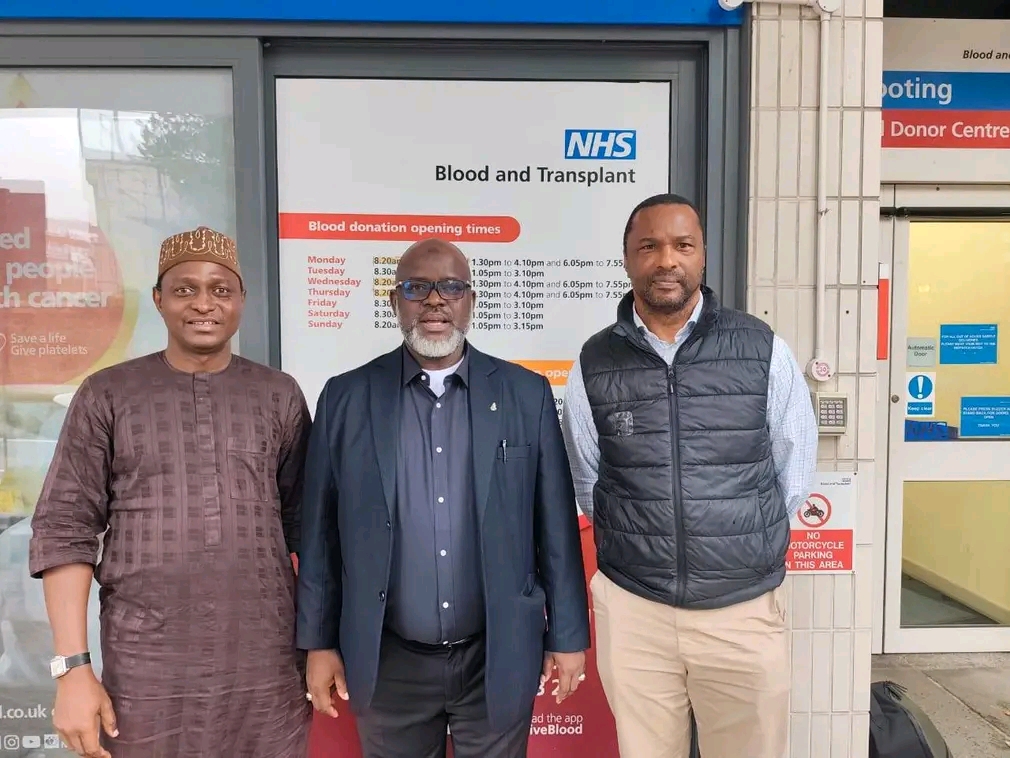
The National Blood Service Agency (NBSA) is exploring technical cooperation and institutional partnership with the United Kingdom’s National Health Service Blood and Transplant (NHSBT) to strengthen blood transfusion services in Nigeria.
The initiative followed a visit by a Nigerian delegation to the NHSBT facility at St George’s Hospital, London, to study operational practices and quality management systems supporting blood collection, processing, storage and distribution.
The delegation was led by the Director-General of NBSA, Professor Saleh Yuguda, and included Dr Aliyu Dahiru Waziri, Head of the Agency’s Operational Centre in Abuja, and Dr Ibrahim Musa, Consultant Haematologist at Aminu Kano Teaching Hospital, Kano.
The visit was facilitated by Dr Ogaga Sim-Ifere, Consultant Obstetrician and Gynaecologist at Homerton Hospital, while Dr Oladapo Odumeru, Assistant Director of Quality at NHSBT, received the Nigerian delegation.
During the visit, the team inspected key operational sections of the facility, including blood collection centres, apheresis donation services, storage facilities and transportation systems.

The engagement provided an opportunity for the Nigerian officials to examine international practices in ensuring the safety, quality and availability of blood and blood components, particularly through effective quality assurance, traceability and temperature-controlled storage and transportation.
Discussions also focused on possible areas of collaboration, including professional training, technical knowledge exchange, operational auditing and the adoption of appropriate standard operating procedures.
Read also: How Kano Is Strengthening Transparency in Medical Supplies Procurement
The proposed areas of capacity development include donor selection and management, blood collection, component preparation, apheresis services, inventory management, quality management systems, storage and distribution.
The delegation also explored opportunities for structured professional attachments and specialised training programmes for Nigerian blood service personnel to strengthen local expertise and institutional capacity.
According to the visit report, the next steps include further engagements with NHSBT, identification of priority areas for technical cooperation and development of an action plan outlining proposed activities and implementation arrangements.
The report also recommended extending relevant capacity-building opportunities to hospital-based transfusion services to ensure wider benefits across Nigeria’s blood transfusion network.
It, however, clarified that no formal partnership agreement was concluded during the visit, as further consultations would be required to establish the scope and implementation framework of the proposed collaboration.
The engagement is part of broader efforts to strengthen Nigeria’s blood transfusion system through improved infrastructure, professional development, institutional capacity and quality assurance.
Read also: NNRA Identifies Skills Gaps, Proposes Electronic Authorisation System
Safe and adequate blood supplies are essential for managing obstetric emergencies, trauma, surgical procedures and patients requiring regular blood transfusions.
The delegation appreciated Dr Sim-Ifere for facilitating the visit and Dr Odumeru for hosting the team and sharing professional insights into blood service delivery in the United Kingdom.