


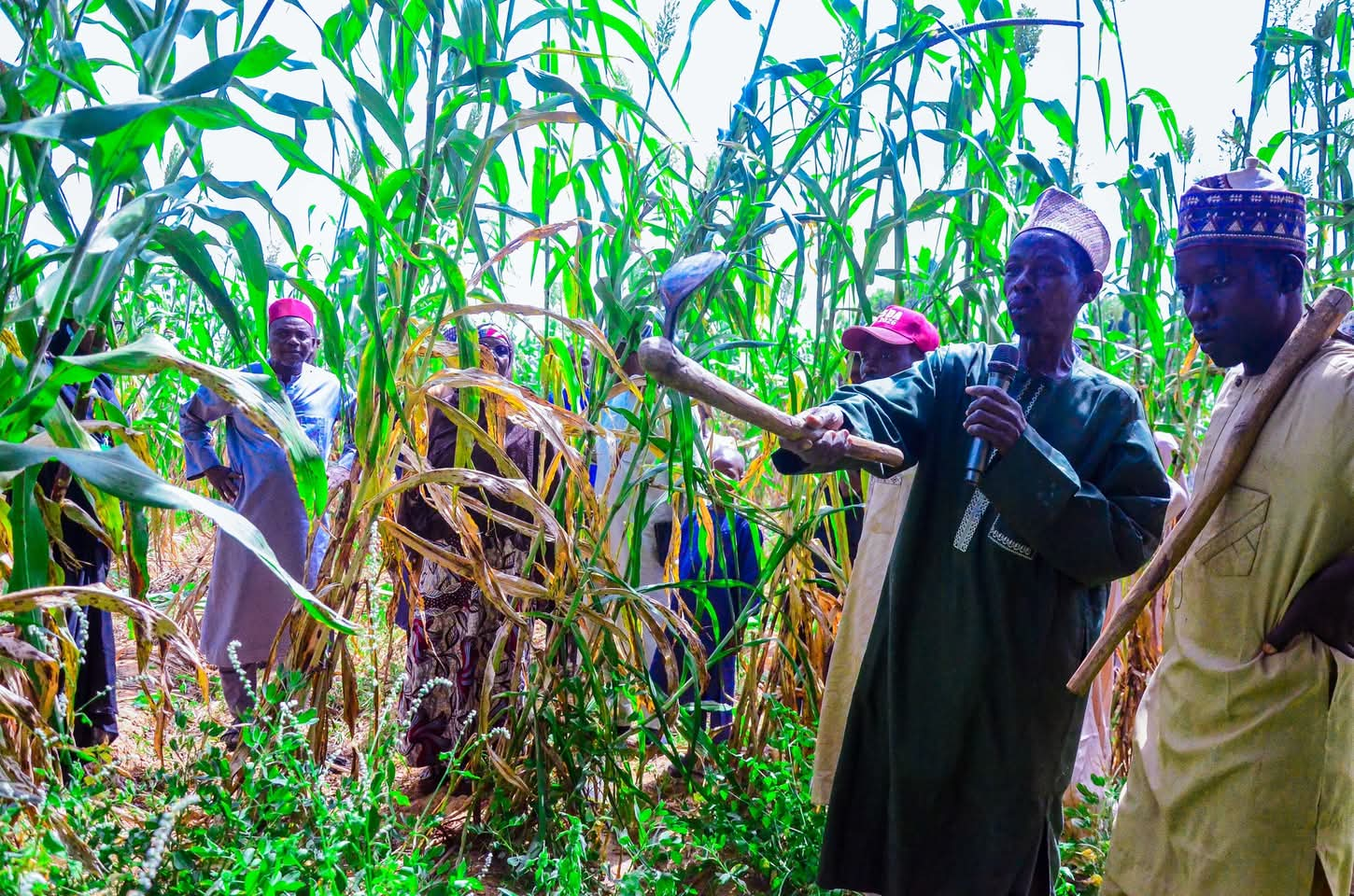
The Centre for Dryland Agriculture (CDA), Bayero University, Kano, has introduced improved groundnut varieties and farming practices to farmers in Shanono and Tofa Local Government Areas of Kano State to boost crop yields and improve livelihoods.
The initiative was demonstrated during field days organised under the Breakthrough Products Project, supported by the International Maize and Wheat Improvement Center (CIMMYT).
Read also: Yari Seeks Royal Blessings Ahead of Tinubu’s 2027 Campaign
The activities took place at Shakogi in Shanono Local Government Area on October 17, 2026, and Doka in Tofa Local Government Area on October 19, 2026.
The programme enabled farmers to assess the performance of improved groundnut varieties supplied by CDA and learn better agronomic practices to enhance productivity, strengthen food security and improve incomes, particularly in dryland communities.
Speaking at the events, the Director of CDA, Professor Sanusi Gaya Mohammed, commended the farmers for their commitment and effective management of the demonstration plots, which yielded encouraging results.

Professor Gaya said the Centre would continue to support participating farmers through training programmes and the provision of additional improved seeds ahead of the next farming season.
He explained that the support was intended to encourage wider adoption of the improved varieties and promote sustainable agricultural production.
Earlier, the Deputy Director of CDA for Outreach and Partnership, Professor Amina Lawan Mustapha, commended the Centre for its efforts to bridge the gap between agricultural research and farming communities.
Professor Mustapha stressed the need to translate research findings into practical solutions that address farmers’ challenges and improve agricultural productivity.
Also speaking, Professor Halima Isah highlighted the importance of adopting improved groundnut varieties with early maturity and high-yielding characteristics.
She noted that such varieties could help farmers achieve better harvests and strengthen food security in dryland areas.
The participating farmers expressed satisfaction with the results of the demonstration plots, commending CDA for providing them with the opportunity to observe the performance of the improved varieties under local farming conditions.
More than 160 participants, including community leaders, agricultural extension agents and smallholder farmers, attended the field day activities.
Women accounted for an estimated 20 to 30 per cent of the participants.
The initiative forms part of efforts to strengthen the link between agricultural research and practical farming, enabling smallholder farmers to adopt improved technologies for increased productivity and better livelihoods.