


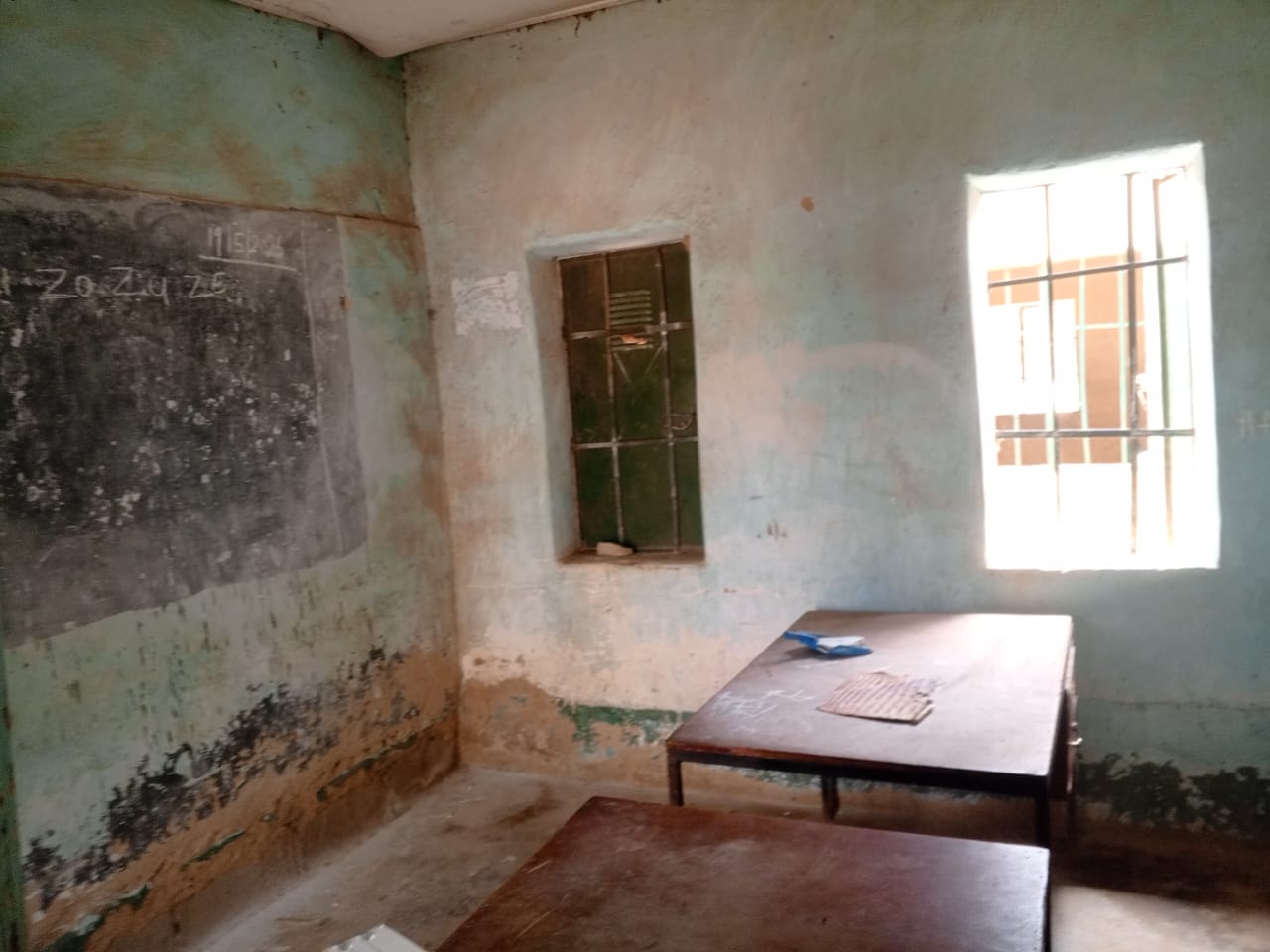
In a modest classroom tucked inside a small office space in Karaye Local Government Area of Kano State, young married women sit shoulder to shoulder, clutching notebooks and listening attentively to their teacher. Some balance babies on their laps while others sit on the bare floor due to lack of chairs and space.
For these women, education is no longer a childhood privilege lost to poverty, early marriage, or cultural expectations. It is a second chance at rebuilding dreams once thought impossible.
Read also: Beyond Promises: Can Nigeria’s New Strategy End Child Marriage in the North?
Across Northern Nigeria, thousands of women and girls are denied access to formal education due to poverty, insecurity, early marriage, and deeply rooted social norms. For many, marriage signals the abrupt end of schooling and the beginning of domestic responsibilities.
AGILE 2nd Chance Achieves Milestone with 5,000 Girls Re-enrolled in Kano
Yet, despite these barriers, Second Chance Education programmes are opening new doors for out-of-school girls, married adolescents, and young mothers determined to rewrite their futures.
Second Chance Education is a learning initiative designed for individuals who missed conventional schooling opportunities or dropped out before completing their education. Beyond literacy and numeracy, the programmes provide vocational skills, life skills, and pathways for women to reintegrate into formal education systems.
In Nigeria, government agencies, development partners, and civil society organizations have increasingly adopted the model to address the growing number of out-of-school girls in the North.
Among the organizations championing the cause is the Participatory Communication for Gender Development PAGED Initiative through its Media Advocacy Project for Married Adolescents, supported by the Malala Fund.
The initiative seeks to expand access to 12 years of inclusive education and strengthen formal re-entry opportunities for married adolescent girls and young mothers across Kano and other states.
As part of the project, journalists visited communities in Karaye to interact with beneficiaries and observe the realities surrounding alternative education centres.
For 20-year-old Rabi’atu Abdulqadir Yakubu, the opportunity to return to school came when she least expected it.
KANO AGILE 2nd Chance Education 2.2c Team Visits NMEC SAME
Rabi’atu was married at 18 while still attending secondary school. Like many girls in her community, she believed marriage had permanently ended her educational ambitions.
But her educated mother-in-law refused to let that happen.
“She encouraged my husband to enroll me in the women centre so I could continue learning,”
Today, Rabi’atu attends classes at the adult education centre while nurturing dreams of becoming a nurse.
However, the path has not been easy.
The Women Centre where she studies was relocated from its permanent structure after the building was converted into a hospital. Classes are now held in a temporary office space at Kofar Fada, with limited facilities and only one teacher handling several subjects.
“In my former school, GGSS Karaye, we offered many subjects, but here we have only one teacher. We study English, Mathematics, Basic Science, and Hausa between 4pm and 6pm,” she said.
Read also: Girls’ Education: Kano SUBEB, AGILE Distribute 11 Laptops
Despite the difficult conditions, Rabi’atu remains determined.
“I will continue pushing to achieve my dream of becoming a nurse,” she added, while appealing to the government to provide more teachers and a permanent site for the centre.
For Binta Sani, education also became a casualty of early marriage.
She got married at a tender after failing her qualifying examinations. Although she later enrolled in the Women Centre, poor infrastructure and overcrowded classrooms continue to threaten her educational journey.
After completing daily household chores Binta walks to school carrying her baby, only to find an overcrowded classroom where some learners are forced to sit on the floor.
“The space is too small and many students stopped attending after the relocation of the centre,” she lamented.
Her story reflects the reality of many married adolescent girls in Northern Nigeria who struggle to balance motherhood, domestic work, and education with little institutional support.
Community leaders say the programme is already making a significant impact despite the challenges.
The Women Leader in the ward, Hajiya Lami Idris, described Second Chance Education as a powerful tool for improving girls’ enrollment, retention, and completion rates.
According to her, the lack of a permanent structure remains one of the biggest obstacles discouraging women from attending classes regularly.
She also urged men to support their wives and daughters in pursuing education, stressing that educated women contribute positively to family and community development.
Similarly, the Ward Head of Karaye Kofar Fada, Alhaji Musa Muhammad, expressed concern over the withdrawal of several learners following the relocation of the centre.
“The temporary classroom is too small and many women prefer to stay at home rather than attend lessons under such conditions,” he said.
Officials of the State Agency for Mass Education say efforts are ongoing to sustain the programme despite limited resources.
The Area Coordinating Officer in Karaye Local Government Area, Bako Bala, explained that the centre currently runs neo-literacy, basic literacy, and post-literacy classes.
According to him, enrollment in the neo-literacy class has dropped significantly from over 200 students due to the relocation challenge.
He added that post-literacy students are preparing for the Senior Secondary Certificate Examination sponsored by the Kano State Government, with subjects including Mathematics, English, Biology, Hausa, Islamic Studies, Civic Education, Physics, Chemistry, and Home Management.
While Second Chance Education programmes continue to restore hope for many women and girls, stakeholders insist that more investment is needed to sustain the gains.
Read also: Kano Boosts Adolescent Healthcare with 743 Facilities
For Hannatu, Nafisa, and many others like them, education is more than learning to read and write. It is an opportunity to reclaim dignity, gain independence, and pursue dreams once interrupted by circumstance.
And in small classrooms scattered across Northern Nigeria, those dreams are slowly being reborn.