


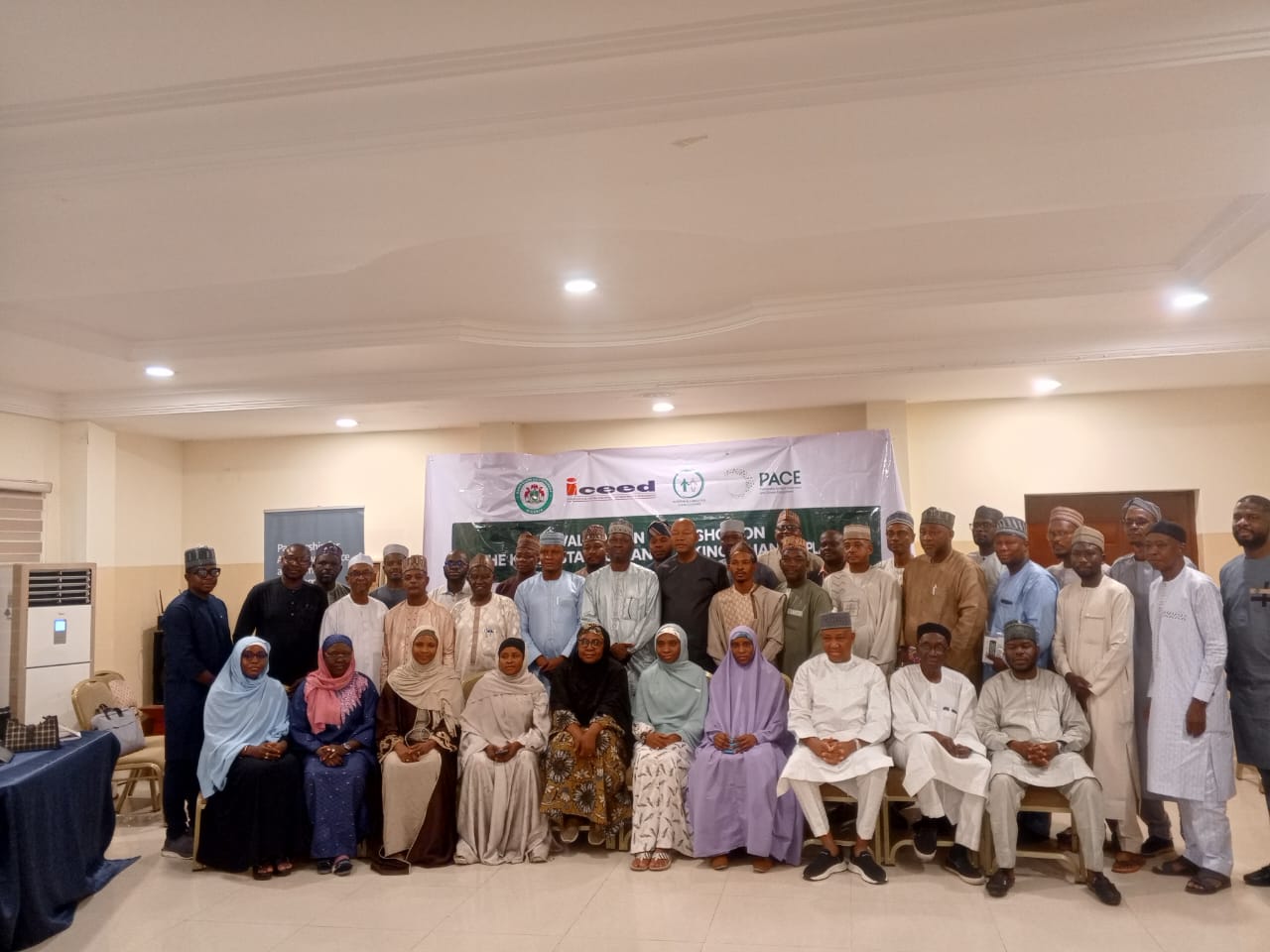
The International Centre for Energy, Environment and Development (ICEED), with support from the Partnership for Agile Governance and Climate Engagement (PACE), has convened a Kano State Clean Cooking Finance Plan Validation Workshop aimed at accelerating the transition to clean cooking technologies and supporting Nigeria’s climate change commitments.
The workshop brought together government officials, development partners, private sector actors, civil society organisations and other stakeholders to review and validate the Kano State Clean Cooking Finance Plan, provide feedback on proposed financing pathways, and identify practical measures to strengthen clean cooking access, finance mobilisation, institutional coordination and implementation readiness across the state.
Read also: Wike Seeks Qatar, Germany Partnerships to Transform Abuja
FG Targets Climate Change, Poverty with Solar Stove Rollout
Speaking at the event, Executive Director of ICEED, Mr. Ewah Otu Eleri, said the transition to clean cooking is critical to addressing major public health, environmental and climate challenges facing Nigeria.
According to him, more than one million households in Kano State still rely on traditional cooking methods, including open-fire and three-stone stoves, exposing families to harmful smoke and serious health risks.
“Over one million households in Kano State cook every day using traditional cooking methods. This is causing significant health challenges,” he said.
Eleri noted that indoor air pollution from cooking smoke remains a major public health concern, adding that nearly 100,000 lives are lost annually across Nigeria due to illnesses linked to smoke from household kitchens.
“In Kano, which has one of the largest populations of households yet to transition to cooking gas or efficient wood and charcoal stoves, the burden of illness and deaths resulting from kitchen smoke is particularly high,” he stated.
He explained that the Kano State Government had taken a bold step by developing a Clean Cooking Finance Plan designed to make cleaner and safer cooking technologies accessible to ordinary households.
Eleri said the initiative comes at a time when rising cooking gas prices have made access to clean energy more challenging for many families.
Read also: Girls’ Education: Kano SUBEB, AGILE Distribute 11 Laptops
According to him, the plan leverages opportunities within global carbon markets, allowing revenues generated through carbon credits to be used as subsidies for clean cooking technologies and infrastructure.
The ICEED Executive Director stressed that the major challenge remains effective coordination among government agencies, private sector investors, development partners, non-governmental organisations and traditional institutions to ensure wider adoption of clean cooking solutions across the state.
Earlier in his welcome remarks, the PACE Northern Hub Strategy advisor Malam Auwalu Hamza described the validation workshop as a critical bridge between clean cooking projects and financing opportunities.
He emphasised the importance of effective Monitoring, Reporting and Verification (MRV) systems in translating climate commitments into credible investment opportunities capable of attracting sustainable financing for clean cooking initiatives.
The team lead urged participants to provide valuable inputs and recommendations that would strengthen the finance plan and support the development of practical, scalable solutions for expanding clean cooking access across Kano State.
During a panel discussion, Director of Climate Change at the Kano State Ministry of Environment and Climate Change, Umar Saleh Anka, disclosed that a proposal on clean cooking had been submitted to the Ministry of Women Affairs.
He noted that clean cooking is a multi-sectoral issue with implications for women’s empowerment, environmental sustainability, public health and climate change mitigation.
According to him, while some ministries view clean cooking as an empowerment initiative and others see it as a low-emission climate intervention, the cross-cutting nature of the issue highlights the need for the establishment of a dedicated special-purpose unit to coordinate implementation efforts.
Also speaking, a representative of civil society organisations, Comrade Safiyanu Lawan Bichi, stressed the need for stronger collaboration, stakeholder commitment and sustained political will to achieve the objectives of the Clean Cooking Finance Plan.
Read also: Kano Boosts Adolescent Healthcare with 743 Facilities
Federal Government Partners Private Sector On Climate Change
Stakeholders at the workshop reaffirmed their commitment to supporting the implementation of the plan, describing it as a strategic tool for improving public health, reducing environmental degradation, creating economic opportunities and advancing Nigeria’s climate change and sustainable development goals.