


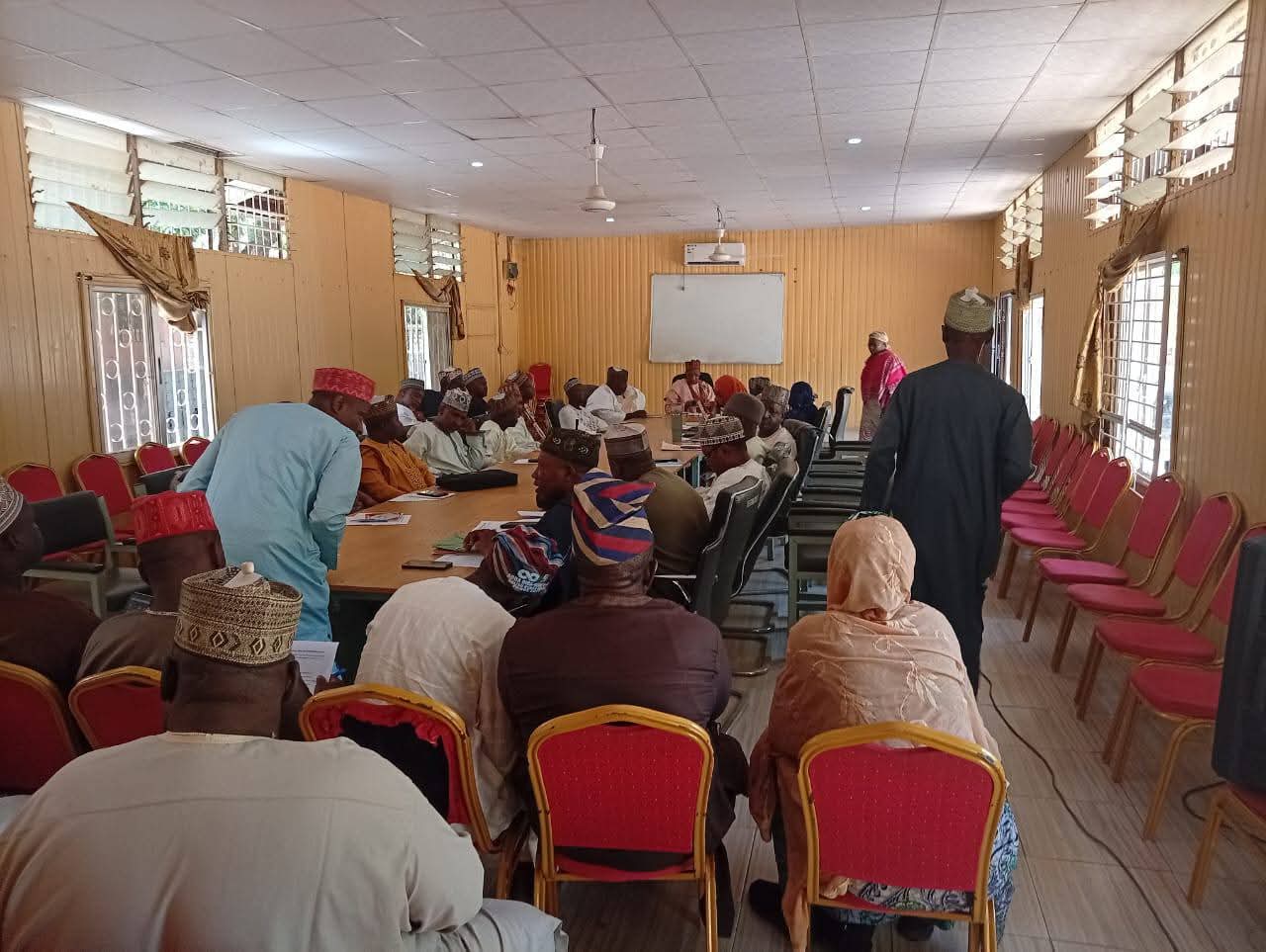
The Executive Chairman of the Kano State Universal Basic Education Board (SUBEB), Malam Yusuf Kabir, has convened a strategic management meeting with Directors, Zonal Directors, and the 44 Education Secretaries across Kano State as part of efforts to strengthen leadership, improve workforce productivity, and enhance the administration of basic education.
The meeting, held at the Special Training Programme (STP) Centre of Sa’adatu Rimi College of Education, Kumbotso, brought together key education managers to review ongoing activities, assess progress on critical projects, and address challenges affecting the sector.
Read also: Kano SUBEB Approves Soft Loans, Whiteboards for Teachers
Speaking during the session, Malam Yusuf Kabir said the gathering was designed to provide updates on the ongoing Recruitment Documentation Exercise and evaluate the implementation of major programmes under the Board’s action plans.
He explained that participants reviewed outstanding activities under the 2024 and 2025 Action Plans, as well as progress recorded in the implementation of the third and fourth quarter 2025 Matching Grant projects across the state.
The Chairman disclosed that reports were also received from education zones and Local Government Education Authorities (LGEAs) regarding schools affected by recent windstorms, with discussions focusing on assessing the extent of damage and identifying classrooms requiring urgent intervention.

He emphasized the importance of teamwork and collaboration among Education Secretaries, Zonal Directors, and SUBEB Directors, noting that effective leadership depends on collective effort and proper delegation of responsibilities.
According to him, no individual can successfully manage all institutional responsibilities alone, stressing that collaboration and division of labour remain essential for organizational growth, efficiency, and improved service delivery.
Malam Yusuf Kabir further encouraged education managers to adopt inclusive leadership approaches that promote staff participation in decision-making processes, saying such practices would enhance knowledge sharing, capacity development, and institutional effectiveness.
Read also: Girls’ Education: Kano SUBEB, AGILE Distribute 11 Laptops
The Executive Chairman also charged education managers to intensify efforts in mentoring teachers and school administrators on professional ethics, discipline, and responsible conduct, particularly in the use of social media platforms.
He expressed concern over reports that some individuals were using the SUBEB name and logo on personal social media accounts to publish content capable of undermining government educational programmes and policies.
The Chairman reminded teachers and education personnel that, as public servants, they are expected to uphold the ethics and standards of the civil service, warning that the Board would not tolerate actions capable of tarnishing the image of the teaching profession or the education sector.
He commended the participants for their dedication and commitment to advancing basic education in Kano State, expressing satisfaction with reports received on their performance and contributions at the grassroots level.
Malam Yusuf Kabir also expressed appreciation to Governor Abba Kabir Yusuf for his continued commitment to the development of education in the state through increased investments and policy support.
He praised the governor for providing substantial funding for the construction of new schools, renovation of dilapidated classrooms, provision of pupils’ desks and teachers’ furniture, sponsorship of teacher training programmes, and other interventions aimed at improving teaching and learning conditions in public schools.
Read also: Kaduna Pushes for Girls’ Education, Protection
The Chairman noted that these investments have significantly strengthened the basic education sector, expanded access to quality education, and created a more conducive learning environment for pupils and teachers.
He assured that SUBEB would continue to complement the government’s efforts through effective implementation, monitoring, and maintenance of educational projects, while education managers pledged to replicate similar engagements in their respective departments and local government areas to improve service delivery across the sector.