


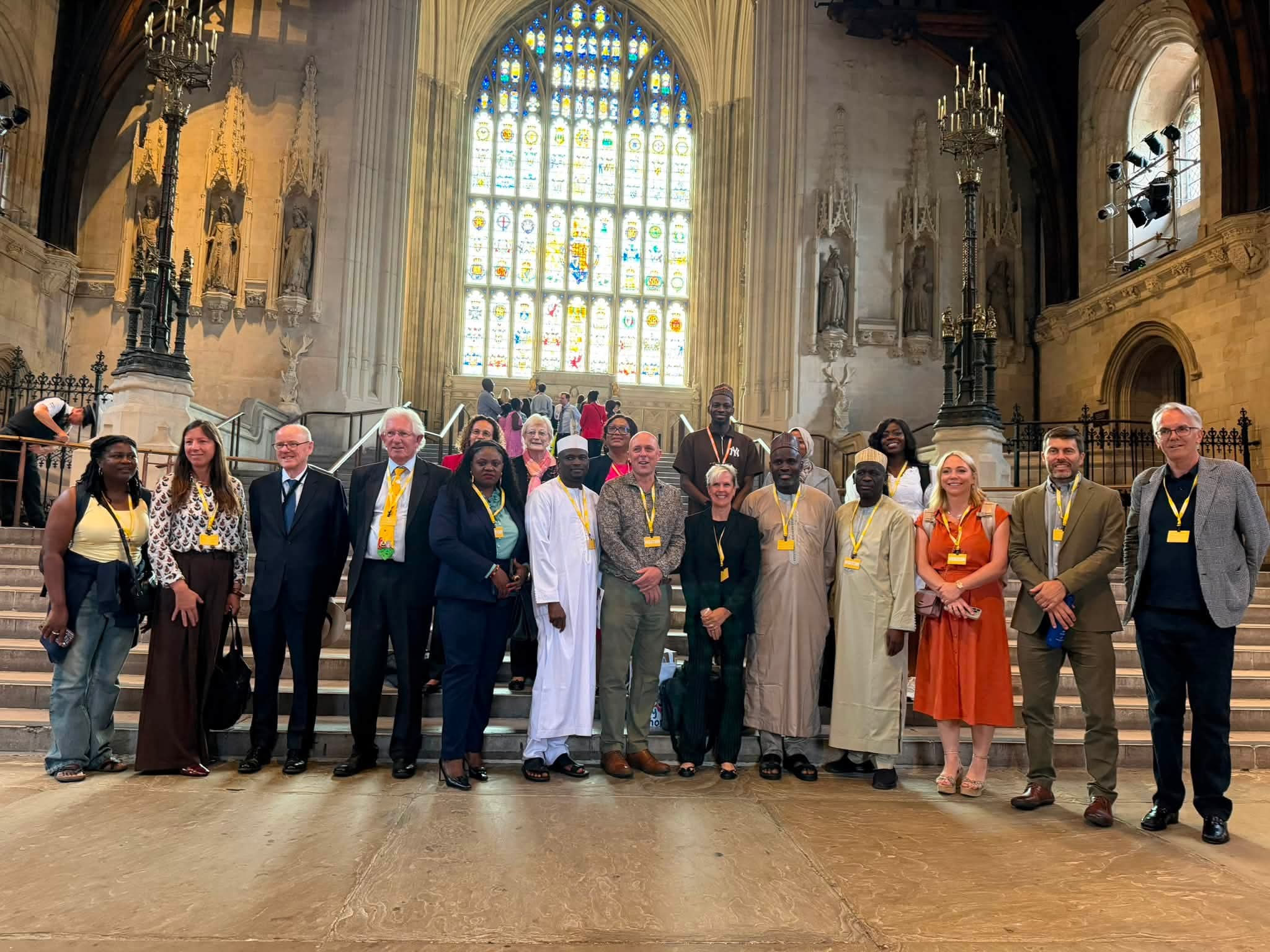
Kano State’s education reforms have received international recognition at the Parliament of the United Kingdom, where education experts and policymakers commended Governor Abba Kabir Yusuf’s commitment to improving literacy through sustained investment and evidence-based policies.
A statement by the Governor’s spokesperson, Sunusi Bature Dawakin Tofa, said the recognition came during the International Parliamentary Forum on Reading Revolution held at the House of Lords, Westminster, London.
Read also: Girls’ Education: Kano SUBEB, AGILE Distribute 11 Laptops
Kano Assembly Pledges Stronger Oversight to Improve Education
The forum, supported by the All-Party Parliamentary Group (APPG) for Nigeria and chaired by Lord Alton of Liverpool, brought together parliamentarians, education leaders, researchers and policymakers from the United Kingdom and Nigeria to strengthen educational cooperation.
Representing Governor Yusuf, the Technical Adviser on Education Reform, Dr. Haladu Mohammed, said education remains the administration’s top priority, noting that sustained investment in teacher recruitment, school improvement and the implementation of the Jolly Phonics literacy programme had significantly improved children’s reading abilities across Kano.
Dr. Haladu said Kano became the first state in Nigeria to implement the United Kingdom’s Phonics Screening Check, providing measurable evidence of progress in literacy. He added that the government was extending the programme to integrated Qur’anic schools through its Almajiri education reforms to ensure more children benefit from quality foundational learning.
Read also: Kano Boosts Adolescent Healthcare with 743 Facilities
The Chief Executive Officer of Universal Learning Solutions, Gary Foxcroft, praised Governor Yusuf for championing evidence-based education reforms, describing Kano as one of Africa’s leading examples of literacy transformation.
Foxcroft said findings from the African Union’s report on foundational learning recognised Kano’s implementation of the Jolly Phonics programme and encouraged wider adoption of structured literacy approaches across the continent.
MTQ Seeks KDSG Support to Strengthen Qur’anic Education
The forum also acknowledged the contributions of Newcastle University researchers, Professor Pauline Dixon and Professor Steve Humble, whose independent studies highlighted the success of the literacy programme in Kano, including improvements in Hausa reading skills.
Read also: Nigeria Moves to Cut Air Travel Costs Through ECOWAS Reform
Also speaking, the Kano State Commissioner for Religious Affairs, Sheikh Ahmad Tijjani Sani Auwal, welcomed the expansion of the Jolly Phonics programme to integrated Qur’anic schools, saying it would improve literacy and numeracy while preserving the state’s religious heritage.
The recognition further strengthens Kano State’s profile as a leading example of government-driven, evidence-based literacy reform in Nigeria and across Africa.