


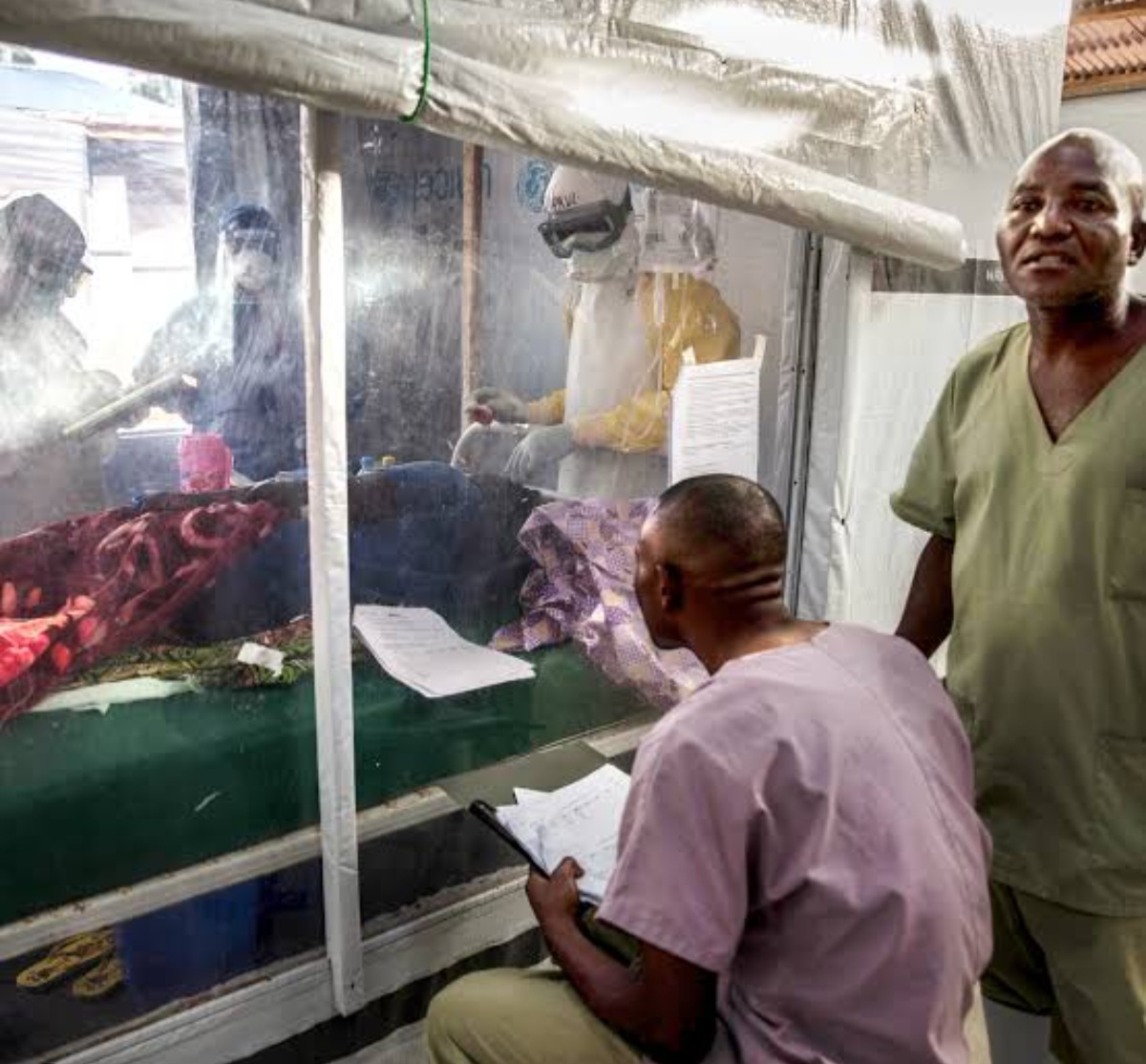
The World Health Organisation (WHO) says the Ebola epidemic in the Democratic Republic of the Congo (DRC) continues to grow and claim lives, despite signs of declining transmission in some of the worst-affected areas.
WHO Director-General, Dr Tedros Adhanom Ghebreyesus, disclosed this during a media briefing on Wednesday, saying more than 7,200 cases and over 3,500 deaths had been reported across seven provinces.
Read also: NCDC Raises Ebola Alert as Kenya Confirms Imported Case
He said transmission was declining in the most affected parts of Ituri Province, while South Kivu had recorded no new cases since May.
According to him, more than 1,700 people have recovered from the disease, while the outbreak has largely remained concentrated in northeastern DRC, apart from a small outbreak in Uganda which was swiftly contained.
Dr Tedros attributed the progress to the leadership of the DRC government, collaboration between WHO, the Africa Centres for Disease Control and Prevention (Africa CDC) and other partners, as well as the efforts of thousands of health workers and frontline responders.

He, however, warned that the situation remained serious, noting that about 300 new cases and 160 deaths were reported in Ituri alone within the past week.
He added that cases were rising rapidly in North Kivu, where the number of weekly cases had almost doubled over the past two weeks, increasing from about 100 to more than 200.
The WHO chief described the outbreak as a collection of multiple outbreaks occurring in different locations, ranging from major cities such as Kisangani, with an estimated population of 1.5 million, to remote villages, mining communities and conflict-affected areas.
He noted that population mobility across the region, difficult terrain, poor road access and insecurity continued to pose major challenges to the response.
Dr Tedros also expressed concern over attacks on aid workers and health facilities, saying such incidents were making an already difficult response more challenging.
He stressed that the response must be sustained and strengthened over the coming months, while appealing to donors to ensure that both the DRC government’s response plan and the broader humanitarian response are fully funded.
The WHO Director-General also highlighted the wider consequences of the Ebola outbreak, saying it was worsening hunger, discouraging people from accessing health facilities, increasing maternal deaths and disrupting HIV treatment.
Read also: Bauchi Equips Facilities With 20 4D Ultrasound Machines
On global pandemic preparedness, Dr Tedros said world leaders would meet at the United Nations General Assembly in New York next week to renew commitments on pandemic prevention, preparedness and response.
He said countries were working towards a political declaration aimed at strengthening global health security through improved surveillance, laboratories, early warning systems, infection prevention and control, and protection of the health workforce.
The declaration also calls for stronger investment in resilient health systems, equitable access to vaccines, diagnostics and treatments, a One Health approach, community engagement, action against misinformation and stronger implementation of the International Health Regulations.
Dr Tedros urged countries to complete negotiations on the Pathogen Access and Benefit-Sharing annex to the WHO Pandemic Agreement, describing it as essential for the agreement to proceed to ratification and eventually enter into force.
Turning to Yemen, he said escalating violence was worsening an already severe health and humanitarian crisis, with nearly 20 million people requiring health assistance.
He said attacks on health facilities, shortages of medical supplies and fuel, displacement and disruptions to referral services were placing further pressure on the country’s health system.
The WHO chief called for the protection of health workers and health facilities, safe humanitarian access and increased international support.
He also used the briefing to mark World Patient Safety Day, observed on September 17, which this year focuses on safe care for people living with noncommunicable diseases.
Dr Tedros said a new WHO analysis estimates that about one in six people with noncommunicable diseases experience preventable harm while receiving care.
He called for patient safety to be integrated into every stage of care, from prevention and early diagnosis to treatment, long-term management and self-care.
Read also: Rivers Clamps Down on Quackery, Shuts 21 Health Facilities
He said governments, health leaders, health workers, civil society and patients all have a role to play in ensuring that healthcare is safe.
“Because if it isn’t safe, it isn’t care,” he said.