


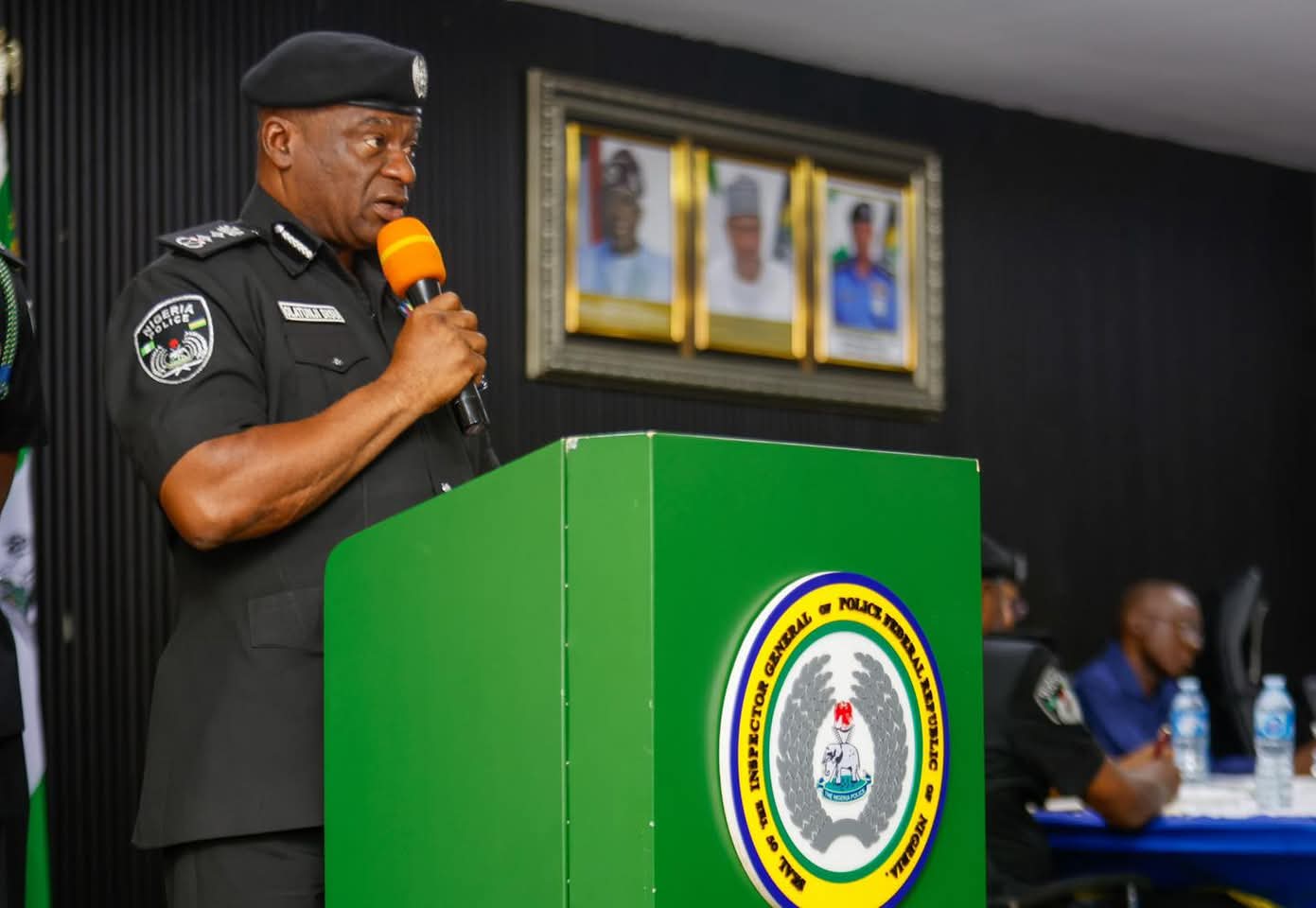
The Inspector-General of Police, Olatunji Rilwan Disu, on Tuesday convened an emergency conference with senior leadership of the Nigeria Police Force at the Force Headquarters in Abuja, announcing sweeping reforms aimed at strengthening accountability and operational efficiency.
The high-level meeting brought together members of the Force Management Team, Assistant Inspectors-General of Police, Commissioners of Police, and representatives of the media. It was convened to address pressing national security concerns and outline strategic directives for police commands and formations across the country.
In his address, the IGP stressed the need for transparency, discipline, and responsible leadership, noting that Nigeria’s evolving security challenges require a more responsive and intelligence-driven policing system.
He also addressed a recent incident in Delta State involving the extrajudicial killing of a suspect, describing the act as unlawful and contrary to the core values of the Force.
According to him, the officers involved have been dismissed, and the matter has been referred for criminal prosecution. He reaffirmed the Force’s zero-tolerance stance on misconduct, emphasizing that no officer is above the law.
Providing an operational update, Disu disclosed that intelligence-led operations conducted in April 2026 led to the arrest of 28 suspected terrorists, 51 murder suspects, 62 armed robbery suspects, 85 kidnapping suspects, and 54 suspected cultists.

He added that 189 kidnapped victims were rescued, while 140 firearms, 1,074 rounds of ammunition, and 37 stolen vehicles were recovered.
As part of ongoing reforms, the IGP announced the creation of a new tactical formation, the Violent Crime Response Unit (VCRU), designed to enhance rapid response to serious and violent crimes.
He explained that the unit would rely on intelligence-based deployments, specialized training, and strict adherence to human rights standards, with Commissioners of Police directly responsible for oversight.
The police chief further directed Commissioners of Police nationwide to intensify community policing efforts through regular town hall meetings with traditional rulers, religious leaders, and other stakeholders.
He also instructed that their contact details be made readily available to community leaders to improve communication and public trust.
Disu reiterated that the reform agenda of the Nigeria Police Force is anchored on professionalism, discipline, respect for human rights, and public accountability. He added that mechanisms such as the Police Complaints Response Unit (CRU) remain in place to ensure citizens can report misconduct.
The Nigeria Police Force, he assured, remains committed to institutional reform, improved operational performance, and the protection of lives and property across the country.