

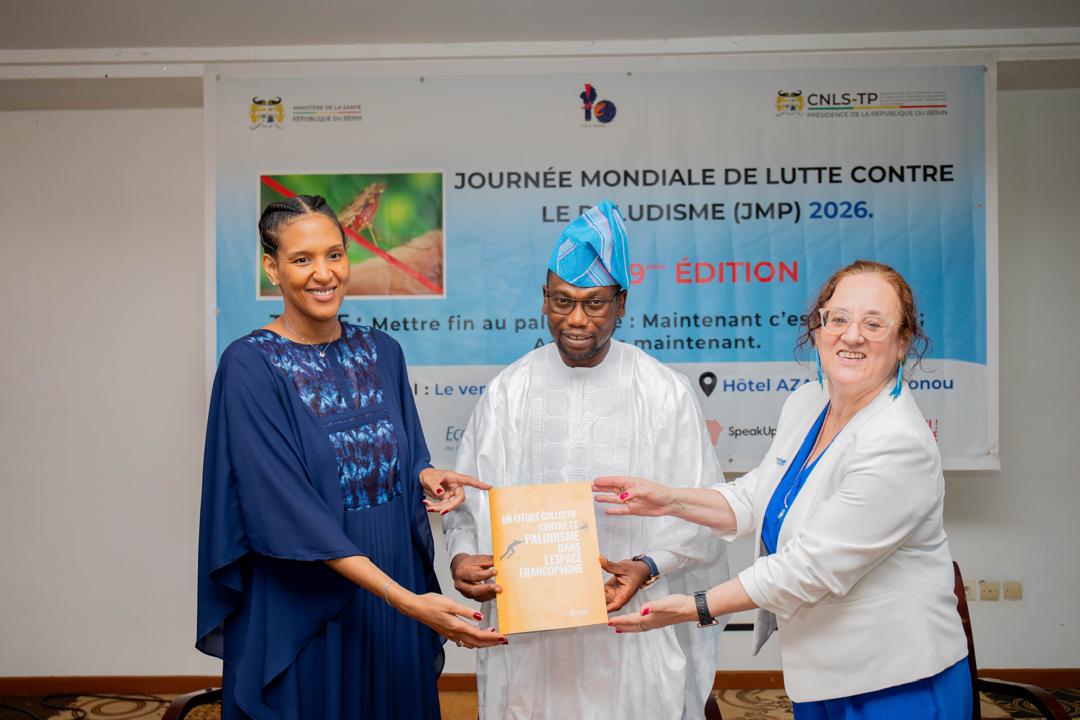
The launch of the report “A Big Push Against Malaria in the Francophone World” set the tone for activities marking World Malaria Day in Benin, as stakeholders intensified calls for urgent action to eliminate malaria across the region.
The report was unveiled in Cotonou by Benin’s Minister of Health, Professor Benjamin Hounkpatin, during a series of high-level engagements held from April 24 to 26.
Read also: World Habitat Day: FMBN Unveils New Housing Products
The events brought together policymakers, technical and financial partners, civil society, youth groups, researchers, athletes, and media professionals.
World Malaria Day: Kano Boosts Efforts to Reduce Malaria Burden
Findings from the report highlight a disproportionate burden of malaria in Francophone countries, which account for only 13 percent of the global population at risk but represent more than 42 percent of cases and 40 percent of deaths.
It calls for increased domestic and international financing, stronger innovation, greater private sector involvement, and inclusive community-driven responses.
Speaking at the launch, Hounkpatin described the report as a wake-up call for the region, noting that while Francophone Africa remains heavily affected, progress is achievable through strong political leadership, adequate funding, and coordinated action.
He reaffirmed Benin’s commitment to sustaining efforts at both regional and global levels.
Read also: NDLEA Arrests 1,860 Suspects, Seizes 5.4 Tonnes of Drugs in Kano
Benin’s progress in tackling malaria was also highlighted, with the country nearly quadrupling its national malaria budget between 2022 and 2025. The government attributes this to a multisectoral approach involving public institutions, lawmakers, civil society, and private sector actors, contributing to a reduction in malaria cases.
Advocacy organisation Speak Up Africa played a key role in mobilising stakeholders during the commemorative events. Its Executive Director, Yacine Djibo, said the initiative aimed to transform awareness into concrete action and accelerate progress toward a malaria-free future.
Activities lined up for the commemoration included policy dialogues, community engagement initiatives, youth-focused programmes, a media day, storytelling workshops, and a 3×3 basketball tournament organised in partnership with the I AM Foundation.
Former Senegal international footballer Khalilou Fadiga highlighted the importance of sports in driving social change, noting that athletes and young people have a critical role in raising awareness and mobilising communities against malaria.
At the global level, the RBM Partnership to End Malaria warned of increasing funding pressures and the risk of reversing progress. Its Chief Executive Officer, Dr. Michael Charles, called for strengthened coordination, sustained investment, and renewed political commitment to keep malaria elimination at the forefront of development priorities.
Stakeholders say the outcomes of the Cotonou gathering will resonate across Francophone Africa, especially as countries confront widening funding gaps and health system challenges. They emphasised the need for innovation, stronger health sovereignty, and inclusive strategies that prioritise women, youth, and communities.
Read also: ABUTH Explains N2.3bn Spending Amid Financial Allegations
NASENI-TROMENT Targets 600m Diagnostic Kits to Combat Malaria
The initiative also aligns with broader efforts to position Benin as a leading advocate for the adoption of a comprehensive malaria resolution at the Francophonie Summit scheduled for November 2026.