

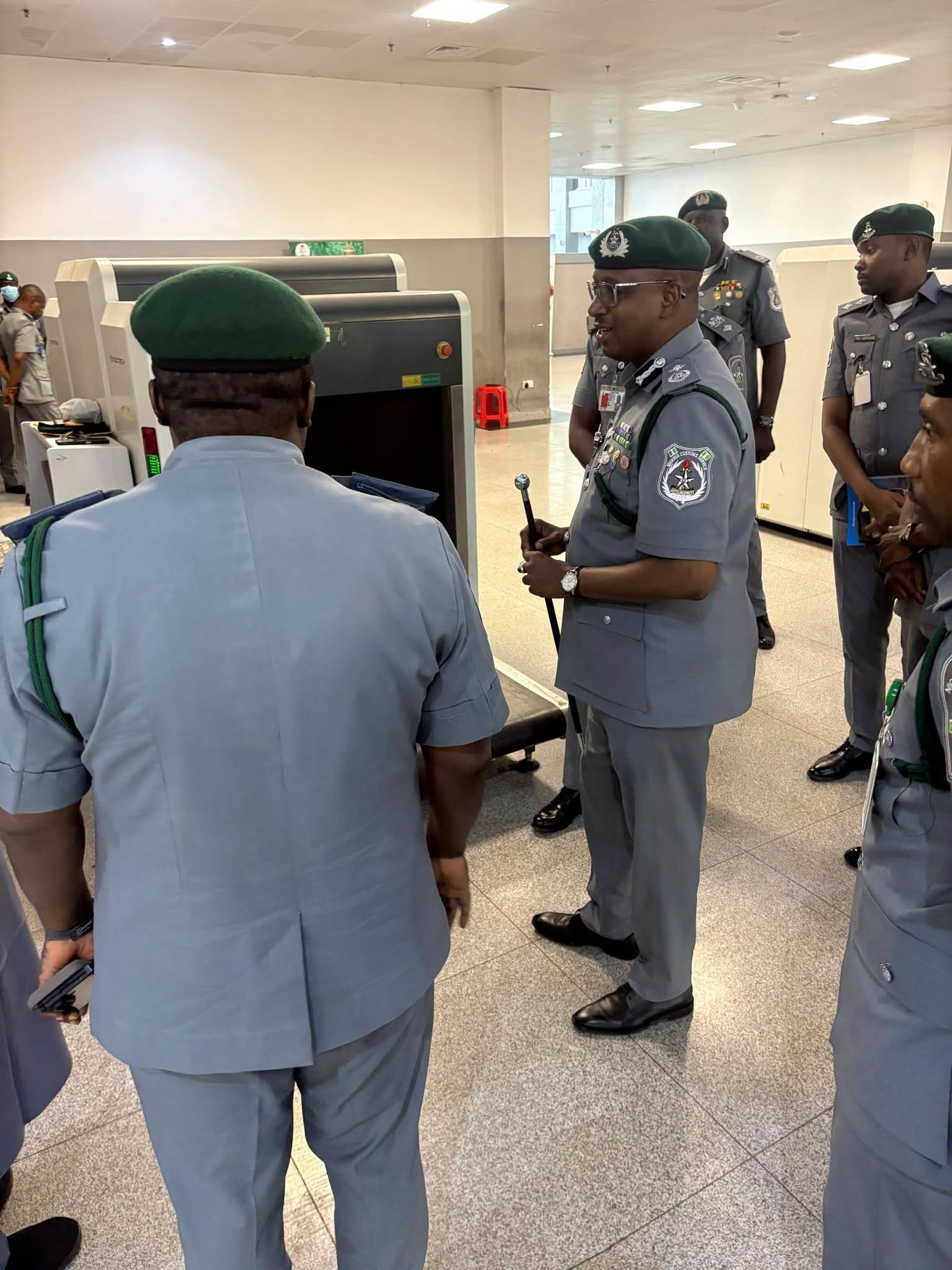
The Nigeria Customs Service (NCS) has commenced the deployment of advanced cargo scanning technology at the Mallam Aminu Kano International Airport (MAKIA) to accelerate cargo clearance, strengthen regulatory compliance and improve trade facilitation.
The initiative was disclosed on October 28, 2026, during a visit by a delegation led by the Acting Comptroller of Non-Intrusive Inspection Technology (NIIT), Deputy Comptroller of Customs Umar Madugu, to the Kano/Jigawa Area Command.
Read also: Beyond Barracks Project Rebrands as Defence Families Empowerment Foundation
The delegation, which included a representative of the Trade Modernisation Project (TMP), held a strategic meeting with the Acting Customs Area Controller, Deputy Comptroller Usman Adamu, to review progress and assess preparations for the deployment.
Speaking during the meeting, DC Adamu commended the Comptroller-General of Customs, Adewale Adeniyi, for driving reforms aimed at modernising the Service.
He said the scanning technology would improve cargo examination, facilitate faster clearance and align Customs operations with international best practices.
Read also: Fire Destroys 110 Structures at Kofar Ruwa Timber Market in Kano
The Acting Area Controller assured the visiting delegation of the Command’s readiness to support the successful installation and operation of the equipment.
In his remarks, DC Madugu explained that the technology would initially be deployed at key cargo facilities at MAKIA, with Skyway Aviation Handling Company (SAHCO) and Nigerian Aviation Handling Company (NAHCO) identified as the first beneficiaries.
He added that the Service was also planning to extend similar non-intrusive inspection technology to other strategic border locations across the Command and the country.
Following the meeting, DC Adamu led the delegation on an assessment tour of the proposed installation sites to evaluate their readiness ahead of the final deployment.
Read also: Gov Yusuf Moves to Appoint Spokesperson Sanusi Bature as Commissioner
The team also engaged stakeholders at the cargo terminals, who expressed support for the initiative and willingness to adopt the new technology.
The deployment forms part of the Nigeria Customs Service’s modernisation agenda, which seeks to leverage technology to enhance operational efficiency, strengthen cargo security and promote faster, transparent and seamless trade processes.