


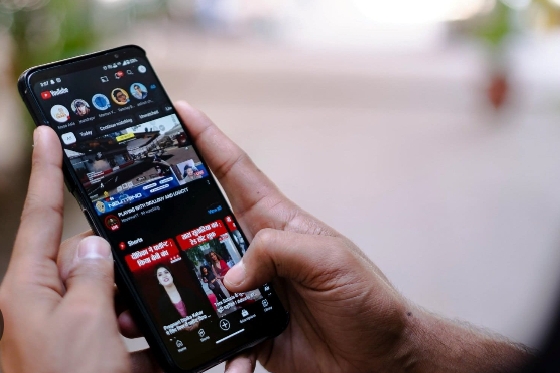
What was once a thriving street-side business in Kano is gradually losing its appeal as more Nigerians embrace the convenience of purchasing mobile data directly through banking apps and mobile network platforms.
Across the Kano metropolis, the familiar sight of customers crowding small kiosks and roadside shops to buy internet data has become less common.
Read also: BudgIT, Malala Fund Tackle Barriers to Girls’ Education in Kano
NDPC, LBS Partner to Advance AI, Data Protection
The shift reflects Nigeria’s growing digital financial ecosystem, where banks and telecommunications companies have simplified access to airtime and data bundles through mobile applications, USSD codes and internet banking services.
A visit to several commercial areas in Kano revealed that many data vendors now spend long hours waiting for customers, with some admitting that daily sales have dropped over the past few years.

Only a few years ago, buying recharge cards from vendors and converting them into data bundles was the norm.
The introduction of data-sharing services later created another business opportunity, allowing vendors to transfer data directly to customers after receiving payment.
Today, however, that business model is under increasing pressure.
A Kano resident Bello Haruna said he always purchase data from his bank account
Another resident, Rabi Musa, said she relies entirely on her mobile network operator’s application.
Not all customers have abandoned vendors completely.
Read also: Kano Targets Stable Power for Water Treatment Plants
For businessman Munzali Garba, the relationship with trusted vendors remains valuable.
Amina Isah and Talatu Haruna, both from Gurjiya Ward in Bunkure Local Government Area, said they prefer buying mobile data from local vendors because the service is convenient and allows them to top up whenever they need internet access for wattsapp.
They explained that they do not have bank accounts and were unaware that data could be purchased directly through banking platforms.
Despite retaining some loyal customers, many vendors acknowledge that the business is no longer as profitable as it once was.
Data trader Sayyadi Mijinyawa said a large proportion of his former customers now purchase data directly from their banks.
Another vendor, Abba Haladu, described the current situation as one of survival rather than growth.
To remain in business, many vendors have diversified their operations by selling mobile phone accessories, offering phone charging services, registering SIM cards where permitted, and carrying out other digital services that complement their existing businesses.
Industry observers say the trend is a natural consequence of increased digital adoption in Nigeria. As financial institutions and telecom operators continue to expand digital services, consumers are prioritising convenience, speed and security.
However, they note that the transition also presents challenges for thousands of small-scale entrepreneurs who built their livelihoods around data and airtime sales.
For many vendors in Kano, adapting to changing consumer behaviour has become essential.
Read also: Residents Seek Justice Over Demolished Zaria Property
Fraud, Logistics, Threaten Growth of Online Businesses in Kano
While technology has made internet access easier for millions of Nigerians, it has also forced small businesses to rethink their strategies in an increasingly digital economy.