


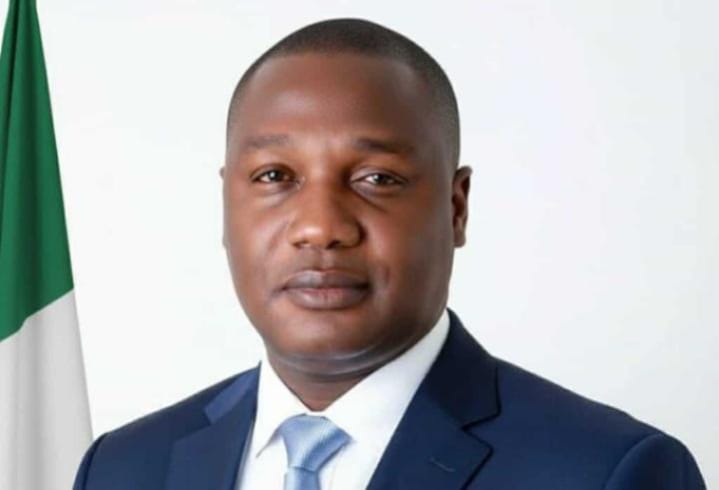
Ado Salisu
The Chairman, Board of Trustees of the Athletics and Other Sports Commission, an NGO advocating accountability and transparency in sports, Ahmed Shuaibu Gara Gombe, has defended the vote of confidence passed on the leadership of the Nigerian Football Federation (NFF), describing it as expected and within the rights of Congress members.
Read also: Nigeria’s Development at Risk Without Girls’ Education- UNICEF
Reacting to the outcome of the recent NFF Congress held in Yenagoa, Gombe said the endorsement of NFF President Ibrahim Gusau and his executive was not unprecedented, noting that similar actions had been taken in the past.
Speaking in a statement issued in Abuja, the sports entrepreneur and former chairman of Gombe State Football Association stressed that passing a vote of confidence is a normal practice within football administration.
“It is their right and normal to pass a vote of confidence. It has a precedent; it is not a new thing,” he said.

Gombe, however, used the opportunity to draw comparisons with the tenure of former NFF President Amaju Pinnick, arguing that the criticisms currently directed at the Gusau-led administration were selective.
“To think that this is the first time such endorsement is happening is wrong. A vote of confidence was also passed during Amaju Pinnick’s tenure despite what I consider more serious shortcomings,” he stated.
He alleged that Nigeria’s football sector suffered deeper challenges during Pinnick’s eight-year leadership, including financial mismanagement and administrative lapses, yet received institutional backing at the time.
Read also: HAFEDPOLY Kazaure Gets NBTE Approval for Additional Programmes
The outspoken sports administrator also questioned the credibility of some critics calling for reforms in the NFF, singling out former Super Eagles captain Mikel Obi for criticism.
“I have heard some ex-players talking about reforms. Where were they during those eight years? Why speak now?” he queried.
Gombe further raised concerns about the role of current National Sports Commission leadership, particularly Shehu Dikko, suggesting that meaningful reforms in Nigerian football may be difficult under the present structure.
He argued that calls for immediate leadership change within the NFF were unrealistic, insisting that continuity should be respected.
“If Amaju stayed for eight years, Gusau should also be allowed to complete his tenure. We cannot continue recycling leadership crises,” he said.
Beyond football, Gombe stressed that reforms should extend across the entire sports sector, including the National Sports Commission and other federations such as basketball and athletics.
He called for a comprehensive investigation into the administration of Nigerian football, tracing it back to the era of former NFF President Aminu Maigari, insisting that only a thorough review would address long-standing issues.
Read also: Adamawa in Mourning as 2nd Fufore LG Chairman Dies in 18 Months
“These challenges will persist until a proper investigation is conducted. Reform must start from the top, with accountability for how sports have been managed over the years,” he added.
Gombe concluded by warning against what he described as “selective attacks,” urging stakeholders to adopt a more consistent and transparent approach in addressing the problems facing Nigerian football.