


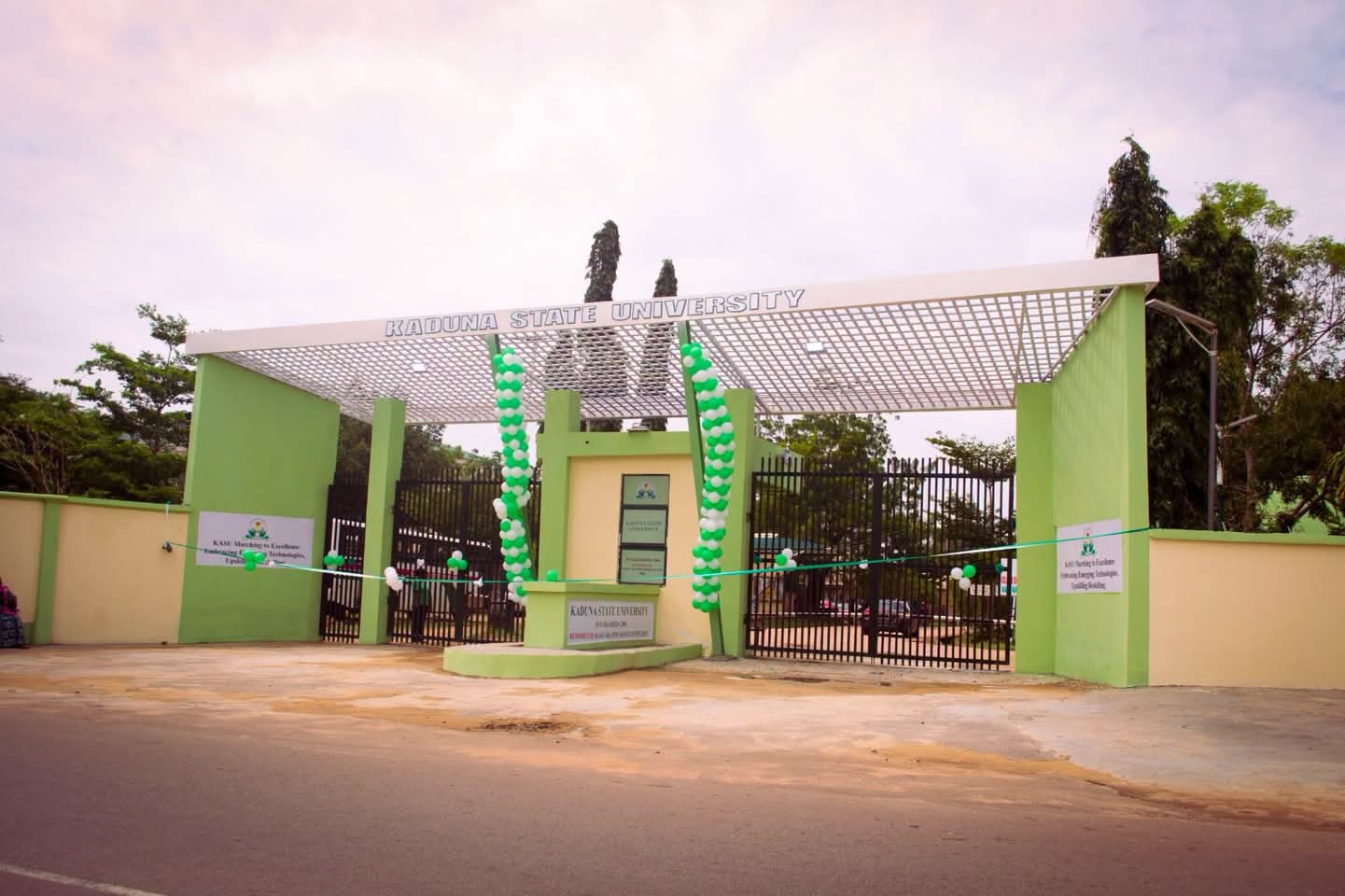
The Vice Chancellor of Kaduna State University (KASU), Professor Abdullahi Ibrahim Musa, has dismissed claims by the university’s chapter of the Academic Staff Union of Universities (ASUU) that about 200 lecturers have resigned over poor working conditions.
In a statement issued on Tuesday, Professor Musa described the claim as misleading and unsupported by the university’s records, urging the public to disregard it.
Read also: Federal Universities Get Green Light to Recruit Staff
ASUU, NAAT Emerge Winners of NWUK Sports Competition
He said staff movements resulting from resignations, retirements, transfers and the pursuit of other professional opportunities were normal within the university system and should not be presented without context as evidence of deteriorating working conditions.
The Vice Chancellor challenged ASUU-KASU to provide verifiable evidence of the alleged mass resignations, including the identities of affected lecturers, dates of resignation and reasons for leaving the institution.
He said public discourse about KASU should be based on facts and verifiable records to avoid creating unnecessary anxiety among students, parents and members of the university community.
Professor Musa said the administration of Governor Uba Sani had made significant investments in staff welfare since assuming office, including more than ₦800 million released for staff welfare over the past three years.
He added that ₦146 million had also been provided to clear withheld salaries and outstanding SIWES allowances inherited from previous administrations.
According to him, the university, Kaduna State Government and ASUU-KASU have established a ₦50 million monthly intervention to support the institution.
He further disclosed that in 2026 alone, the government had released more than ₦200 million in overhead funding for essential academic activities, including laboratory chemicals and reagents, students’ field trips and examinations.
The Vice Chancellor said the state government had also invested more than ₦300 million in the accreditation of over 57 academic programmes and resource verification for 60 postgraduate programmes by the National Universities Commission.
Read also: ABU SPESSE-CE Graduates 420 in Sustainability Training
He noted that KASU had secured full accreditation for seven professional programmes, including Nursing and Midwifery and Physiotherapy, as well as full accreditation for its newly established Digital Learning Centre.
Professor Musa also highlighted the establishment of 14 research centres and two specialised institutes, including the Digital Learning Institute, to promote multidisciplinary research, innovation and professional development.
He said the university had secured a ₦1 billion competitive TETFund grant for commercial agriculture, while its researchers attracted seven international research grants over the past three years, in addition to national and institutional grants.
The Vice Chancellor also cited the reduction of tuition fees across Kaduna State-owned tertiary institutions, including KASU, as part of efforts to improve affordability.
He said more than ₦1.6 billion had been paid in local and foreign scholarships to support indigent students from the state studying within Nigeria and abroad.
According to him, KASU has also expanded academic and research partnerships with institutions and organisations in countries including Russia, Egypt, the United Kingdom, Indonesia and China.
Kebbi Releases N2.07bn for Tertiary Institutions, Staff Welfare
Professor Musa acknowledged that some staff welfare issues remained unresolved, but said the university management was committed to addressing them progressively and sustainably.
He appealed to ASUU-KASU to reconsider any action that could disrupt the academic calendar and impose hardship on students and parents, stressing that established channels of engagement remained open.
The Vice Chancellor urged the union to focus on the legitimate welfare concerns of its members and avoid being drawn into partisan politics.
Read also: Tinubu Hails Mustapha Abdullahi on NBBF Presidency
He said the welfare of lecturers, stability of the university and the education and future of students should remain the priority.
Professor Musa maintained that constructive dialogue, rather than disruption of academic activities, remained the most effective approach to resolving outstanding issues, adding that industrial action should be considered only as a last resort.