


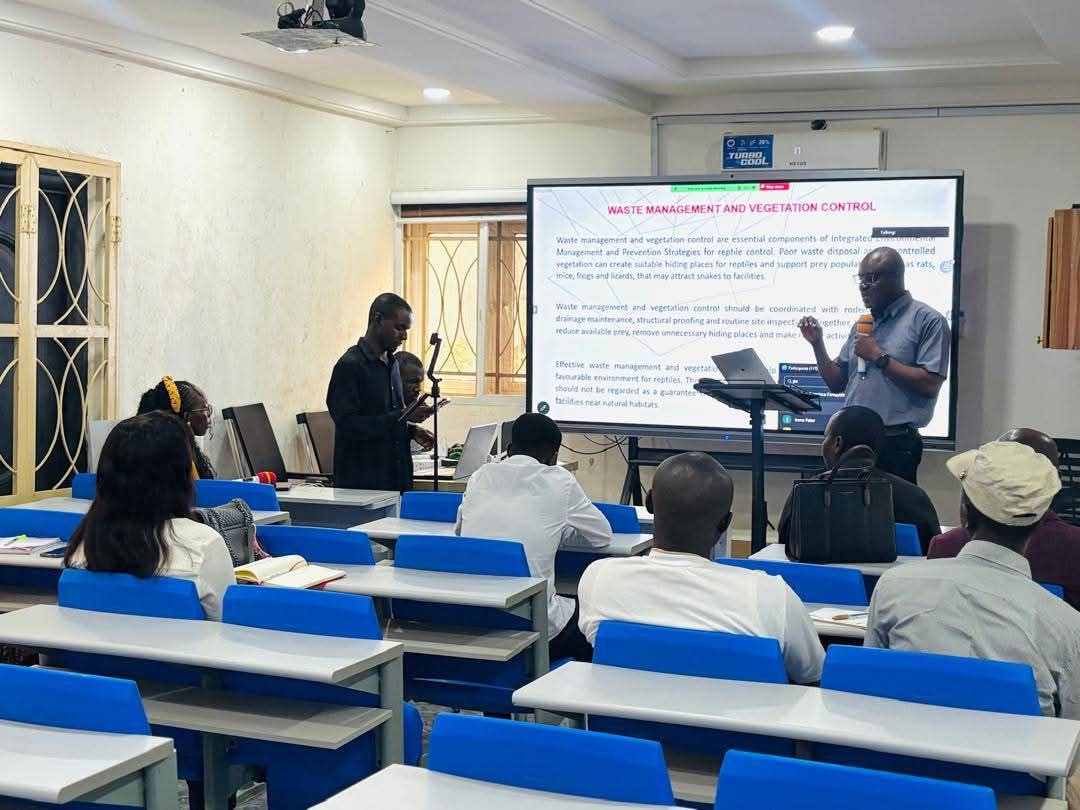
The Environmental Health Council of Nigeria (EHCON) has commenced a two-day training programme for Environmental Health Officers on the control of reptiles and venomous arthropods in homes and offices.
The training was held at the EHCON Resource Centre, Gwarinpa, Abuja, by the Registrar of the Council, Dr Yakubu Mohammed Baba, represented by San. Victor Eborh Uguru.
Read also: Kano Boosts Adolescent Healthcare with 743 Facilities
Speaking on behalf of the Registrar, Uguru appreciated the support for the initiative, noting that the programme would focus on practical demonstrations and real-life applications to strengthen participants’ professional skills.
He welcomed participants attending physically and virtually and encouraged them to actively engage in the sessions and share their knowledge and experiences.
The Director of Sammy Roy Management Academy highlighted the safety risks associated with pest-related incidents, including animal bites, medical emergencies and psychological distress.

Read also: KIRCT Deepens Research into Vaccines, Breast Cancer
He stressed the need for effective prevention and control measures in homes, schools, offices and other facilities.
The training aims to equip Environmental Health Officers with practical skills to identify, prevent and safely respond to encounters with dangerous species while promoting responsible pest management and environmental safety.
In his keynote address, the Managing Director of Gold Spring Outsourcing Limited and PCO, Mr Jeremiah Ubah, emphasised environmental management as a key strategy for preventing encounters with snakes and other dangerous species.
He recommended proper waste disposal, vegetation control, drainage maintenance and the removal of potential hiding places around buildings.
Read also: FG Moves to Curb Antibiotic Misuse, Combat Drug Resistance
Ubah also advised members of the public against handling or attempting to kill snakes, urging them instead to contact trained wildlife handlers for safe removal.
The programme is expected to strengthen the capacity of Environmental Health Officers to manage risks associated with reptiles and venomous arthropods and promote safer living and working environments.