

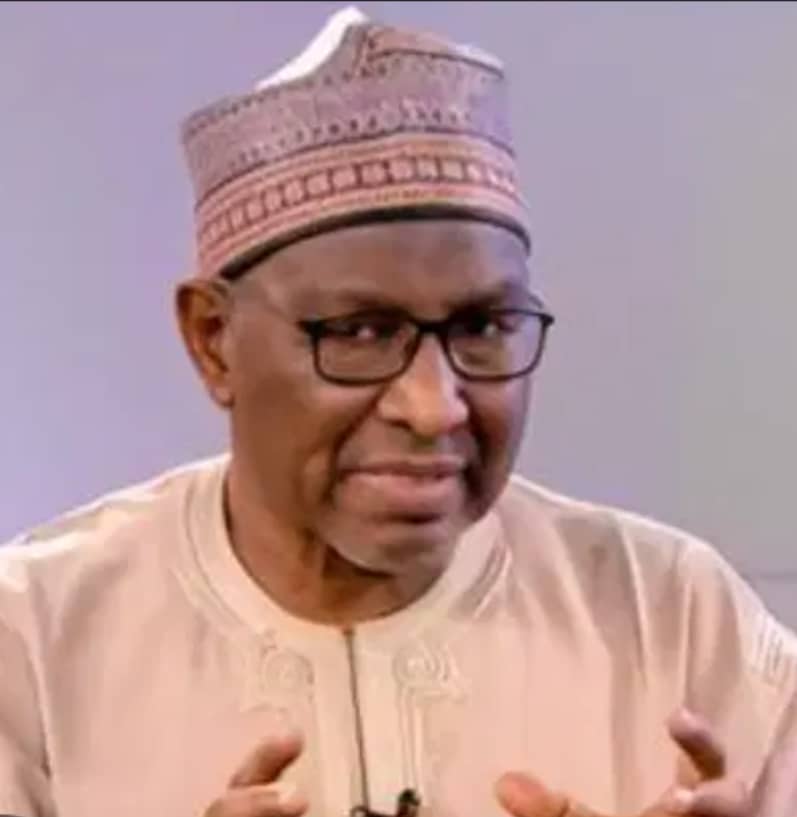
Dr Usman Bugaje, a scholar and political activist, has described the Muslim-Muslim presidential ticket as a “fraud” allegedly promoted by politicians to deceive Muslim voters for electoral gains.
Bugaje made the remarks at a one-day summit organised by the Islamic Forum of Nigeria in Kano on Saturday. The summit, themed “Dilemma of Muslims in Nigeria: The Way Forward,” brought together Islamic scholars, professionals and other stakeholders to discuss challenges confronting Muslims in Nigeria.
Read also: ACF Appoints Three-Member Interim Leadership in Kano
He argued that the religious identity of candidates does not necessarily guarantee the protection of Muslim interests, citing persistent insecurity and economic hardship as evidence of what he considered the failure of political leaders to address the concerns of Muslim communities.
According to him, politicians had used the Muslim-Muslim ticket to secure electoral support without adequately addressing the challenges affecting the people they claimed to represent.
Bugaje cited insecurity in parts of Northern Nigeria, alleging that Boko Haram insurgents continued to exercise influence in communities around Maiduguri, where they reportedly collected taxes and held court sessions to settle disputes among residents.
He described the security situation in Sokoto State as worrying, claiming that residents travelling from the state capital to Isa Local Government Area could travel only twice a week, with support from the Joint Task Force (JTF).
The scholar linked the security challenges to the broader difficulties confronting Muslim communities, arguing that political representation based on religious identity had not translated into improved safety and living conditions.
He also raised concerns about Nigeria’s dependence on imported medicines, claiming that about 70 per cent of drugs used in the country were imported.
Bugaje argued that domestic pharmaceutical production and the protection of territorial integrity were important measures of a country’s independence.
He further expressed concern over drug abuse among young people and women, describing it as a threat to the social and economic wellbeing of Muslim communities.
The scholar’s remarks formed part of wider discussions at the summit on insecurity, poverty, religious discrimination, governance and the impact of government policies on citizens.
Earlier, Professor Sulaiman Abdullahi Karwai of Ahmadu Bello University, Zaria, said the Muslim-Muslim ticket did not necessarily represent Muslim interests, arguing that politicians had adopted the arrangement as an electoral strategy because Muslims constitute a large proportion of Nigeria’s population.
Karwai, however, said the emergence of a Muslim presidential candidate in the 2023 election, despite the presence of three Muslim presidential candidates, demonstrated the political strength of Muslim voters.
Read also: BUK Interfaculty Games: Students Battle for Sporting Glory
He lamented the economic hardship Nigerians face, citing inflation, fuel subsidy removal, exchange-rate changes, and tax reforms as factors that worsened poverty.
Karwai also raised concerns about insecurity, including the reported abduction and killing of a professor and a nurse at Ahmadu Bello University, Zaria, and what he described as inadequate federal capital projects in Muslim-majority states.
He recalled that the late General Sani Abacha established the Petroleum Trust Fund (PTF) to cushion the effects of increases in fuel prices, saying its interventions supported health and educational institutions.
The summit’s chairman, Alhaji Gidado Mukhtar, rejected the description of Nigeria as a secular country, arguing instead that it was a multi-religious nation in which citizens should be free to practise their chosen faith.
He said the summit would focus specifically on the challenges confronting Muslims in Nigeria, including insecurity, religious discrimination and persecution.
The National Chairman of the Islamic Forum of Nigeria, General Ahmad Daku (rtd), represented by his deputy, Alhaji Muhammad Tukur Bello, said the meeting was convened to examine the situation of Muslims in the country and chart a way forward.
The forum’s Acting Executive Secretary, Alhaji Dalhatu Muhammad Gwarzo, said the summit was designed to deliberate on major challenges affecting Muslims, including banditry, kidnapping and religious discrimination.
Gwarzo said the summit also called on state governors and members of the National and State Assemblies to remember the plight of Muslims and take concrete steps to address their challenges.
He said the leaders had been urged to act decisively to find solutions to the problems confronting the Muslim community, adding that Allah was fully aware of their situation.
Gwarzo also called on Muslims and other Nigerians to intensify prayers for divine intervention in the country’s challenges.
He urged Imams to consistently pray for Allah’s guidance and solutions to the nation’s problems and to sensitise the Muslim community on the importance of prayer, particularly during Friday sermons.
The forum said a committee would be constituted to review the summit’s resolutions and develop an actionable plan for implementation.
Read also: Gombe Trains 104 Health Workers to Reduce Newborn Deaths
In its communiqué, the summit called for stronger security measures, a review of economic policies worsening hardship, fairness in federal appointments, protection of the right to wear hijab and greater cooperation among Muslim organisations.
It also urged Muslim communities and organisations to invest in education, healthcare, economic empowerment and Islamic social finance as part of efforts to address poverty and improve human development.