

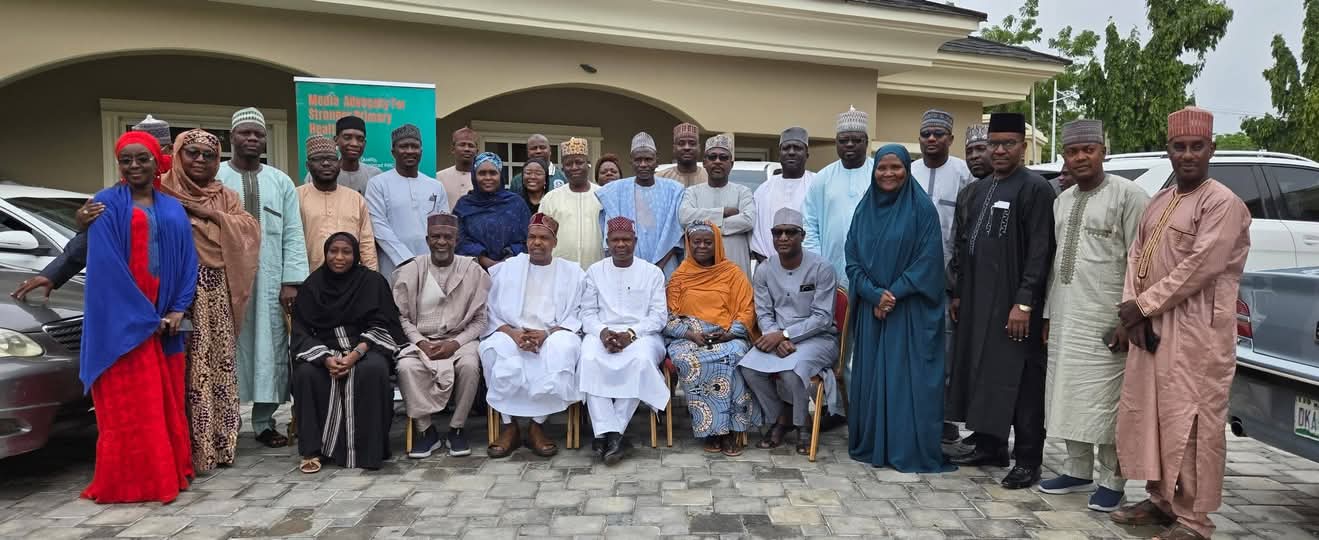
The Kano State Commissioner for Health, Dr. Abubakar Labaran Yusuf, has called on journalists to uphold professionalism, accuracy, and ethical standards in health reporting to strengthen public trust and improve health outcomes.
He made the call while declaring open a One-Day Roundtable Discussion with Media and Health Leadership aimed at strengthening journalists’ capacity to generate evidence-based stories using Integrated Supportive Supervision (ISS) data, Reproductive, Maternal, Newborn, Child and Adolescent Health (RMNCAH) indicators, and Primary Health Care Facility Assessment Tool (PHC-FAT) scorecards.
Read also: NMA Urges Young Doctors to Rethink Migration as Brain Drain Persists
Dr. Labaran described journalism as a powerful tool that shapes public opinion, noting that many people regard information published by journalists as the truth. He therefore urged media practitioners to verify information thoroughly and carefully consider the impact of every report on the public.
According to him, journalists should prioritize public education and preventive health messaging rather than creating fear or panic during disease outbreaks. Using cholera as an example, he advised the media to focus on prevention and public health guidance instead of sensationalizing outbreaks.
The commissioner also encouraged members of the Kano Health Journalism Network to sustain regular discussions on health issues through dedicated platforms that address misconceptions, misinformation, and myths surrounding maternal, newborn, child, and adolescent health.
Dr. Labaran further urged journalists to maintain close engagement with health authorities to ensure timely clarification of emerging issues and prevent the spread of misinformation.
Read also: Continuity and Shared Development: My Position on Kano State and Nigeria
He also appealed to media practitioners to support government health programmes by monitoring the proper utilization of health interventions at the community level and encouraging beneficiaries to make appropriate use of healthcare commodities.
Earlier, the Executive Director of the International Society of Media in Public Health (ISMPH), Mrs. Moji Makanjuola, MFR, represented by the organisation’s Programmes Director, Mr. Solomon Dogo, said the roundtable was designed to bridge the gap between technical health data and public communication.
She noted that while health institutions generate valuable evidence through ISS, RMNCAH indicators, PHC-FAT scorecards, and health insurance data, such information often remains underutilized because it is not translated into messages that resonate with the public.
Mrs. Makanjuola said the forum brought together health leaders, journalists, development partners, and civil society organisations to explore how health evidence can be transformed into accurate, compelling, and solutions-focused stories that promote accountability and improve health outcomes across Kano State.
Also speaking, the ISMPH Kano Director, Sabuwa Yahaya, said the training was designed to strengthen journalists’ capacity to interpret and report health data accurately, improve collaboration between media organisations and public health institutions, and promote the use of evidence-based information in public discourse.
Read also: Kano Assembly Confirms Six Commissioner Nominees
The roundtable featured panel discussions and technical presentations on RMNCAH, KACHMA, PHC-FAT scorecards, and in-depth review of ISS data and .
The event was attended by the DG KSPHCMB, DG DMCSA, KanSLAM,KAHJON and representatives of development partners, including LESDEL, CCSI, and IBP.