


Ibrahim Sulaiman
Ahmadu Bello University (ABU), Zaria, has highlighted the potential of agricultural research and innovation to improve farmers’ productivity, increase food production and strengthen food security in Nigeria.
Read also: Kebbi Begins 34km Road Projects to Boost Rural Connectivity
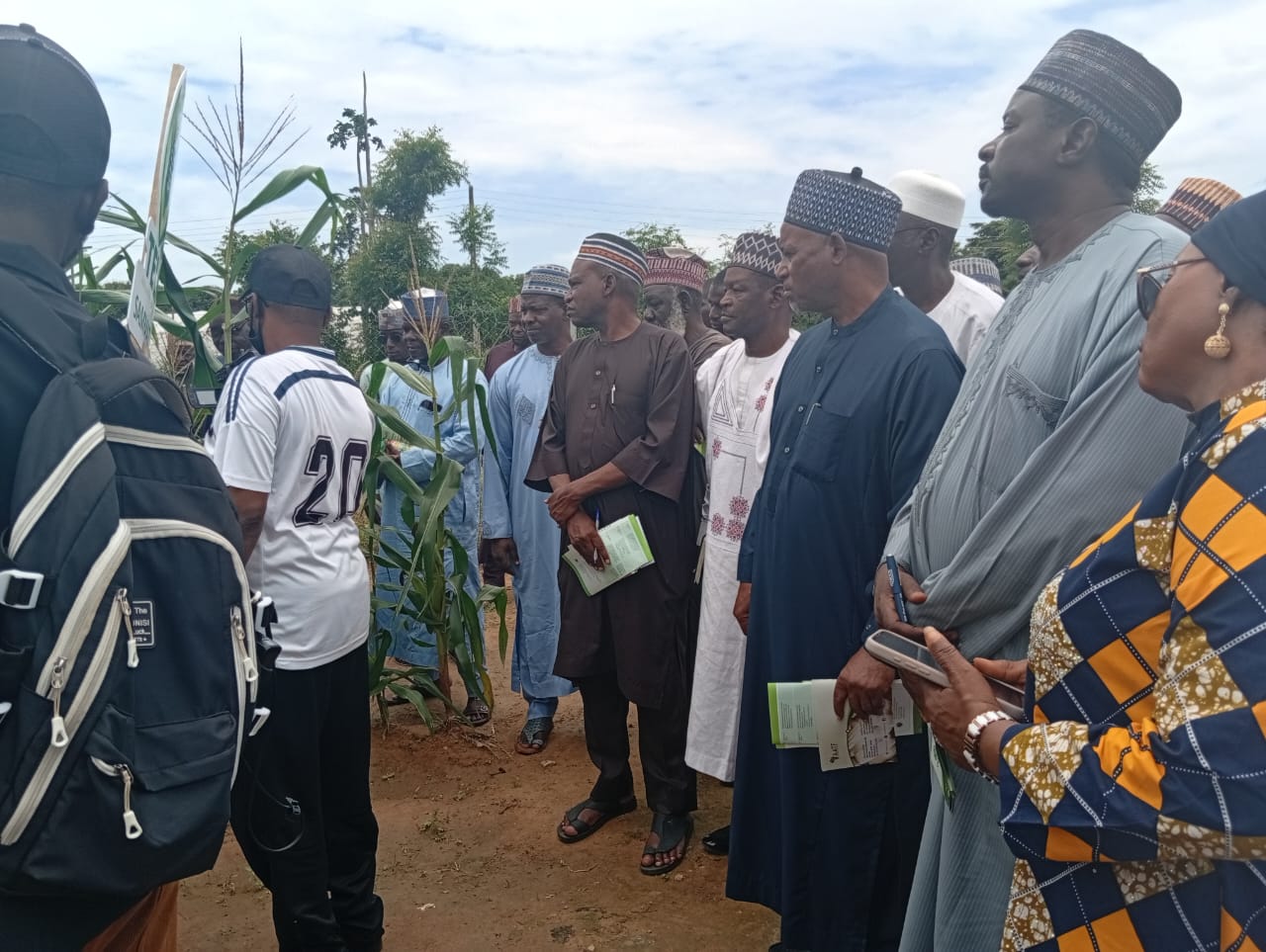
The Vice-Chancellor of the university, Professor Adamu Ahmed, stated this at a field day showcase organised by the Institute for Agricultural Research (IAR), ABU Zaria, to demonstrate the performance and potential of TELA maize to farmers and other stakeholders.
Represented by the Deputy Vice-Chancellor, Advancement, Research and Innovation, Professor Aliyu Rafin Dadi Sunusi, the Vice-Chancellor said ABU researchers were working closely with farmers to promote agricultural technologies capable of addressing challenges confronting the sector.
He said TELA maize could contribute to increased food production because of its ability to withstand drought and reduce losses associated with pests.

Professor Ahmed explained that TELA maize is similar to conventional maize in terms of nutrition and general use, stressing that its major advantage lies in its improved characteristics.
He added that ABU, through the Institute for Agricultural Research, was actively involved in the research, development and propagation of the TELA maize variety.
Also speaking, the Director of the Institute for Agricultural Research, Professor Ado Yusuf, represented by the TELA Programme Coordinator in Nigeria, Professor Rabi’u Adamu, described TELA maize as a new agricultural technology with significant potential to contribute to Nigeria’s food security.
He urged farmers to embrace research-based innovations that could increase productivity and help them respond to emerging challenges in agriculture.
Read also: Stop Playing Politics as a Do-or-Die Affair-Wike to Opposition
The Executive Director of the National Agricultural Extension and Research Liaison Services (NAERLS), Professor Sani Yusuf Ahmed, said improved maize varieties could significantly increase yields, particularly among smallholder farmers.
Professor Ahmed identified low agricultural productivity as a major challenge facing farmers, noting that the use of improved seeds could account for a substantial part of a farmer’s yield potential.
He said testimonies from farmers who cultivated the improved variety indicated yield increases of more than 40 percent compared with conventional maize varieties.
He encouraged farmers to learn from early adopters and consider planting improved varieties to increase productivity, boost household income and contribute to food security.
Professor Ahmed said the field engagement was designed to give farmers first-hand information and practical experience on the performance and economic benefits of improved agricultural technologies.
He urged farmers to take advantage of innovations developed by agricultural research institutions to address low yields, climate change, pests and diseases.
Earlier, the Country Director of TELA, Mr Yarama Ndirpaya, said the showcase was organised to enable farmers to see the technology first-hand, assess its performance and make informed decisions on adoption.
Read also: Guinness Record: MAAUN Student Completes 120-Hour Sewing Marathon
In a goodwill message, the Chairman of the All Farmers Association, Alhaji Nuhu Aminu, urged farmers to cultivate improved and high-yielding crop varieties capable of withstanding drought and other harsh weather conditions.
He said adopting improved seeds would enable farmers to increase yields, enhance food production and improve their livelihoods.