


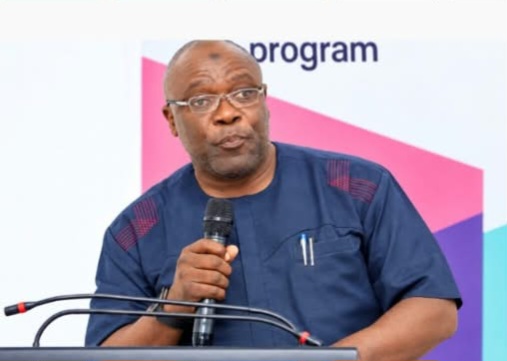
The Executive Director of Fridabs SolaceBase Communications Limited and Publisher of SolaceBase Online Newspaper, Comrade Abdullateef Abubakar Jos, has urged journalists to prioritise verification and accuracy in reporting ahead of the 2027 general elections.
Jos gave the advice while presenting a paper titled, “Fake News, Misinformation in Electioneering and Digital Tools to Fact-Check Pictures, Videos and Information,” at the 2026 Kaduna Retreat of the Kano Correspondents Chapel of the Nigeria Union of Journalists, NUJ.
Read also: RMAFC Chairman Demands Accountability, Discipline
The retreat, held in Kaduna under the theme, “2027 General Elections: Navigating Legal, Security and Ethical Challenges in the Media,” brought together journalists and other stakeholders to examine legal, security and ethical challenges associated with election reporting.
Jos said the rapid growth of social media had made it possible for false and misleading information to spread within minutes, noting that photographs, videos, audio recordings, screenshots and alleged election results could reach thousands of people before their authenticity was established.
He identified fake election results, false statements attributed to politicians, manipulated photographs, old videos presented as current events, fake endorsements, false claims about candidates withdrawing from elections, fabricated INEC statements and misleading claims about BVAS as some of the forms of misinformation journalists could encounter during elections.

According to him, the emergence of artificial intelligence had further complicated the information environment by making it easier to produce manipulated audio, videos, photographs and other forms of synthetic media.
The facilitator therefore urged journalists to make verification a central part of their professional practice, stressing that the responsibility of the media goes beyond disseminating information to establishing its authenticity.
“Speed is important in journalism, but accuracy is more important,” Jos said.
He advised journalists to clearly explain what is false or misleading about a particular claim rather than simply describing it as “fake news.”
Jos explained that misinformation, disinformation and malinformation were different forms of information disorder.
He said misinformation involved false information shared without the intention to deceive, while disinformation involved false or misleading information deliberately created or distributed to deceive or cause harm.
He added that malinformation involved genuine information deliberately presented or used in a harmful or misleading manner.
Jos said election periods were particularly vulnerable to information disorder due to political competition, emotional reactions, partisan loyalty, the speed of social media and information gaps.
He warned that false information could influence voters’ perceptions, discourage voter turnout, damage reputations, undermine confidence in the Independent National Electoral Commission, INEC, create ethnic or religious tension and contribute to post-election violence.
The publisher said journalists should be particularly cautious when dealing with political claims, stressing that information supporting one political party or attacking another should attract greater scrutiny.
Read also: Kano, NWDC to Harmonise Data for Rural Dev Projects
“When a claim supports one political party or attacks another, the journalist should become more skeptical, not less skeptical,” he said.
Jos also introduced participants to digital tools that could assist in verifying photographs, videos, locations and online claims.
He identified Google Lens and reverse-image search as useful tools for tracing earlier versions and original sources of photographs, while TinEye could help establish previous appearances of images.
He also recommended InVID and WeVerify for video verification and keyframe extraction, as well as Google Maps and Google Earth for checking locations through buildings, roads, landmarks and other geographical features.
Jos said the Internet Archive’s Wayback Machine could also assist journalists in examining older versions of websites and previously published online materials.
On artificial intelligence and deepfakes, he urged journalists to be increasingly alert to AI-generated photographs, cloned voices, fabricated interviews, fake political endorsements and manipulated videos.
He, however, cautioned against declaring material AI-generated simply because it appeared unusual, stressing that technical indicators should be combined with source verification and independent corroboration.
Jos suggested a simple verification process for journalists: “Detect, investigate, corroborate and conclude.”
He further encouraged newsrooms to adopt a “Stop, Check, Trace and Confirm” approach before publishing sensitive election-related information.
The facilitator advised journalists to establish who created the information, what exactly was being claimed, when and where an event occurred, why the information was being circulated and what evidence supported the claim.
He described the question, “How do we know?” as one of the most important questions journalists should develop as a professional reflex.
Jos also urged journalists to use precise verdicts when assessing disputed information, including “true,” “false,” “misleading,” “out of context,” “manipulated” and “unverified,” noting that unverified was a legitimate journalistic position where available evidence was insufficient to establish the truth.
He warned against unnecessarily amplifying false claims, saying journalists should ensure that verified information and corrections remain at the centre of reports when false claims must be reported.
Read also: Minister Defends Tinubu’s Economic Reforms, Promises Relief for Nigerians
Jos concluded by urging journalists covering the 2027 elections to combine traditional journalistic principles with digital verification skills, stressing that the credibility of the media would depend largely on its ability to distinguish facts from falsehoods.
He said the responsibility of an election journalist was not to be the fastest person to spread information but to ensure that information was accurate, properly contextualised and worthy of public trust.