


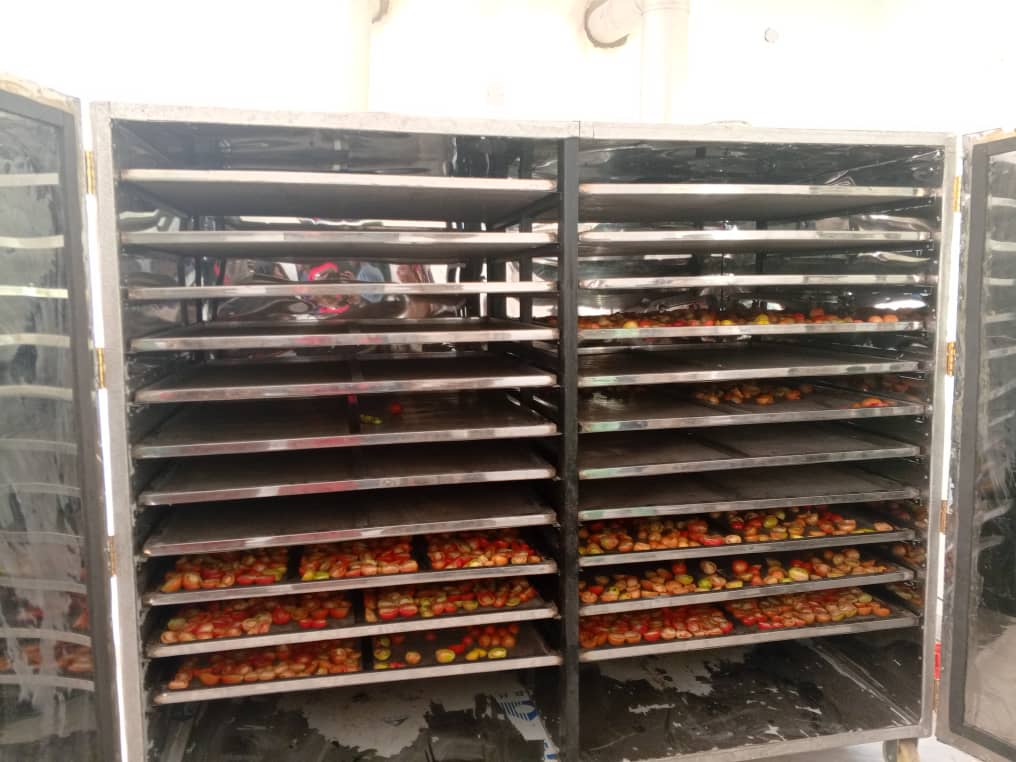
The World Food Programme (WFP), in collaboration with the Mastercard Foundation, implemented by Self Help Africa, has launched a ₦100 million solar drying hub in Kura Local Government Area of Kano State to create sustainable livelihoods for 5,000 youths within the agricultural value chain.
The initiative is part of broader efforts to strengthen food systems and promote enterprise-driven development across the state.
Read also: Why Kano Govt Is Bringing Intellectuals Into Its Dev Agenda-Waiya
CDA BUK, WOFAN Partner to Train 300 Agriculture Students Annually
Speaking at the launch, Joy Aderele, Country Director of Self Help Africa, described the facility as a shift from traditional aid to job creation and business development.
She said the hub would provide direct employment opportunities for young people in Kura and surrounding communities, particularly in horticulture and value-added sectors.

Aderele noted that Kura is widely known for its horticultural produce, especially tomatoes, peppers and onions, which are supplied to markets across Kano and beyond.
However, she explained that farmers often suffer heavy losses during periods of glut due to inadequate storage facilities and falling market prices.
“When there is glut and storage is poor, farmers lose income and produce goes to waste,” she said, adding that the solar drying hub provides a practical solution to the challenge.
According to her, the solar-powered technology enables farmers and young entrepreneurs to preserve produce, add value and extend shelf life, allowing them to sell beyond the immediate harvest period.
Read also: Ondo Air Crash: NSIB Ready to Help NAF Unravel Cause
AGROW: FG’s $500m Initiative Set to Drive Sustainable Agricultural Growth
Explaining the technical capacity of the hub, the senior program officer self help Africa who doubles as head of office Kano Hajara Muhamamad,said the facility comprises a solar dryer capable of drying one tonne of tomatoes within four to six hours, and a UV dryer that protects produce from environmental damage during processing.
She hinted that, the innovation is projected to reduce post-harvest losses in the area by up to 50 per cent, thereby increasing farmers’ earnings and improving environmental sustainability.
“The hub operates as a community-based commercial model managed by cooperatives to ensure sustainability, with farmers paying a token for services rendered”
In her remarks, WFP representative Esther Ogundari commended local authorities and community leaders for supporting the project and encouraged youths, particularly women, to take advantage of the opportunity to boost their incomes.
She highlighted Kura’s strong agricultural potential, noting that access to water and fertile land positions the area for increased productivity and expanded market access.
Commissioning the facility, Chairman of Kura Local Government Area, Alhaji Rabiu Abubakar, described the hub as the first of its kind in the community and said it would go a long way in boosting agricultural productivity to global standards.
The District Head of Kura, Alhaji Lamido Abubakar, called for proper maintenance and sustainability of the facility to ensure it achieves its intended objectives.
Read also: V-PeSDI, Sa’adatu Rimi College Unite to Advance Disability Inclusion
Speaking on behalf of beneficiaries, a physically challenged participant, Malam Rabi’u Balarabe, said he received training on modernised drying of vegetables and other perishable farm produce, as well as business planning to effectively utilise the hub.
He expressed optimism that the facility would improve incomes and reduce wastage among smallholder farmers.