


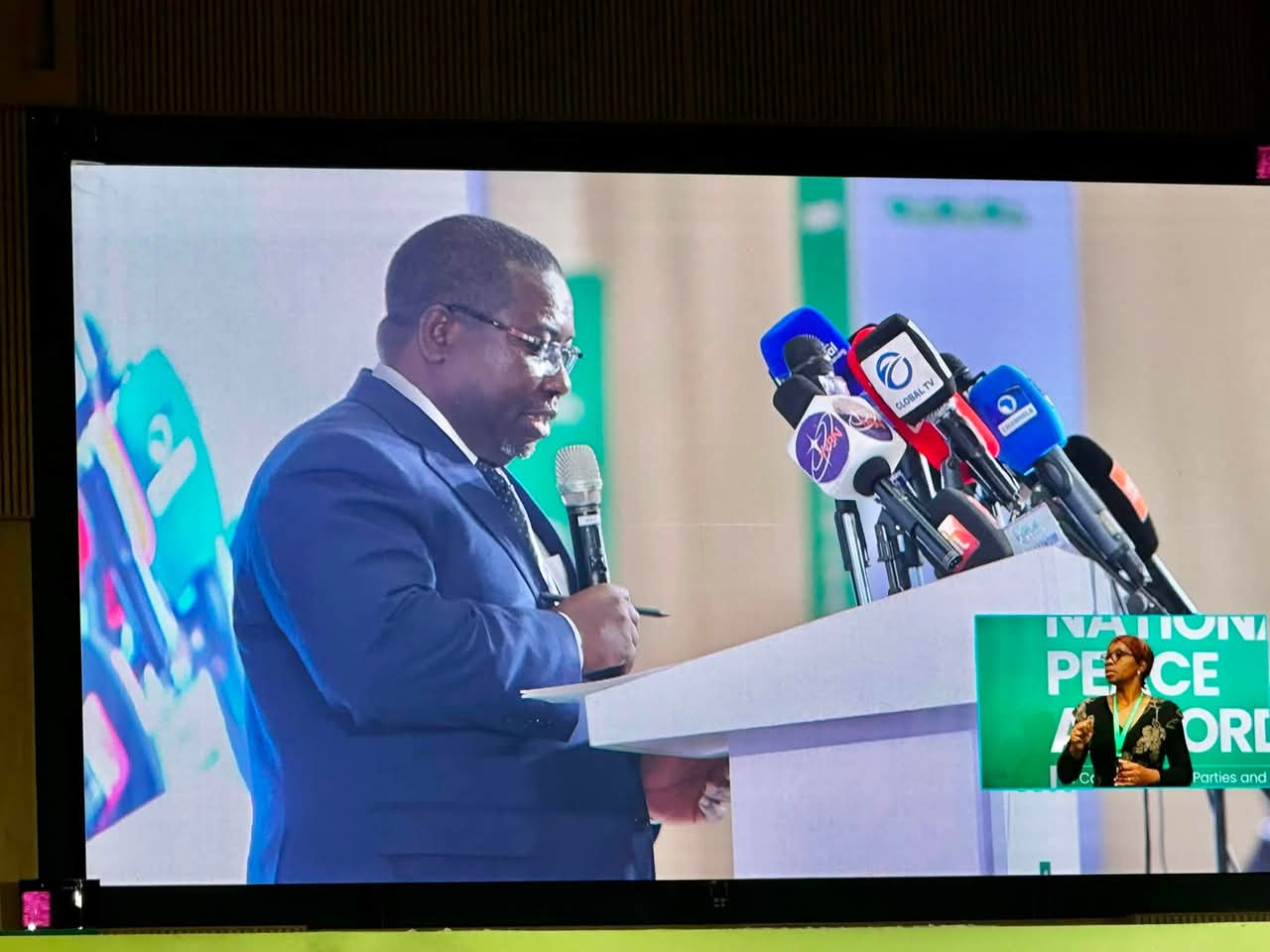
The Chairman of the Independent National Electoral Commission (INEC), Professor Joash Amupitan, SAN, has urged political parties and candidates contesting the 2027 General Election to uphold the commitments contained in the National Peace Accord.
Professor Amupitan made the call in Abuja during the signing of the First National Peace Accord by political parties and candidates ahead of the 2027 elections.
Read also: Affordable Housing: FG Advances 10,000 Units Across Nigeria
Osun 2026: INEC Closes Situation Room, Begins Preparations for 2027 Elections
He warned that the credibility of the elections would depend not only on INEC but also on the conduct of political actors, their supporters and campaign organisations.
The INEC Chairman said August 19, 2026, marks the commencement of public campaigns and rallies for the 2027 General Election.

He said the Presidential and National Assembly elections are scheduled for January 16, 2027, while the Governorship and State Houses of Assembly elections will hold on February 6, 2027.
Professor Amupitan described the signing of the accord as a critical milestone in the electoral process, stressing the need for political actors to establish ethical boundaries ahead of campaigns.
He urged parties and candidates to focus on issue-based campaigns and avoid character assassination, identity manipulation and inflammatory rhetoric.
The INEC Chairman warned that the accord would have little meaning if its provisions were not respected by party supporters and campaign structures.
He called on presidential candidates and party leaders to ensure that the commitments were communicated to state supporters, local government executives, ward canvassers and grassroots supporters.
Professor Amupitan also warned against incitement, the use of private armed groups and digital disinformation, saying such practices could undermine the electoral process even before Election Day.
Read also: Speaker Commissions Soba Projects to Boost Education, Healthcare
He assured Nigerians that INEC was committed to improving the transparency of the 2027 elections, including through additional measures in the result-management process.
The Chairman of the National Peace Committee, former Head of State, General Abdulsalami A. Abubakar, GCFR, represented by General Martin Luther Agwai, CFR, said the committee had facilitated 30 peace accords since 2015.
According to Agwai, five were national-level accords ahead of the 2015, 2019 and 2023 general elections, while 25 were facilitated at the sub-national level, including states that conducted off-cycle elections.
He said the committee had also established independent state-based peace structures in 23 states to complement its national efforts.
Agwai explained that the issue-based campaign component of the accord was introduced in 2019 to encourage parties and candidates to focus on policies, programmes and ideas rather than sentiments and personal attacks.
He urged political actors to compete fairly, debate opposing views respectfully, mobilise supporters peacefully, protect voters and respect electoral institutions.
Representing the Inspector-General of Police, Deputy Inspector-General of Police Umar Shehu Nadada said the Nigeria Police Force would remain professional and impartial throughout the electoral process.
He said the police would work with INEC, the military, intelligence agencies and other security and law-enforcement bodies to provide a secure environment for peaceful political activities and credible elections.
Nadada, however, stressed that security agencies could not secure the elections alone, urging political parties and candidates to take responsibility for the conduct of their supporters.
He appealed to political leaders to stop mobilising young Nigerians for political violence and instead make them instruments of democratic renewal.
Read also: 2027: Kebbi Backs Tinubu’s Re-election Bid, Says Yari
INEC Resumes Second Phase of Continuous Voter Registration
The signing of the First National Peace Accord marks the formal commencement of a crucial phase in preparations for the 2027 General Election.