


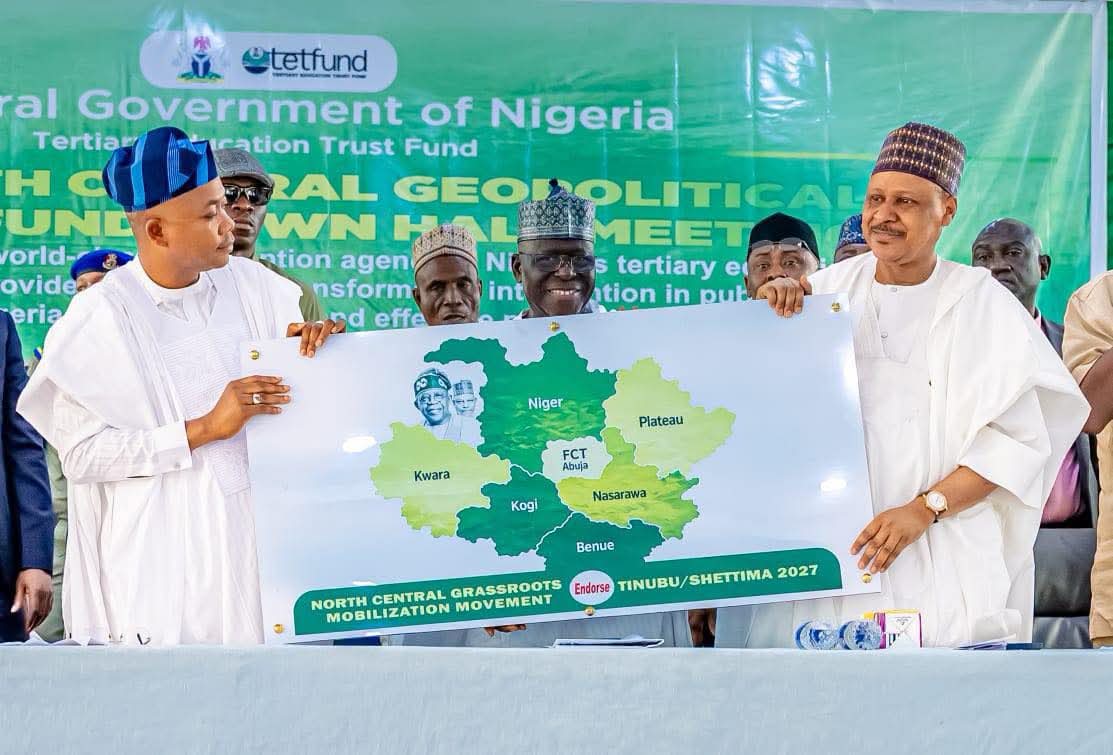
The Minister of Information and National Orientation, Mohammed Idris, says sustained investment in tertiary education through the Tertiary Education Trust Fund (TETFund) will help unlock the vast agricultural, mineral, energy and economic potential of Nigeria’s North Central region.
Idris stated this in Lokoja, Kogi State, at the 2026 TETFund North Central Zonal Town Hall Meeting.
Read also: UNICEF Seeks Increased Funding for Child Nutrition in Adamawa
NWUK Seeks REA, TETFund Support for Solar Power
The Minister said tertiary institutions across the region must align their teaching, research and innovation with the development needs of their communities and the wider economy.
He stressed that universities, polytechnics and colleges of education should produce graduates with practical skills required to drive agriculture, mining, manufacturing, technology and other critical sectors.
“Our universities, polytechnics and colleges of education must therefore be closely connected to these opportunities, producing the scientists, engineers, agricultural experts, technicians and entrepreneurs required to unlock the vast potential of the North Central,” he said.
Idris said the Federal Government’s commitment to tertiary education was reflected in the 2026 TETFund intervention allocations, with approximately N2.53 billion for each public university, N1.87 billion for each polytechnic and N2.06 billion for each college of education.
He explained that the allocations were intended to translate into improved learning and research environments through the provision of laboratories, lecture halls, modern libraries and support for research activities.
“These are not simply budgetary figures. They represent laboratories that can be equipped, lecture halls that can be built, libraries that can be modernised, research that can be supported and students who can learn in better environments,” Idris said.
The Minister called for stronger collaboration between tertiary institutions and industry, noting that higher education must go beyond producing graduates to promoting research, innovation, entrepreneurship and job creation.
Read also: Islamic Summit in Kano Urges FG to Address Insecurity, Economic Hardship
He also highlighted the importance of the Nigerian Education Loan Fund (NELFUND), technical and vocational education, digital skills and entrepreneurship programmes in expanding opportunities for young Nigerians.
According to him, education is critical not only to economic development but also to national security and social stability.
“Education is therefore not only an economic investment; it is an investment in national security and social stability,” he said.
Idris urged TETFund to sustain transparency, monitoring and accountability in the utilisation of intervention funds.
Tetfund Expends 1.75 Billion Procures Equipment For 7 Universi.
He also called on stakeholders at the zonal town hall meeting to ensure that recommendations emerging from the engagement translate into measurable improvements in tertiary education and regional development.
The Governor of Kogi State, Ahmed Usman Ododo, said tertiary institutions must move beyond the conventional role of producing graduates and become centres for research and practical solutions to Nigeria’s development challenges.
He called for research focused on agriculture, mining, healthcare, manufacturing, artificial intelligence, renewable energy and security.
“We need research that solves problems in agriculture, mining, healthcare, manufacturing, artificial intelligence, renewable energy, and security. Our research must move beyond theory to solutions that improve the lives of our people,” Ododo said.
Read also: Gombe Steps Up Efforts to Save Premature Babies
The Governor said tertiary institutions should also contribute to transforming the North Central’s natural resources and human capital into food security, industrial growth, employment and sustainable development.
The meeting was attended by representatives of the Secretary to the Government of the Federation, including Prof. Babatunde Bernard; former Kogi State Governor, Captain Idris Wada; Chairman of the TETFund Board of Trustees, Rt. Hon. Aminu Bello Masari; and other dignitaries.