


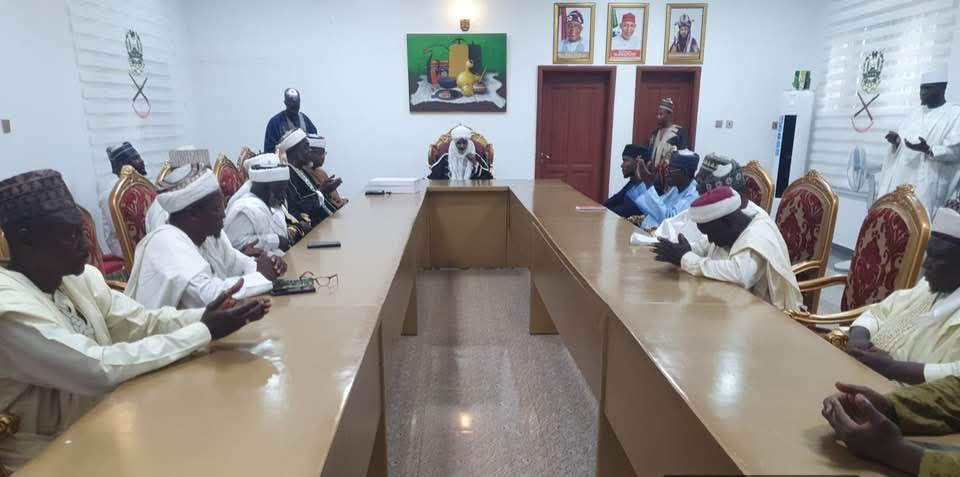
The Emir of Kano, Khalifa Dr Muhammad Sanusi II, has backed the use of mosques and other religious and community institutions as alternative learning centres to address the growing challenge of out-of-school children, particularly in northern Nigeria.
The Emir made the position known when he received an advocacy team led by the Special Adviser to the Minister of Education on Almajiri and Out-of-School Children’s Education, Dr Balarabe Shehu Kakale, during a sensitisation visit to the Kano Emir’s Palace.
Dr Sanusi questioned what would become of children removed from Tsangaya schools if adequate alternative learning opportunities were not provided.
He warned that such children could end up on the streets and become vulnerable to drug abuse, street begging and other social problems.
The Emir stressed the need for a comprehensive approach that combines Islamic and conventional education, citing historic institutions such as Al-Qarawiyyin in Morocco, Al-Zaytuna in Tunisia and Al-Azhar in Egypt as examples of institutions where religious and other forms of education have historically coexisted.
He also condemned the practice of child street begging and called for greater parental responsibility in ensuring that children receive proper education and upbringing.
Earlier, Dr Kakale said the Federal Government had put in place the necessary legal and policy frameworks to ensure that every Nigerian child has access to quality and inclusive education.
He explained that the Alternative Pathways of Education policy provides opportunities for learning in non-conventional settings, including mosques, homes, Zawiyyas and other community spaces.
According to him, such learning centres must operate with accredited teachers and meet the required educational standards.
The Kano State Team Lead of the National Commission for Almajiri and Out-of-School Children’s Education (NCAOOSCE), Malam Abubakar Yaro Muhammad, said the Commission had established 119 learning centres across the country for Almajiri and out-of-school children.
He said the Commission had also introduced skills-training interventions in Kaduna and Ibadan, equipping hundreds of Almajiri and out-of-school children with literacy, language, vocational and entrepreneurial skills.
The Emir commended the advocacy team for its sensitisation efforts and pledged his support for initiatives aimed at expanding access to education for children outside the conventional school system.
He expressed optimism that collaboration among traditional institutions, government agencies, religious leaders, communities and parents would help reduce the number of children excluded from formal and structured learning opportunities.