


Jamilu Abubakar
The United Nations Children’s Fund (UNICEF) has urged Local Government Councils in Adamawa State to prioritise interventions targeting the first 1,000 days of a child’s life in their 2027 plans and budgets.
Read also: Gombe Trains 104 Health Workers to Reduce Newborn Deaths
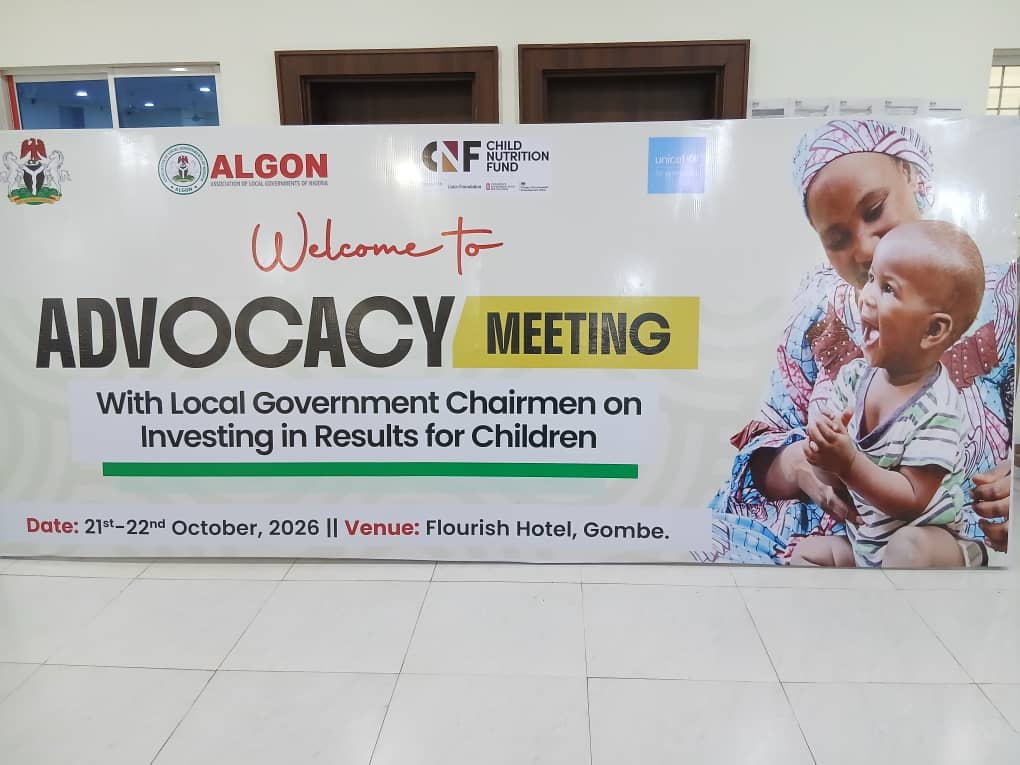
UNICEF Chief of Bauchi Field Office, Dr Nuzhat Rafique, made the call at a two-day advocacy meeting in Gombe State involving chairmen, vice chairmen and other officials from the 21 Local Government Areas of Adamawa State, alongside state government officials.
Dr Rafique said the meeting was aimed at strengthening the capacity of local government authorities in planning, budgeting and advocating increased investment in programmes that deliver measurable improvements in children’s wellbeing.
She explained that the first 1,000 days, from conception to a child’s second birthday, represent a critical period for survival, healthy growth and development.

According to her, essential interventions during this period include adequate antenatal care, safe delivery, postnatal services, exclusive breastfeeding, appropriate complementary feeding, improved sanitation and child protection.
The UNICEF official urged local government chairmen and their management teams to incorporate these priorities into their 2027 plans and budgets to improve access to essential services for mothers and children at the grassroots.
Read also: Gombe Steps Up Efforts to Save Premature Babies
She also highlighted the Child Nutrition Fund (CNF), a co-financing initiative through which government investments in nutrition interventions are matched by UNICEF, describing it as an opportunity to mobilise additional resources to tackle malnutrition and improve child survival.
Representing the Adamawa State Chairman of the Association of Local Governments of Nigeria (ALGON), the Vice Chairman of Demsa Local Government Area, Amsam Thaddawus, said the meeting would enhance the capacity of council officials to address challenges affecting children and families in their communities.
Thaddawus identified poverty, poor sanitation and inadequate personal hygiene as some of the challenges confronting communities, calling for improved sanitation facilities and sustained public awareness campaigns to prevent diseases.
She stressed the need for local governments to pay greater attention to children’s nutritional needs to promote healthy growth and development, while addressing other challenges affecting families at the grassroots.
The Permanent Secretary, Adamawa State Ministry of Budget and Economic Planning, Makallan Akila, said the participation of officials from the 21 local government areas and the state government would strengthen planning and investment in programmes designed to improve children’s wellbeing.
Akila identified nutrition, sanitation, a healthy environment and access to appropriate food as critical factors in children’s growth and development. He also acknowledged UNICEF’s continued partnership with the Adamawa State Government in healthcare and other development interventions.
Read also: Yari Seeks Royal Blessings Ahead of Tinubu’s 2027 Campaign
The meeting is expected to strengthen coordination between state and local governments and promote child-focused planning and budgeting to improve nutrition, healthcare, sanitation, protection and other essential services for children across Adamawa State.
FRCN