


Jamilu Abubakar
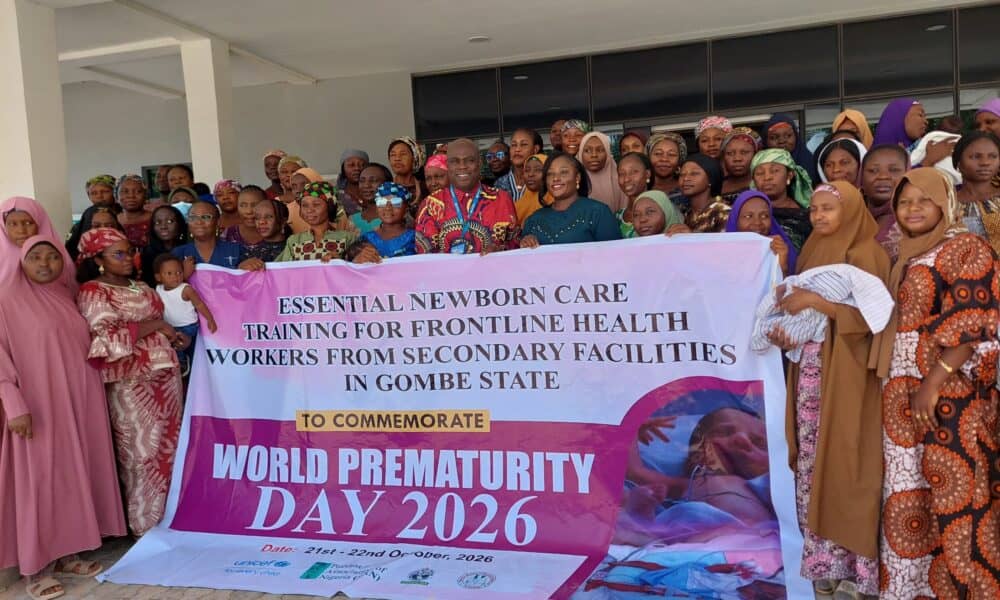
The Gombe State Government, in collaboration with the United Nations Children’s Fund (UNICEF), has trained 104 frontline health workers to improve newborn care and reduce neonatal deaths across the state.
Read also: Gombe Steps Up Efforts to Save Premature Babies
The training comprised a two-day capacity-building programme in Gombe for 48 doctors, nurses and midwives from secondary healthcare facilities, following an earlier programme for 56 health workers from primary healthcare centres.
Executive Secretary of the Gombe State Primary Health Care Development Agency, Dr Abdulrahman Shuaibu, said strengthening the skills of frontline health workers was essential to preventing avoidable deaths among newborns.
Dr Shuaibu explained that many babies are delivered at community and primary healthcare facilities before those requiring specialised attention are referred to secondary facilities, making it necessary for healthcare providers across the referral system to possess the skills needed to deliver appropriate newborn care.

He expressed concern over neonatal and infant mortality rates in the state, stressing that reversing the trend required sustained collaboration among government, healthcare professionals and development partners.
According to him, the training would enhance health workers’ ability to identify and manage complications affecting newborns, ultimately contributing to a reduction in neonatal deaths across communities.
Dr Shuaibu urged participants to share the knowledge and practical skills acquired with colleagues in their respective facilities to extend the benefits of the programme to more healthcare workers and newborns.
Read also: UNICEF Seeks Increased Funding for Child Nutrition in Adamawa
He said the intervention complemented ongoing efforts by the state government to improve services at primary and secondary healthcare facilities, while commending UNICEF and other development partners for their support to the health sector.
UNICEF Health Officer at the Bauchi Field Office, Mr Oluseyi Olosunde, said the training was organised as part of activities marking the 2026 World Prematurity Day, with a focus on improving the quality of care for newborns, particularly premature babies and those requiring specialised attention.
Mr Olosunde stressed that ensuring child survival required more than access to healthcare facilities, noting that newborns needed quality services delivered by adequately trained professionals.
He explained that doctors, nurses and midwives involved in pregnancy, childbirth and postnatal care were targeted to strengthen their capacity to protect the lives of mothers and newborns.
The UNICEF official described the level of newborn deaths in many northern states as unacceptable and called for sustained investment in capacity-building programmes for healthcare workers.
He urged participants to apply the knowledge and practical skills gained during the training to improve service delivery and enhance maternal and newborn survival.
Also speaking, Consultant Paediatrician at the Federal Teaching Hospital, Gombe, Dr Raymond Mercy, called on healthcare workers to prioritise timely and appropriate care for newborns.
Read also: CDA Demonstrates Improved Groundnut Varieties to Farmers
Dr Mercy, who is also a member of the Paediatric Association of Nigeria and the Nigerian Society of Neonatal Medicine, said Nigeria records between 34 and 41 neonatal deaths per 1,000 live births.
She noted that Nigeria has the world’s second-highest burden of neonatal mortality, highlighting the urgent need to strengthen newborn healthcare services and improve the capacity of health professionals nationwide.