


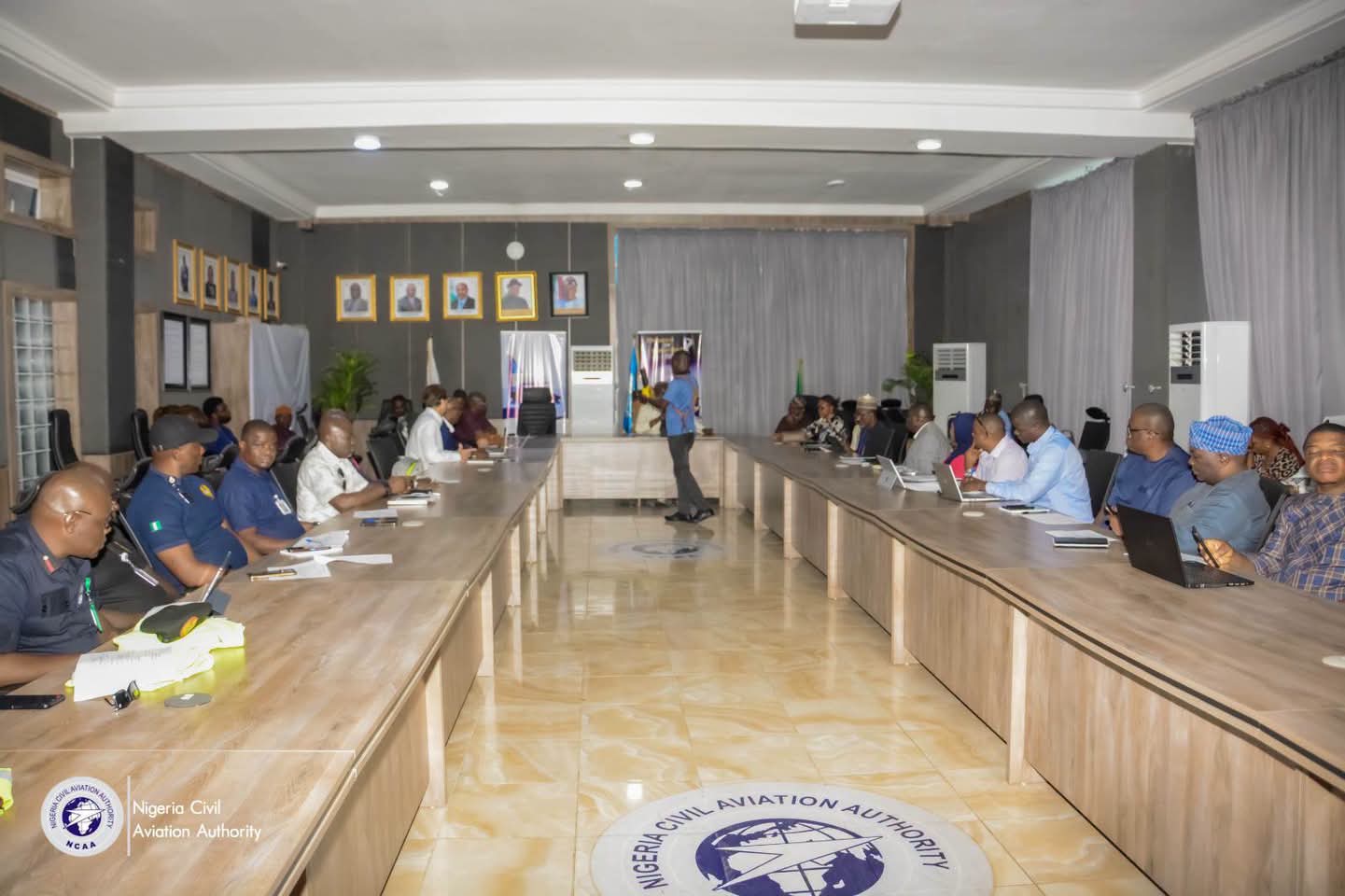
The Nigeria Civil Aviation Authority, NCAA, has hosted a technical mission from the International Civil Aviation Organization, ICAO, and the United Nations Environment Programme, UNEP, under the Fortifying Infrastructure for Responsible Extinguishment, FIRE, Project.
The mission is aimed at supporting Nigeria’s transition from firefighting foams containing per- and polyfluoroalkyl substances, PFAS, to fluorine-free alternatives at selected airports.
Read also: Continuity and Shared Development: My Position on Kano State and Nigeria
Drone Strikes, Explosions Disrupt Dubai, Abu Dhabi Airports
Welcoming the delegation during a strategic meeting held at the NCAA Corporate Headquarters in Abuja, the Director-General of Civil Aviation, Captain Chris Najomo, said the initiative was in line with the aviation industry’s commitment to maintaining high safety standards while promoting environmental sustainability.
Captain Najomo said the project would support feasibility studies and the development of phase-out plans for selected Nigerian airports, including the Nnamdi Azikiwe International Airport, Abuja, and the Port Harcourt International Airport.

He assured the delegation of the NCAA’s commitment to working with the Federal Airports Authority of Nigeria, FAAN, ICAO, UNEP, the Federal Ministry of Environment and other stakeholders to ensure a safe, effective and environmentally responsible transition across the aviation sector.
The Managing Director of FAAN, Mrs. Olubunmi Kuku, represented at the meeting by the General Manager, Aerodrome Rescue and Firefighting Services, Mr. Rimdap Nantim, also reaffirmed the authority’s commitment to the project.
Read also: FG Seeks Practical Training to Unlock Nigeria’s $3.2bn Livestock Market
Mrs. Kuku described the transition as an important step towards more sustainable and environmentally responsible airport firefighting operations.
She stressed that safety must remain central throughout the transition and called for stronger collaboration among stakeholders to ensure the successful implementation of the initiative in Nigeria.
Providing an overview of the project, its Coordinator, Mr. Eike Peltzer, said the initiative was funded by the Global Environment Facility, GEF, with approximately 10 million dollars committed across five African countries — Egypt, Ethiopia, Kenya, Nigeria and South Africa.
He said the 60-month project would cover about 40 airports, with focus on four key areas: development of regulatory frameworks, transition from PFAS-containing firefighting foams, knowledge management and training, as well as monitoring and evaluation.
Mr. Peltzer explained that the transition would require a comprehensive assessment of existing firefighting systems and equipment.
He said the project would support feasibility studies, phase-out planning and training to ensure that fluorine-free alternatives meet applicable aviation firefighting performance requirements.
Read also: Kawu Sumaila Empowers Constituents with 416 Vehicles
NCAA Recognizes Kano, Port Harcourt Airports’ Compliance with Global Standards
The technical mission is expected to continue with physical inspections in Lagos and Port Harcourt to assess existing firefighting systems and infrastructure and support Nigeria’s transition to fluorine-free firefighting foam.