


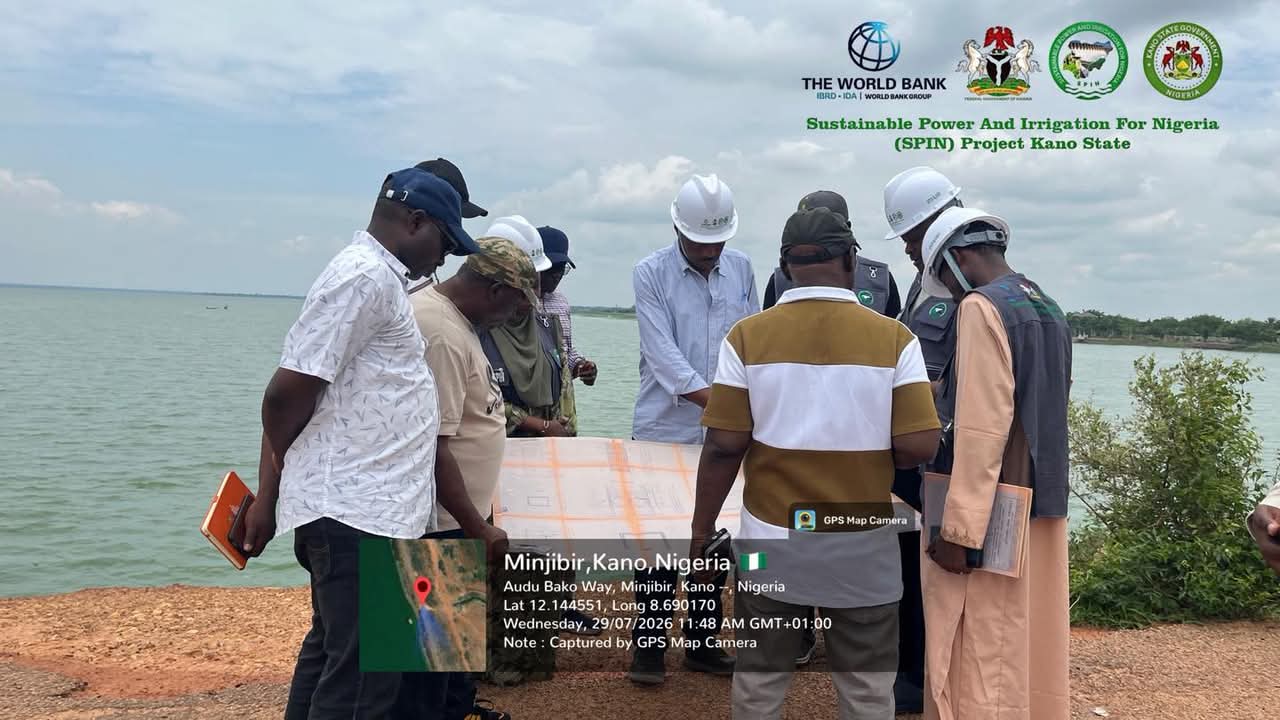
The Kano State Government has taken another major step towards the rehabilitation and modernization of the Jakara–Wasai Dam under the Sustainable Power and Irrigation for Nigeria (SPIN) Project by hosting a Dam Safety Review Panel of Experts for a technical assessment of the proposed intervention.
The technical mission enabled the panel to conduct a comprehensive field assessment of the dam, review the proposed engineering designs, and evaluate the state’s readiness for the implementation of the rehabilitation project approved by Governor Abba Kabir Yusuf.
Read also: FG Seeks Practical Training to Unlock Nigeria’s $3.2bn Livestock Market
During the visit, the Kano SPIN Project Implementation Unit presented its rehabilitation strategy, which includes dam safety enhancement measures, structural rehabilitation, reservoir management, irrigation modernization, and other engineering studies aimed at restoring the dam’s functionality and efficiency.
The team also highlighted progress made in project preparation, technical planning, institutional coordination, and compliance with international standards on dam safety and project implementation.
Read also: Harry Kane: Kano Bayern Munich Supporters Celebrate Ballon d’Or Victory

The visiting experts commended the level of preparedness demonstrated by the Kano SPIN technical team and lauded the state government’s commitment to implementing the rehabilitation project in line with global best practices for dam safety, resilience, and sustainable water resources management.
According to the project team, the rehabilitation of the Jakara–Wasai Dam represents a strategic investment that will enhance dam safety, expand irrigation capacity, strengthen climate resilience, improve water security, and boost sustainable agricultural production across Kano State.
Read also: Kano Steals the Show in Kaduna: Abba Yusuf Emerges as Tinubu’s Political Mobiliser
The project is also expected to contribute significantly to socio-economic development by supporting irrigation farming, improving livelihoods, and enhancing food security in the state.
The Kano State Government reaffirmed its commitment to delivering modern and resilient water infrastructure through strategic investments, sound engineering practices, and collaboration with experienced technical experts under the SPIN Project.