


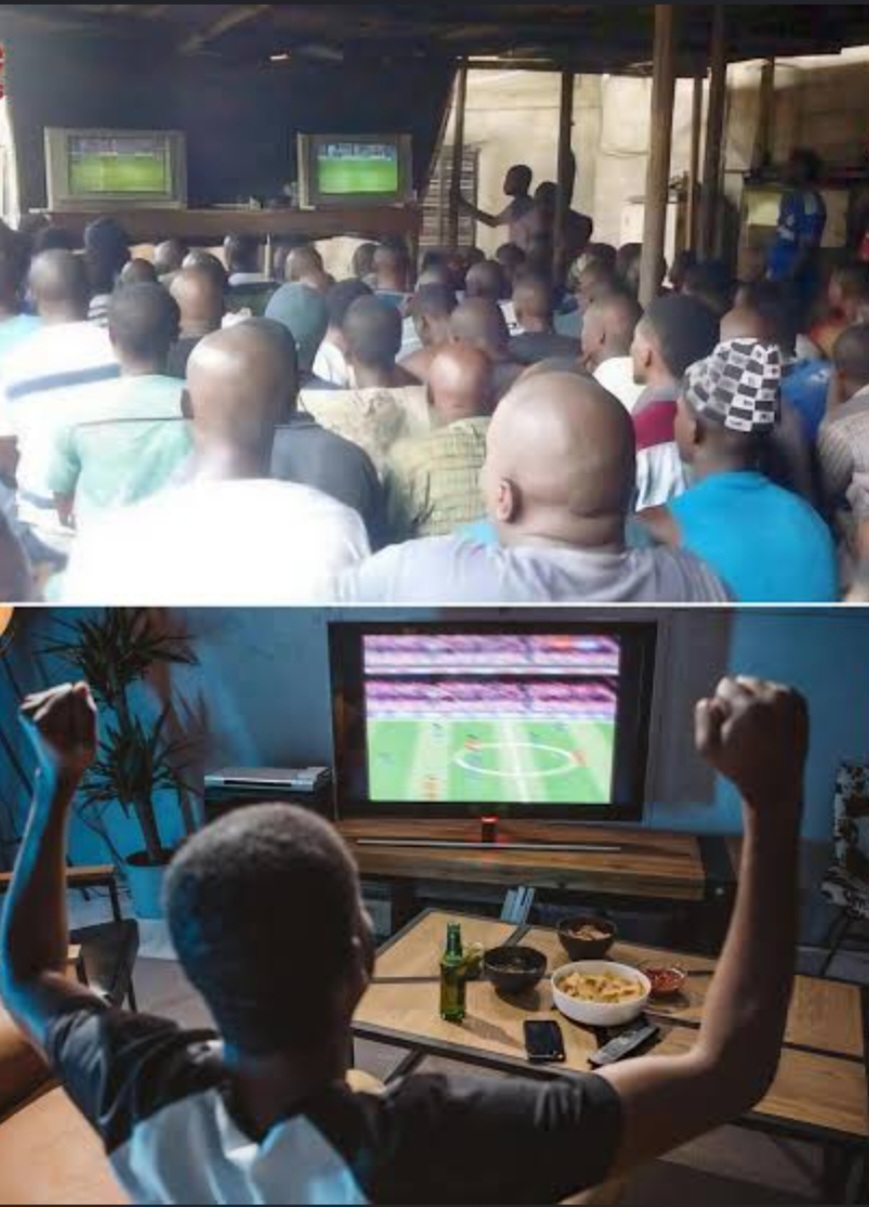
For decades, viewing centres have remained a major part of Nigeria’s football culture, providing low-cost and communal spaces where fans gather to watch local and international sporting events.
Popularly known as “Gidan Kallo” in Kano, these centres have evolved beyond places for watching football. They serve as informal meeting points where friends, families and supporters of different football clubs come together to share the excitement, tension and emotions that accompany major matches.
Read also: UNICEF Seeks Increased Funding for Child Nutrition in Adamawa
During major tournaments such as the UEFA Champions League, Africa Cup of Nations and FIFA World Cup, viewing centres often attract large crowds, transforming ordinary neighbourhood spaces into lively football arenas.
The tradition is particularly strong among grassroots football fans who may not have access to subscription-based television services or large-screen entertainment at home.
For Mustapha Hodi Adamu, who has patronised viewing centres for several years, watching football among fellow supporters makes the experience more exciting.

He says the atmosphere, discussions and reactions from fans of different clubs are part of what makes viewing centres unique.
Another football enthusiast, Rabilu Musa, describes the centres as meeting points for friends and families.
He says spectators usually pay between 200 and 300 Naira, depending on the match and location, to enjoy live football in a communal environment.
The patronage also extends to rural communities.
Sardo Abdullahi, a resident of Kunchi in Gharin Local Government Area, says viewing centres remain a convenient place for people in the grassroots to watch football, films and other programmes.
Read also: 2027: SDP, LP Chieftains Question Electoral Credibility Over APC Campaign Song
However, the business is facing growing competition from mobile streaming platforms.
Abdulhamid Maifata, a viewing centre operator in Fagge Local Government Area who has been in the business for more than 20 years, says patronage has declined considerably with the increasing use of smartphones and affordable internet data.
According to him, many young people now purchase data bundles costing as little as 200 Naira to stream football matches directly on their mobile phones.
Despite the challenge, some viewing centre operators say the business remains profitable, particularly during high-profile matches.
Some operators make between 20,000 and 50,000 Naira in a day, while larger centres in strategic locations can generate even higher revenue depending on the popularity of the match and the number of spectators.
For another operator, Muhammad Mikail, the business remains lucrative, although mobile streaming poses a significant threat to its sustainability.
He says Champions League matches still attract large crowds, but rising electricity costs are reducing profit margins.
Beyond the financial aspect, viewing centres have become part of the social fabric of many Nigerian communities.
They provide affordable entertainment while bringing together people from different backgrounds who share a common passion for football.
Read also: Islamic Summit in Kano Urges FG to Address Insecurity, Economic Hardship
As technology continues to change the way Nigerians consume sports content, viewing centre operators are being forced to adapt to new realities.
For many football enthusiasts, however, the excitement of watching a crucial match surrounded by fellow supporters, sharing the cheers, arguments and celebrations, remains an experience that mobile phones and private television screens may not easily replace.