


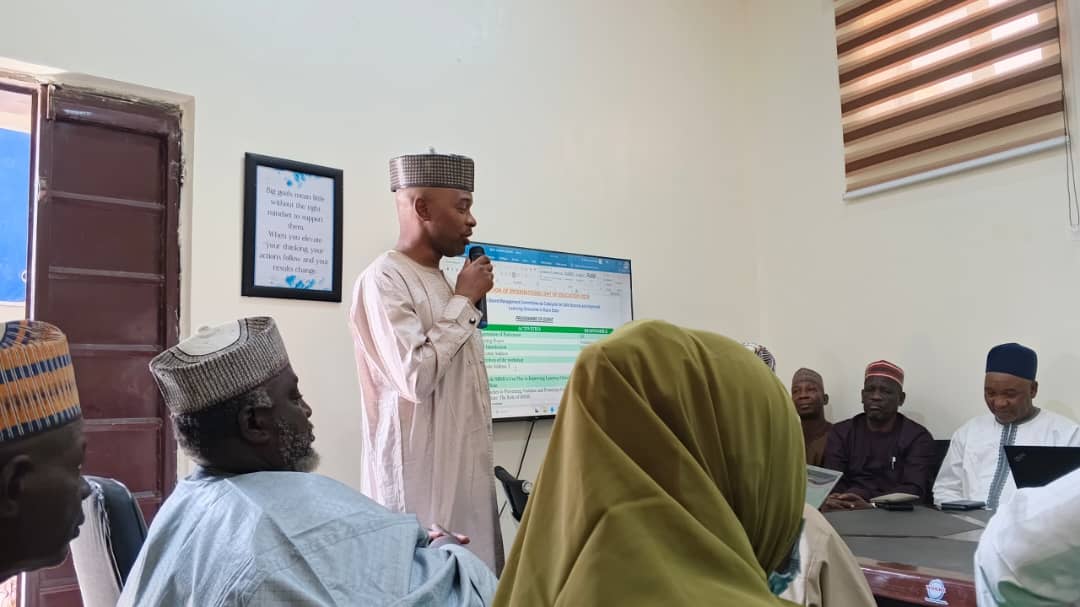
A non-governmental organisation, Non-Formal Development for Education and Health Initiatives (NDEHI), has organised an event on safe schools and improved learning outcomes to mark the 2026 International Day of Education in Kano State.
The event, themed “School-Based Management Committees as Catalysts for Safe Schools and Improved Learning Outcomes in Kano,” brought together key stakeholders in the state’s education sector, including government officials, civil society groups, development partners, and education experts.
Read also: Kano SUBEB Approves Soft Loans, Whiteboards for Teachers
In his welcome remarks, the Co-Chair of the CSOs Kano State Accountability Forum on Education (K-SAFE), Dr. Auwal Halilu, said the roundtable was organised to brainstorm practical strategies for improving school safety and learning outcomes across the state’s 44 local government areas.
Dr. Halilu described School-Based Management Committees (SBMCs) as critical drivers of education development and stressed the need for stakeholders to work together to ensure effective utilisation of education resources.
He noted that while government and development partners are implementing several interventions in the education sector, community ownership and sustainability remain weak.

He added that strengthening the role of SBMCs in promoting school safety would significantly reduce learning poverty, explaining that stakeholders were invited to chart a clear way forward for safer schools and improved educational outcomes.
Read also: Girls’ Education: Kano SUBEB, AGILE Distribute 11 Laptops
Delivering the keynote address, the Technical Adviser to the Kano State Governor on Education Reforms, Malam Haladu Muhammad, disclosed that a recent survey showed Kano State has over 4.7 million pupils in primary schools, but fewer than one million students enrolled in junior secondary schools.
He attributed the disparity to the shortage of junior secondary schools, adding that the state government under the leadership of Governor Abba Kabir Yusuf is working to bridge the gap through the provision of education infrastructure and the recruitment of teachers.
Malam Haladu also expressed concern over the current teacher-to-student ratio, noting that Kano State has about 8,000 schools and 50,000 teachers. He said the present administration has already recruited teachers and is set to employ more to address the shortfall. He urged residents to complement government efforts by establishing community schools.
Also speaking at the event, the UNICEF Kano Education Specialist, Muttaqa Mukhtar, emphasised the need for proper utilisation of textbooks and learning materials supplied to schools by development partners.
According to him, UNICEF provided books to schools in the state last year, but follow-up assessments revealed that many of the materials were not effectively utilised by pupils, limiting their availability for other learners.
Read also: Kano Boosts Adolescent Healthcare with 743 Facilities
In his remarks, the State Reform Facilitator and Non-State Governance Specialist with PLANE, FCDO Nigeria, Abdulrahman Abdu, stressed the importance of synergy between SBMCs and host communities.
He said enhanced school ownership, effective monitoring of community resources, strong partnerships, and accountability would help address many of the challenges facing the education sector in Kano State.