


Ibrahim Sulaiman
The National Institute of Public Health and Infectious Diseases (NIPHID) has announced plans to introduce a new academic programme aimed at strengthening the capacity of healthcare workers in the management of infectious diseases in Nigeria.
Read also: ABU SPESSE-CE Graduates 420 in Sustainability Training
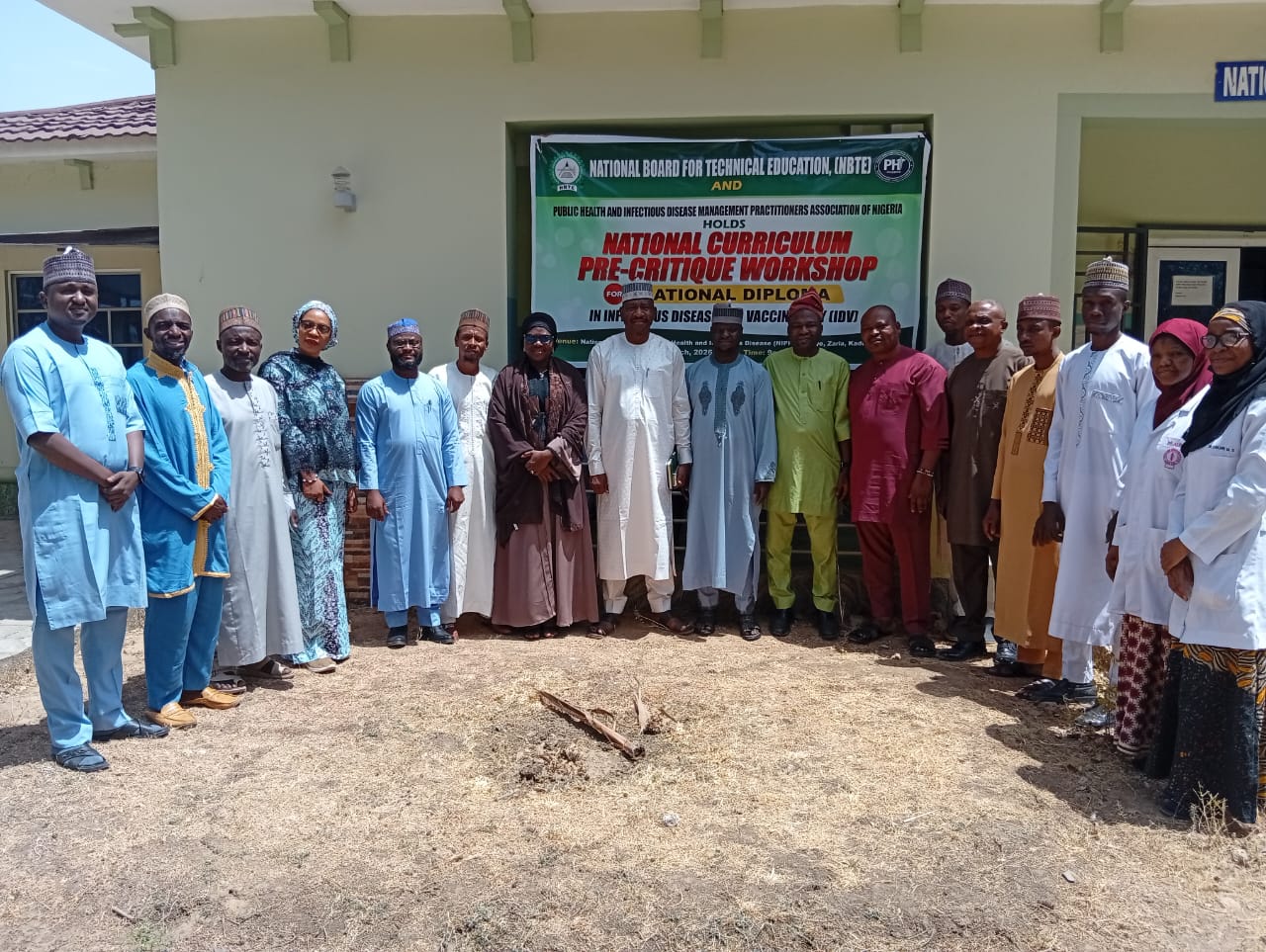
Director-General of the institute, Abdullahi Aminu Dalhatu, disclosed this during the closing ceremony of the National Curriculum Workshop for the proposed National Diploma in Infectious Diseases and Vaccinology, held at the institute in Zaria.
Dalhatu explained that training in infectious diseases has largely been available only at postgraduate diploma, certificate, and fellowship levels, leaving a gap at the middle and lower professional levels of healthcare practice.
According to him, the proposed diploma programme is designed to equip graduates with the knowledge and practical skills required for the identification, prevention, and management of infectious diseases.
He noted that infectious diseases remain a major public health challenge in Nigeria and other tropical regions, accounting for more than half of the health problems affecting the population.
Dalhatu stressed the need to train young healthcare professionals, particularly because many Nigerians often first seek treatment from patent medicine vendors and other local healthcare providers before visiting hospitals.
Read also: Speaker Commissions Soba Projects to Boost Education, Healthcare
He said equipping such frontline health workers with the necessary knowledge would improve early detection and response to infectious disease outbreaks.
The Director-General also commended participants at the workshop for their contributions to the curriculum development process, expressing confidence that the programme would strengthen healthcare delivery in the country.
In his remarks, the Executive Secretary of the National Board for Technical Education (NBTE), Idris Muhammad Bugaje, described the development of the proposed curriculum as a national exercise aimed at strengthening professional training in Nigeria’s health sector.
Represented by Liyaudeen Bashir Hassan, Bugaje explained that the workshop marked the first phase of the curriculum development process, noting that the foundation stage was critical as it involves drafting the initial document before further reviews and improvements.
Also speaking, the Chairman of the Board of Trustees and workshop chairman, Khadija Toyin Musah, said experts from various health professions thoroughly reviewed the curriculum and agreed that at least one institution should commence the programme before the end of the year.
Read also: ABU Honours Onitsha Monarch During Ofala Festival
Musah added that policies require effective implementation and expressed confidence that the institute has the facilities and expertise needed to pioneer the programme.
The workshop forms part of efforts by the institute to collaborate with relevant stakeholders in developing specialised training programmes aimed at strengthening Nigeria’s public health system.