

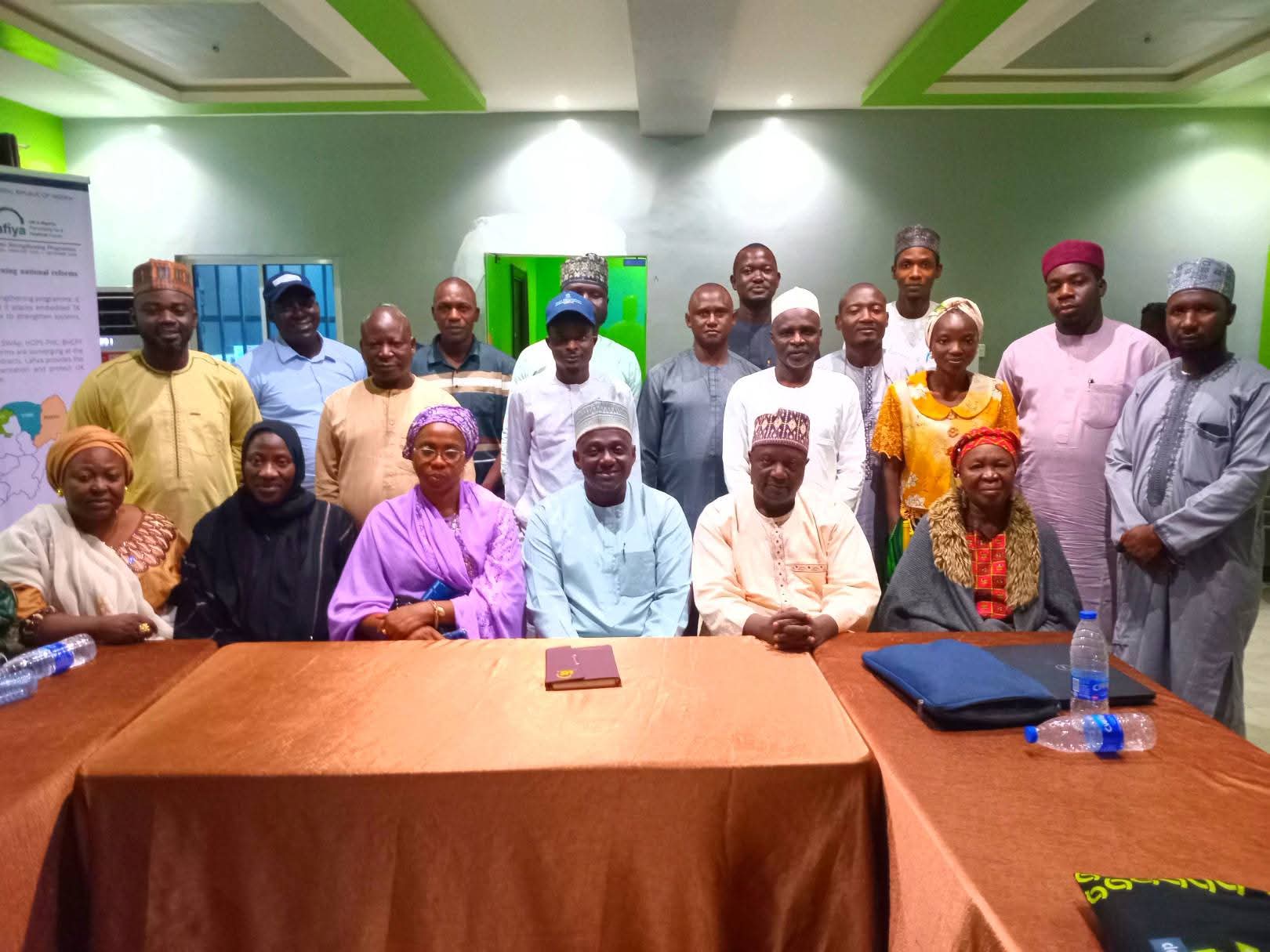
The Kaduna Local Government Accountability Mechanism (KADLGAM), in collaboration with the Human Resources for Health (HRH) Technical Working Group (TWG), successfully facilitated a two-day workshop under the Lafiya Programme to strengthen Human Resources for Health (HRH) data analytics and advocacy in Kaduna State.
The workshop brought together representatives of government, civil society organizations, development partners and members of the HRH Technical Working Group to develop evidence-based advocacy tools that will support improved health workforce deployment across the state.
Read also: NMA Urges Young Doctors to Rethink Migration as Brain Drain Persists
Niger Trains 125 Health Workers on Postpartum Haemorrhage
Participants identified three priority advocacy issues requiring urgent attention: inadequate financing for accreditation-related projects in state-owned health training institutions, delays in replacing exited health workers, and the absence of digital Human Resources for Health Information Management Systems (HRHMIS) at secondary and tertiary healthcare levels.
Read also: Sell Empowerment Items, Lose Your Job, Gov Yusuf Warns Beneficiaries
The workshop also examined broader workforce challenges, including shortages of health personnel, rural staffing gaps, welfare incentives, budget release constraints and the growing attrition of health workers.
At the end of the workshop, participants developed stakeholder maps, crafted key advocacy messages, produced a draft HRH Advocacy Brief and agreed on a Civil Society Advocacy Action Plan to advance evidence-based engagement with policymakers.
Read also: Kano Steals the Show in Kaduna: Abba Yusuf Emerges as Tinubu’s Political Mobiliser
Outbreak Preparedness Starts Before Crisis, Says eHealth Africa
These efforts represent another important step towards strengthening Kaduna State’s health workforce and accelerating progress toward Universal Health Coverage (UHC).