


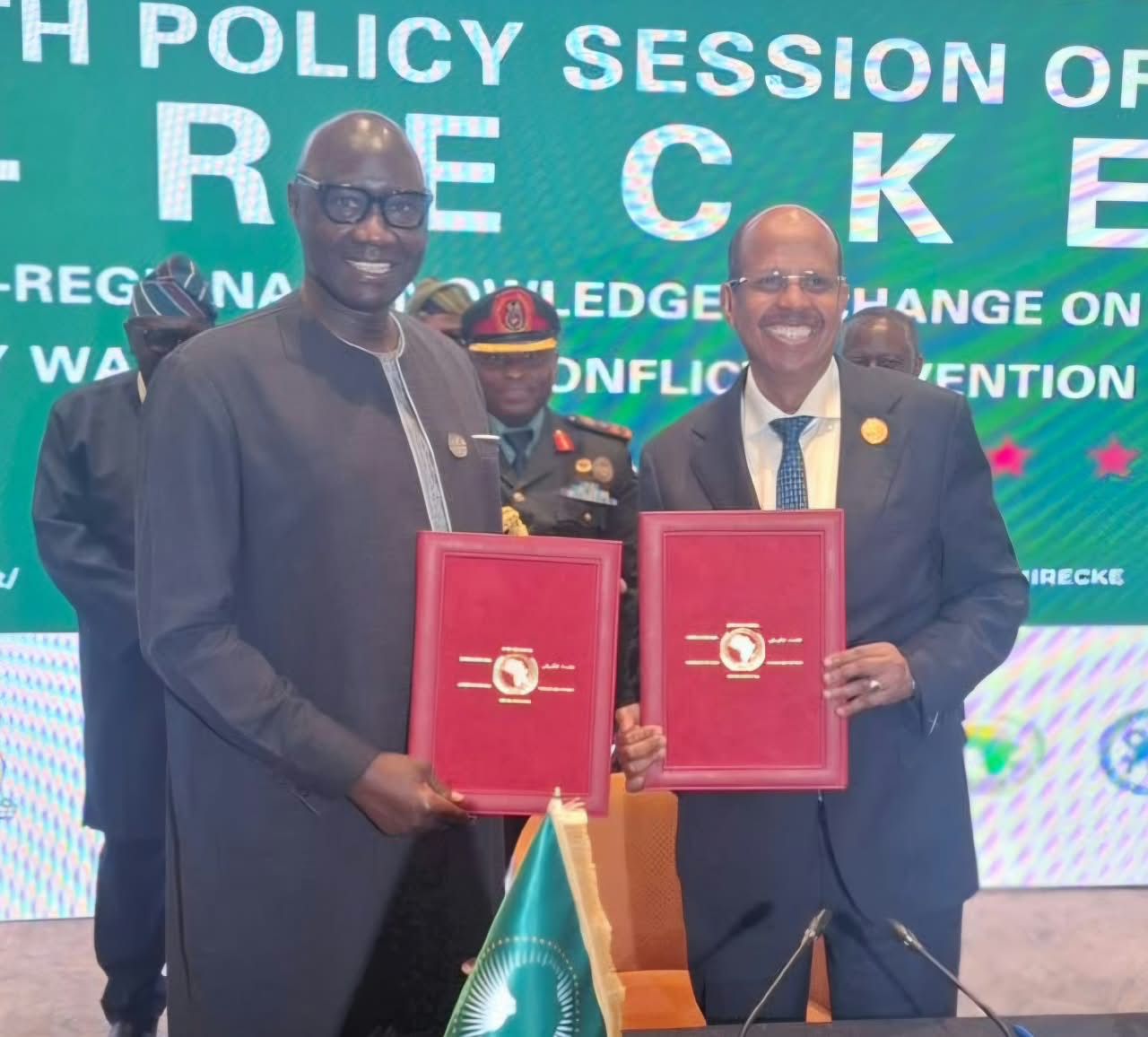
The Economic Community of West African States (ECOWAS) Commission has signed a Memorandum of Understanding (MoU) with the African Union (AU) and other regional blocs to strengthen coordination in the preparation and deployment of the African Standby Force.
The agreement was signed by the President of the ECOWAS Commission, General Birame Diop, during the Fifth Policy Session of the Inter-Regional Knowledge Exchange on Early Warning and Conflict Prevention (I-RECKE) in El Alamein, Egypt.
Read also: Islamic Summit in Kano Urges FG to Address Insecurity, Economic Hardship
The session was held on the margins of the eighth Mid-Year Coordination Meeting, which brought together representatives of African regional and continental institutions to discuss peace and security challenges.
The MoU provides a framework for clarifying the roles and responsibilities of the AU, Regional Economic Communities (RECs) and Regional Mechanisms (RMs) in the preparation, employment, deployment and post-deployment phases of the African Standby Force.
The African Standby Force comprises regional standby forces that can be mandated by the AU to undertake peace support operations and respond to complex emergency situations across the continent.

Read also: BUK Interfaculty Games: Students Battle for Sporting Glory
Signing the agreement on behalf of ECOWAS, General Diop reaffirmed the bloc’s commitment to strengthening Africa’s collective peace and security architecture.
The agreement brings together the AU and key regional mechanisms, including the Economic Community of Central African States (ECCAS), North African Regional Capacity (NARC) and the Southern African Development Community (SADC).
The framework is expected to enhance coordination between the continental body and regional organisations in responding to conflicts, crises and other emergencies.
Read also: 2027: SDP, LP Chieftains Question Electoral Credibility Over APC Campaign Song
It also seeks to establish clearer responsibilities among participating institutions before, during and after the deployment of standby forces.
The agreement comes as African countries continue efforts to strengthen early warning systems, conflict prevention mechanisms and coordinated responses to emerging security challenges across the continent.