


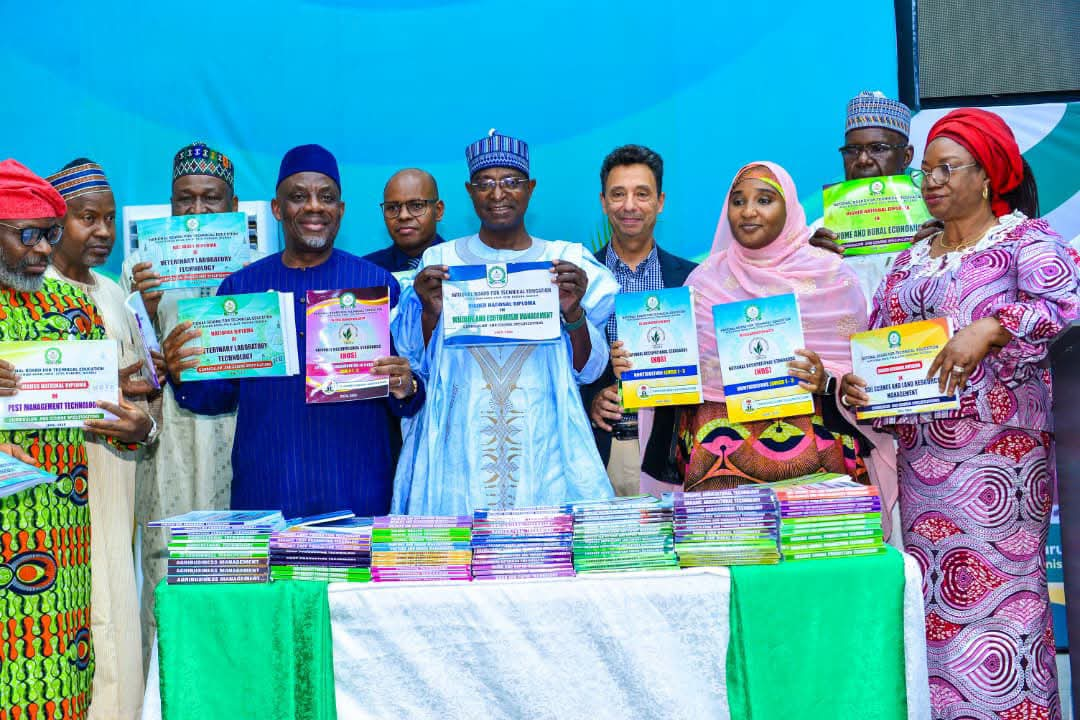
The Federal Government has called for stronger practical training and industry partnerships in agricultural education to develop the skilled workforce needed to transform Nigeria’s livestock sector, create jobs and expand economic opportunities.
The Minister of Livestock Development, Idi Mukhtar Maiha, made the call on Monday, October 19, 2026, at the unveiling of Nigeria’s reviewed agricultural curricula and national occupational standards for technical and vocational education and training (TVET) institutions and Colleges of Education.
Read also: Continuity and Shared Development: My Position on Kano State and Nigeria
Maiha described the initiative as a significant step towards aligning educational programmes with industry requirements, noting that the livestock sector offers enormous opportunities for investment, entrepreneurship, import substitution, export expansion and employment generation.
He said the sector was vital to Nigeria’s food and nutrition security, livelihoods, industrial development and economic growth.
The Minister, who put the value of the livestock market at about 3.2 billion dollars, said Nigeria had the livestock resources, land and human capacity to expand the sector but lacked sufficient practical expertise to manage modern livestock operations across the entire value chain.

According to him, the knowledge gap underscores the need for agricultural training institutions to equip students with practical skills in animal production, breeding, nutrition, animal health, biosecurity, pasture development, processing and marketing.
Maiha stressed that students must be exposed to modern livestock production systems, urging agricultural training institutions to establish or provide access to functional farms and livestock facilities where learners could acquire hands-on experience.
He said the government’s objective was to move beyond producing graduates who depend on paid employment to developing skilled professionals, innovative entrepreneurs and job creators.
Read also: UNICEF Seeks Increased Funding for Child Nutrition in Adamawa
The Minister also called for inclusive access to skills development opportunities for women, young people, smallholder farmers and rural communities to ensure that the benefits of the reforms reach a wider segment of the population.
In his remarks, the Minister of Education, Dr Maruf Olatunji Alausa, commended the institutions, industry partners and other stakeholders involved in reviewing the agricultural curricula.
He described the reform as part of the Federal Government’s efforts to align education with national development priorities and ensure that graduates possess the competencies required to contribute meaningfully to economic growth.
Dr Alausa emphasised the need to modernise agricultural training facilities, including demonstration farms, processing centres, greenhouses and other practical learning environments.
He also called for stronger coordination among regulatory agencies to ensure that the adoption, assessment, monitoring and accreditation of training institutions align with the revised curricula and national occupational standards.
Other stakeholders, including the United Nations Educational, Scientific and Cultural Organization (UNESCO), the National Universities Commission and the Embassy of France, welcomed the curriculum review.
Read also: NMA Urges Young Doctors to Rethink Migration as Brain Drain Persists
They stressed that successful implementation would require qualified trainers, appropriate equipment, effective assessment methods and opportunities for students to gain practical experience through workplace learning.
The revised curricula and occupational standards are expected to strengthen the link between agricultural education and industry needs, helping to develop a workforce capable of driving innovation, productivity and sustainable growth in Nigeria’s livestock sector.