


Muhammad Sani
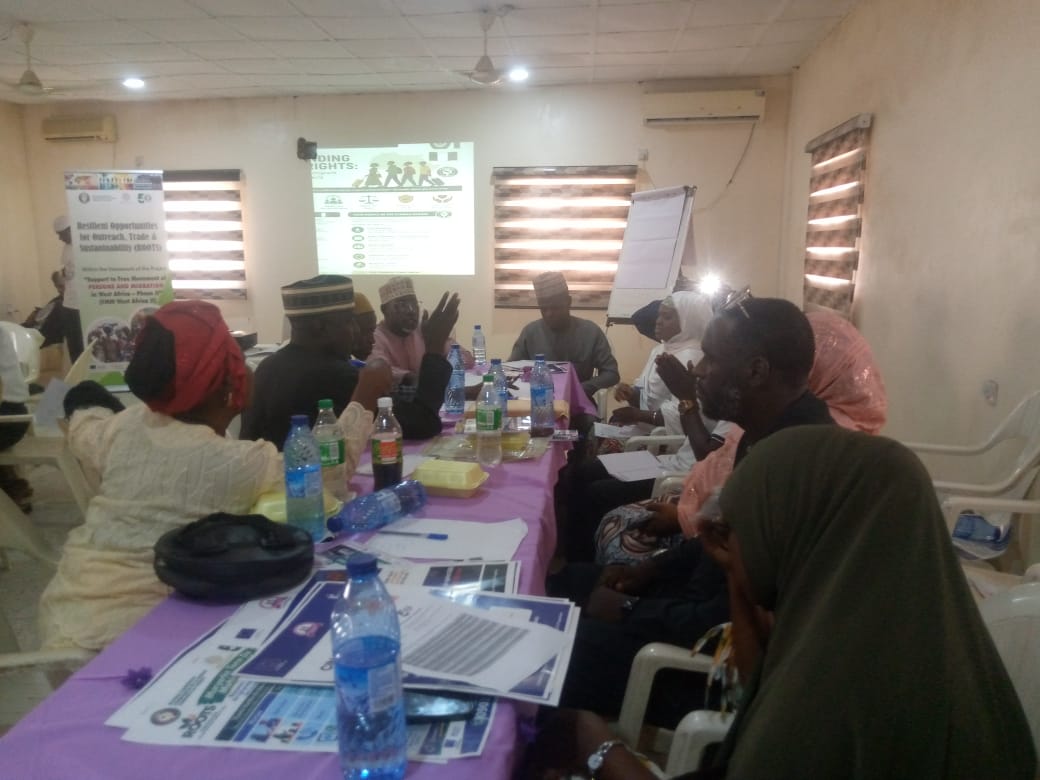
Participants at a three day workshop for Civil Society Organisations (CSOs), women’s groups, Community-Based Organisations (CBOs), youth and protection actors on regional migration governance have identified kidnapping, sexual abuse, exploitation and other forms of victimisation as major risks associated with irregular migration.
Read also: Affordable Housing: FG Advances 10,000 Units Across Nigeria
The training was organised by the Adolescent Health and Information Projects, AHIP, in collaboration with the International Organization for Migration, IOM, under the ROOTS Programme.
The programme is aimed at strengthening the capacity of stakeholders to educate communities on regional migration governance, advocate for safe migration and promote positive actions to increase public awareness of regular migration pathways.
Speaking at the training, a participant and Director-General of International Peace and Secure Society, Comrade Danjuma Yusuf, said irregular migrants faced numerous risks, including kidnapping, sexual abuse and exploitation.

Comrade Yusuf said migrants travelling through unsafe routes could also become victims of serious crimes, including organ trafficking, while some risk losing their lives during transit.
He urged Nigerians seeking to migrate to obtain the necessary documentation and use recognised migration channels, stressing that the risks and hidden costs associated with irregular migration could outweigh its perceived benefits.
Comrade Yusuf commended the organisers for creating awareness among stakeholders and called for sustained public education to enable prospective migrants to make informed decisions.
Earlier in her welcome address, the Executive Director of AHIP, Dr Mairo V. Bello, said government agencies and other relevant stakeholders were being engaged to sensitise communities on the dangers of irregular migration.
Dr Bello expressed concern over the vulnerability of young people and women to dangerous migration routes and urged Nigerians seeking opportunities abroad to explore safe, legal and documented migration pathways.
Read also: Speaker Commissions Soba Projects to Boost Education, Healthcare
She said AHIP also works with relevant government institutions to support returned migrants through skills-acquisition programmes designed to make them self-reliant and enable them to contribute meaningfully to their communities.
Also speaking, the ROOTS Programme Manager, Halima Kasim Usman, said many people, particularly in Northern Nigeria, embark on irregular migration without the required documentation, exposing themselves to various risks during transit and at their destinations.
She identified unemployment, poverty and the search for better livelihood opportunities as some of the major factors driving irregular migration, while noting that others migrate for business, trade and the acquisition of new skills.
Ms Usman said the ROOTS Programme was also addressing climate-related migration by supporting rural women and smallholder farmers with knowledge of climate-smart agriculture.
She explained that the intervention, implemented in selected local government areas, including Bunkure Dala and Ungogo, had trained women farmers in techniques that could enable them to continue farming despite changing weather patterns and declining rainfall.
According to her, the initiative, implemented in partnership with the Centre for Dryland Agriculture of Bayero University, Kano, also promotes backyard farming and other methods that support year-round food production.
She added that returned migrants were trained in agribusiness, entrepreneurship and value addition to agricultural products to enable them to establish alternative sources of income within their communities.
Ms Usman said one of the programme’s partners, Smart Agri-Bus, provided improved seeds to some women farmers, contributing to better yields and encouraging some potential migrants to remain engaged in farming.
Read also: Say No to Vote Buying, Violence, Minister Urges Nigerians
She noted that some returnees had also established small businesses after receiving training in processing and value addition, creating opportunities for them to earn livelihoods within their communities.
The training is part of intensified efforts under the ROOTS Programme to discourage irregular migration by educating communities and vulnerable groups on the dangers of unsafe migration and the benefits of using lawful migration channels.