


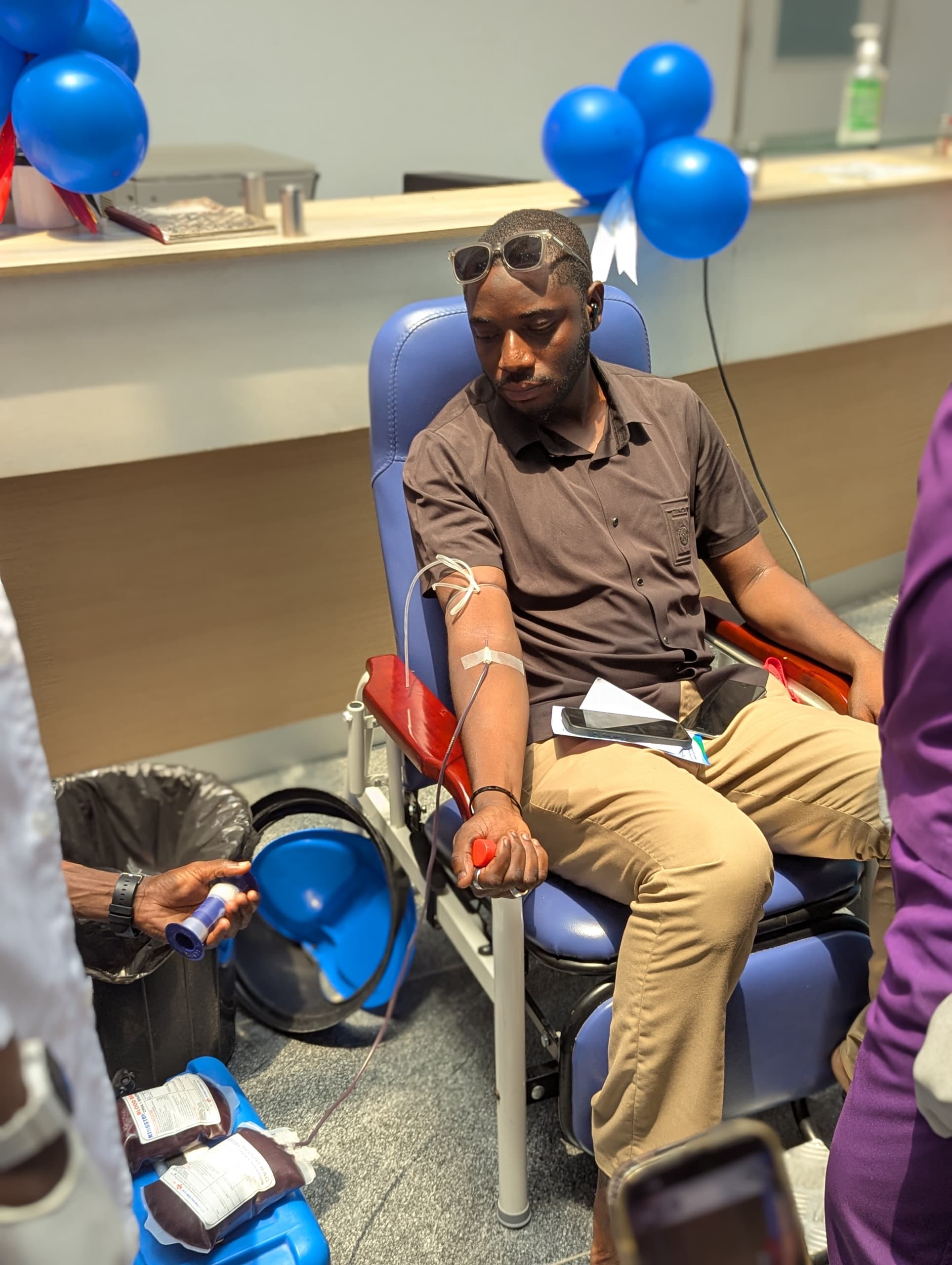
The Global Shapers Community, Kano Hub, has recorded one hundred and eight pints of blood during its 13th annual blood donation drive held at the Kano Cancer Treatment Centre.
The exercise attracted a large turnout of young people and other members of the community who volunteered to donate blood to support patients requiring transfusion.
Read also: Kano Boosts Adolescent Healthcare with 743 Facilities
Curator of the Global Shapers Community, Kano Hub, Sumayya Umar Tofa, said the annual blood drive had been sustained for thirteen years as part of the organisation’s efforts to address blood shortages for medical emergencies.
She said the blood collected would support patients, including women experiencing complications during pregnancy and childbirth, accident victims, people living with anaemia and children with blood-related conditions.
According to her, the organisation also operates a blood-access initiative through which patients in need can be linked with potential donors, particularly when relatives or friends are unable to provide the required blood.
Umar Tofa said the initiative had recorded significant successes over the years, noting that the previous blood drive collected eighty-six pints, while the 2026 edition recorded one hundred and eight pints of blood.
She appealed to individuals, organisations and development partners to support the initiative, saying stronger partnerships could enable the project to collect up to two hundred pints in a single day and potentially expand beyond Kano State.
She explained that donated blood would undergo laboratory screening for infectious diseases before being stored and made available to patients requiring transfusion.
Read also: KIRCT Deepens Research into Vaccines, Breast Cancer
Umar Tofa said the participation of Médecins Sans Frontières in this year’s exercise would further support its free medical services in Kano by helping provide blood for patients who require transfusion.
The Chief Executive Officer of the Kano Cancer Treatment Centre, Dr Nafisa Abdu, represented by the Assistant Head of Nursing, Umar Halliru, explained that prospective donors undergo three stages: pre-donation screening, blood donation and post-donation observation.
Halliru said the screening process was necessary to determine whether a donor was healthy and fit to give blood, after which the donor would proceed to the donation stage and later rest for between fifteen and thirty minutes.
He advised donors to maintain an adequate diet containing protein, carbohydrates, vegetables and fruits, as well as adequate water intake, to support the body after blood donation.
A Medical Laboratory Scientist at the centre, Shamsuddeen Muhammad Abubakar, said blood collection generally involved either a 250-millilitre paediatric blood bag or a 450-millilitre adult blood bag, depending on the donor’s eligibility and screening results.
Mr Abubakar said eligibility was determined by factors including age, vital signs, weight, previous donation history and Packed Cell Volume, or PCV, adding that prospective donors must generally be at least eighteen years old and observe the required interval between donations.
He added that donated blood was screened for infections including HIV, hepatitis B, hepatitis C and syphilis before it could be accepted for use, stressing that voluntary blood donation was an important humanitarian service capable of saving lives.
Read also: EHCON Strengthens Capacity for Safe Reptile Control
One of the donors, twenty-nine-year-old Mustapha Abdulwaseeq, said he participated in the exercise because he considered blood donation a form of charity capable of helping people he might know or never meet.
He described the experience as rewarding and encouraged more people to embrace voluntary blood donation and contribute to efforts to save lives in their communities.