


Ahmad Sorondinki.
Unlike in developed democracies where electoral outcomes are largely determined by policy track records and candidate popularity, many political actors in developing contexts believe that elections cannot be won purely at the ballot box.
Read also: Continuity and Shared Development: My Position on Kano State and Nigeria
As Nigeria gradually approaches the 2027 general elections, there is a heavy and renewed reliance on informal security arrangements most notably the local militias popularly known as Yan daba who are deployed to intimidate the electorate before, during, and after elections.
Kebbi APC Says Party Strong, United Ahead of 2027 Elections
As elections draw closer, a concerning trend emerges: certain candidates and incumbents actively maneuver to secure the release of incarcerated militia members. Under the guise of executive clemency or political amnesty, these individuals many of whom are serving sentences for violent crimes are freed specifically to serve as political enforcers.

Estimates suggest that hundreds of inmates have been released under questionable amnesty schemes, with an overwhelming majority belonging to various Yan Daba factions.
The term Yan Daba literally translates to “street boys” or “area gangs.” Historically anchored in dense urban neighborhoods, motor parks, and informal market centers, these groups operated primarily as loose fraternities involved in localized crime, petty extortion, neighborhood defense, and drug abuse.
Historically, these groups specialized in fadan daba localized confrontations over territorial control. The weapons of choice were low-tech but lethal, including knives, cutlasses, and gora sticks.
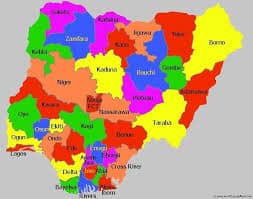
While universally recognized as violent gangs, their nomenclature varies regionally across Northern Nigeria: North-West (Kano, Jigawa, Katsina Kaduna.): North-Central ( Niger, Plateau) Designated predominantly as Yan Daba.North-East (Bauchi, Gombe): Operating under the designations Yan Sara Suka and Yan Kalare, respectively.
Some Candidates routinely mobilize and fund these factions during political rallies, paying them stipends to carry out high-risk enforcement operations. In many instances, electoral success has become directly proportional to the sheer volume of armed thugs a politician can deploy to serve as private escorts while wielding local arms.
Consequently, campaign cycles create a highly lucrative market for illicit drug networks. The demand for narcotics surges dramatically, as political actors and gang leaders supply these substances to embolden youth prior to deploying them for violent operations.
It is now standard practice for campaign organizations to assign dedicated vehicles within their motorcades to transport armed militias, typically positioned at the rear of convoys.
In confidence, several political candidates admitted anonymously that they rely more heavily on these informal militias than on state security agencies, precisely because the militias execute covert, extra-legal “dirty jobs” that formal security forces cannot legally undertake.
This dynamic severely compromises law enforcement. While security personnel make efforts to apprehend these actors, their interventions are frequently subverted by political patronage.
High-ranking political sponsors regularly intervene to secure the immediate release of arrested militia members either at police stations or by negotiating bail once suspects are charged in court.
The operational gravity of this threat is clearly illustrated in Kano State a commercial hub of nearly 20 million people where an estimated 8 million youths reside.
Read also: Beyond Bricks and Mortar: The Human Architecture of the Renewed Hope Housing Agenda
In a landmark 2026 joint statement, the Kano Civil Society Alliance for Peaceful Politic a coalition including the Center for Strategic Conflict Management and the Center for Grass-root Development and Crime Prevention sounded an urgent alarm regarding the “astronomical rise” in Yan Daba violence ahead of 2027.
Civil society documentation pinpointed key 2026 field developments: State Road Clashes: Fatal violent confrontations resulting in approximately 10 casualties during high-profile political events.
Targeted Attacks on Law Enforcement: The fatal ambush of a senior police officer in the Hotoro Division during inter-gang clashes.Commercial & Urban Disruption: Organized raids on commercial centers, including the Farm Centre Phone Market attack and widespread turf wars across Hotoro, Unguwa Uku, Koki, and Dorayi-Karama, in Kano State.
Recently in Niger state, Open-Source Intelligence (OSINT) confirms that the Yan Daba footprint has actively metastasized into North-Central hubs such as Minna, Niger State.
Field updates across Bosso and Chanchaga Local Government Areas specifically within neighborhoods like Dutsen-Kura Gwari, Fadikpe, Maitumbi, Angwan-Roka, Kpakungu, and Tudun Wada demonstrated a dangerous convergence of territorial gang warfare, drug-fueled street violence, and political co-optation.
Recognizing the severity of the threat, state executive leadership across Northern Nigeria has deployed targeted countermeasures in Kano State’s Multi-Agency Strategy: Governor Abba Kabir Yusuf recently signed an Executive Order aimed at dismantling political thuggery and providing a legal framework to prosecute violent gangs.
Simultaneously, the state inaugurated a dedicated Multi-Agency Task Force on Drug Abuse, Thuggery, and Related Crimes, backed by state logistics, operational independence, and expanded rehabilitation facilities.
However, Niger State’s Inter-Agency Sweeps & Habitat Demolitions: In Minna metropolis, Homeland Security Commissioner Maurice Magaji deployed a joint task force combining the Police, DSS, NDLEA, and Urban Development Boards.
Under directives from Governor Mohammed Umaru Bago, the state implemented a strict policy authorizing the demolition of illegal settlements, uncompleted structures, and makeshift hideouts utilized by drug syndicates and youth gangs.
previously the Kano State police command had initiated profiling exercises to reconcile, disarm, and rehabilitate repentant Yan Daba actors in collaboration with state mechanisms.
Despite these robust executive orders and inter-agency task forces, a fundamental structural contradiction remains, while state governors and security agencies invest heavy resources into task forces and rehabilitations, some political actors within the same ecosystem continue to undermine these efforts by securing the release of arrested thugs, funding illicit drug pipelines during campaign cycles, and deploying gangs as political enforcers.
To prevent informal militias from hijacking the 2027 electoral cycle, stakeholders must adopt the following multi-dimensional strategies, with the political parties and the Independent Electoral Commission INEC promoting safer campaign alternatives to high-density public rallies, including town hall meetings in small venues, digital outreach, constituency door-to-door engagements, and media-broadcast briefings.
Executive pardon mechanisms must be audited by independent oversight bodies to prevent political actors from abusing amnesty schemes to release convicted violent offenders for electoral enforcement.
Tracking Political Drug Financing through Financial intelligence and anti-corruption agencies (EFCC, NFIU, DSS) by monitoring campaign spending linked to drug distribution networks and illicit payments to youth gangs.
Read also: Kano Steals the Show in Kaduna: Abba Yusuf Emerges as Tinubu’s Political Mobiliser
Targeted Socio-Economic Re-integration: Beyond kinetic policing by units like the Anti-Daba, state governments must sustain long-term vocational integration and economic empowerment to address the underlying poverty driving gang recruitment.
2027 Elections: The Fear of Trump, ‘Werekaci’ and Nigerian Politics
Ultimately, the 2027 contest will not only be decided at the polling stations; it will be fiercely contested across the streets, markets, and motor parks of Nigeria’s urban centers. The rising influence of the Yan Daba demonstrates a critical double crisis, the systemic failure of state security architecture