


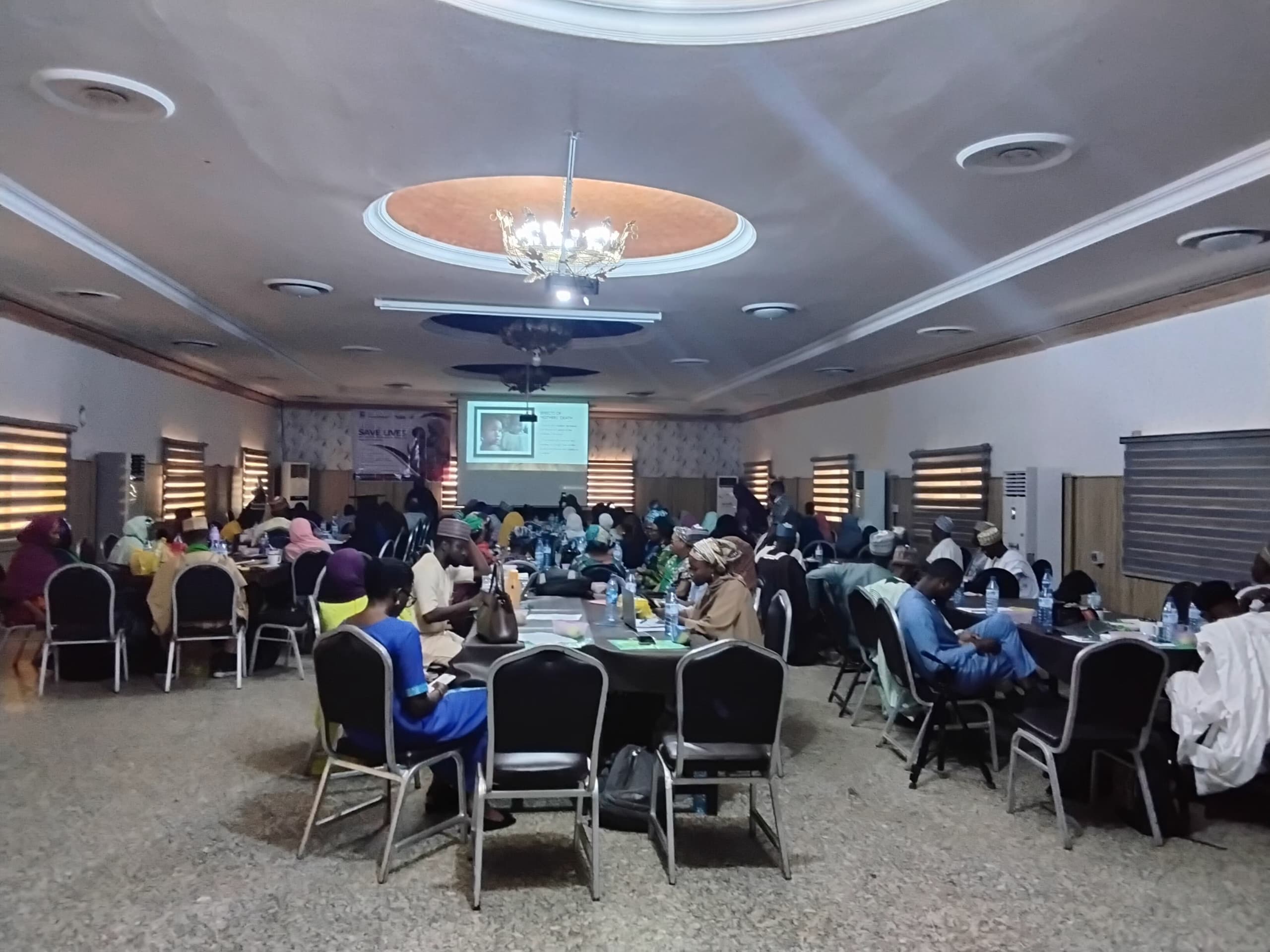
Interfaith religious leaders from 18 Local Government Areas with high maternal mortality burden in Kano State have converged for a two-day workshop aimed at addressing barriers to maternal healthcare and strengthening community-led efforts to reduce maternal deaths.
The participants include Muslim and Christian religious leaders from the 18 MAMII LGAs, alongside government representatives and development partners.
Read also: Kano Boosts Adolescent Healthcare with 743 Facilities
MTQ Seeks KDSG Support to Strengthen Qur’anic Education
Speaking at the workshop, Senior Programme Manager, Centre for Communication and Social Impact, CCSI, Oluyemi Abodunrin, said the initiative was focused on working with religious leaders to address social and religious norms that prevent women from accessing appropriate maternal healthcare.
He said maternal mortality remained a major concern in Kano and other parts of Nigeria, stressing that women should not lose their lives simply because they are pregnant.

Mr Abodunrin explained that religious leaders were being engaged because they command significant trust and influence within their communities and could help encourage pregnant women to seek timely healthcare.
He identified three major delays contributing to maternal deaths, including delays in seeking healthcare, geographical barriers and delays within health facilities.
According to him, religious leaders can play an important role in addressing the first delay by encouraging women and their families to seek healthcare promptly during pregnancy.
He advised pregnant women to register early at health facilities and attend antenatal care consistently, stressing that this would help reduce the risk of complications and maternal deaths.
Also speaking, Technical Adviser, Pathfinder International, Dr Olufemi Ibitoye, said the workshop was a call to save lives by harnessing the influence of religious leaders in promoting maternal health.
Read also: FG Moves to Curb Antibiotic Misuse, Combat Drug Resistance
Dr Ibitoye explained that religious leaders from the 18 LGAs were brought together to discuss practical measures they could adopt to contribute to reducing maternal mortality.
He said the initiative brings together representatives of the Christian Association of Nigeria, CAN, Jama’atu Nasril Islam, JNI, and other Muslim and Christian groups, including women’s wings.
Dr Ibitoye said the project was being implemented by a consortium led by the Africa Centre of Excellence for Population Health and Policy, ACEPHAP, in collaboration with Pathfinder International, CCSI, the Medical Women’s Association of Nigeria and other partners, with funding support from the Gates Foundation.
He said the project was currently being implemented in 16 states and that Kano was the third state where the intervention was being undertaken.
According to him, the project has measurable targets, including mobilising women to attend antenatal care, promoting male involvement in maternal healthcare and encouraging women to deliver in health facilities.
Dr Ibitoye said the next phase of the Kano workshop would involve developing a sermon guide that would provide religious and scriptural support for maternal health advocacy.
He explained that the guide would draw on relevant teachings from both the Qur’an and the Bible and would be used by religious leaders during Friday prayers, Sunday services and other community platforms to promote maternal health messages.
Kano Intensifies TSTS Policy to Reduce Maternal Mortality
He said the training would also position religious leaders as advocates for maternal health, enabling them to consistently use their platforms and influence to encourage families to support women throughout pregnancy and childbirth.
Read also: KIRCT Deepens Research into Vaccines, Breast Cancer
Paradigm News reports that, the project is funded by the Gates Foundation and implemented by the AIM-MNCNH Investment Consortium, comprising the Africa Centre of Excellence for Population Health and Policy (ACEPHAP), Pathfinder International Nigeria, Centre for Communication and Social Impact (CCSI), and the Medical Women’s Association of Nigeria (MWAN).
The religious leaders participating in the initiative are AIM-MNCNH champions who have been trained to advocate for the reduction of maternal mortality and promote improved maternal health practices within their communities.