


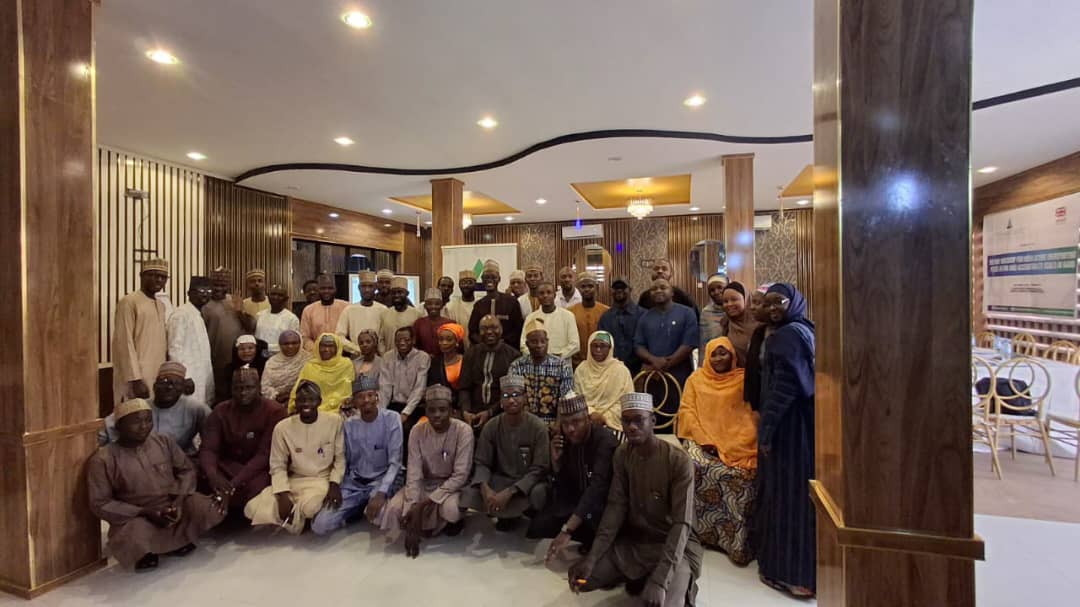
The Rule of Law and Empowerment Initiative, also known as Partners West Africa Nigeria (PWAN) with support from the Foreign, Commonwealth and Development Office (FCDO), organized a one-day workshop for media practitioners on police reform and accountability issues.
The event brought together reporters, editors,presenters and producers from print, broadcast, and digital media to enhance professional reporting on policing and justice sector reforms.
Read also: NDLEA Arrests 1,860 Suspects, Seizes 5.4 Tonnes of Drugs in Kano
248 Suspects Arrested in Kano as Police Rescue Kidnap Victims
In her presentation titled “What is Police Reform: Overview of the Police Act and the Role of Media and Citizens in Ensuring a Robust Reform Framework,” PWAN Program Manager Aisha Isa Yusuf provided a comprehensive overview of the Police Act 2020.
She highlighted that under Section 31, the police are empowered to investigate reported offences or suspects brought before them, with findings forwarded to the Attorney-General of the Federation or respective state.
On arrest procedures, Yusuf emphasized that police officers may arrest individuals only when an offence is committed in their presence or in violation of the law.
She clarified that the Act prohibits arrests in civil matters, such as landlord-tenant disputes, contractual disagreements, divorce, or debt issues, as outlined in Sections 31 and 32.
Read also: Over 1,000 Benefit as NMA Holds Medical Outreach in Bunkure
She also highlighted Sections 35 to 37, which require the police to notify a suspect’s next of kin at no cost, prohibit the arrest of relatives in place of a suspect, and forbid torture or any form of degrading or inhuman treatment.
The workshop further featured sessions led by Mr. Odoh Okenyodo and Mr. Aron Leonardo, titled “Reviewing Understanding Within Development Reporting and Solutions Journalism.”
They explained the differences between developmental reporting and solutions journalism and demonstrated how artificial intelligence tools can aid effective news writing.
Participants engaged in practical exercises under a session tagged “Humanizing the Police and Policing,” crafting topics for news stories and programs on police reform, human rights, and police welfare.
Other sessions addressed ethics and language that build reform rather than incite rage, mainstreaming the Police Act in reporting, arrest, stop-and-search procedures, profiling, and strategies for building local accountability.
Panic in Malawi as Police Nab 9 Over ‘Missing Private Parts’ Allegations
Read also: Police Arrest Suspect in Kano Kidnap Case, Recover Rifle
Speaking to newsmen after the workshop, participants including Longtong Ibrahim Yakubu (Leadership Newspaper), Zainab Maiagogo (Kakaki24), Abdulmajid Habibu Isah (Times Express), and Salisu Baffayo (Freedom Radio) described the training as timely and enriching.
They pledged to share the knowledge gained with their colleagues to strengthen professional reporting on police reform.