


On April 24 each year, the world pauses to reflect on a simple but powerful idea that nations are stronger when they work together.
Established in 2018 by the United Nations, the International Day of Multilateralism and Diplomacy for Peace was created to reinforce global commitment to cooperation, dialogue, and collective action in addressing shared challenges.
Read also: Beyond Promises: Can Nigeria’s New Strategy End Child Marriage in the North?
But in today’s fast-changing and increasingly fragmented global order, that message carries a renewed sense of urgency.
Across continents, rising geopolitical tensions, protracted armed conflicts, and deepening humanitarian crises are testing the very foundations of international law and the rules-based system that has guided global relations for decades.
From economic shocks to climate pressures and transnational threats, the world is witnessing a strain on systems once designed to ensure stability and peace.
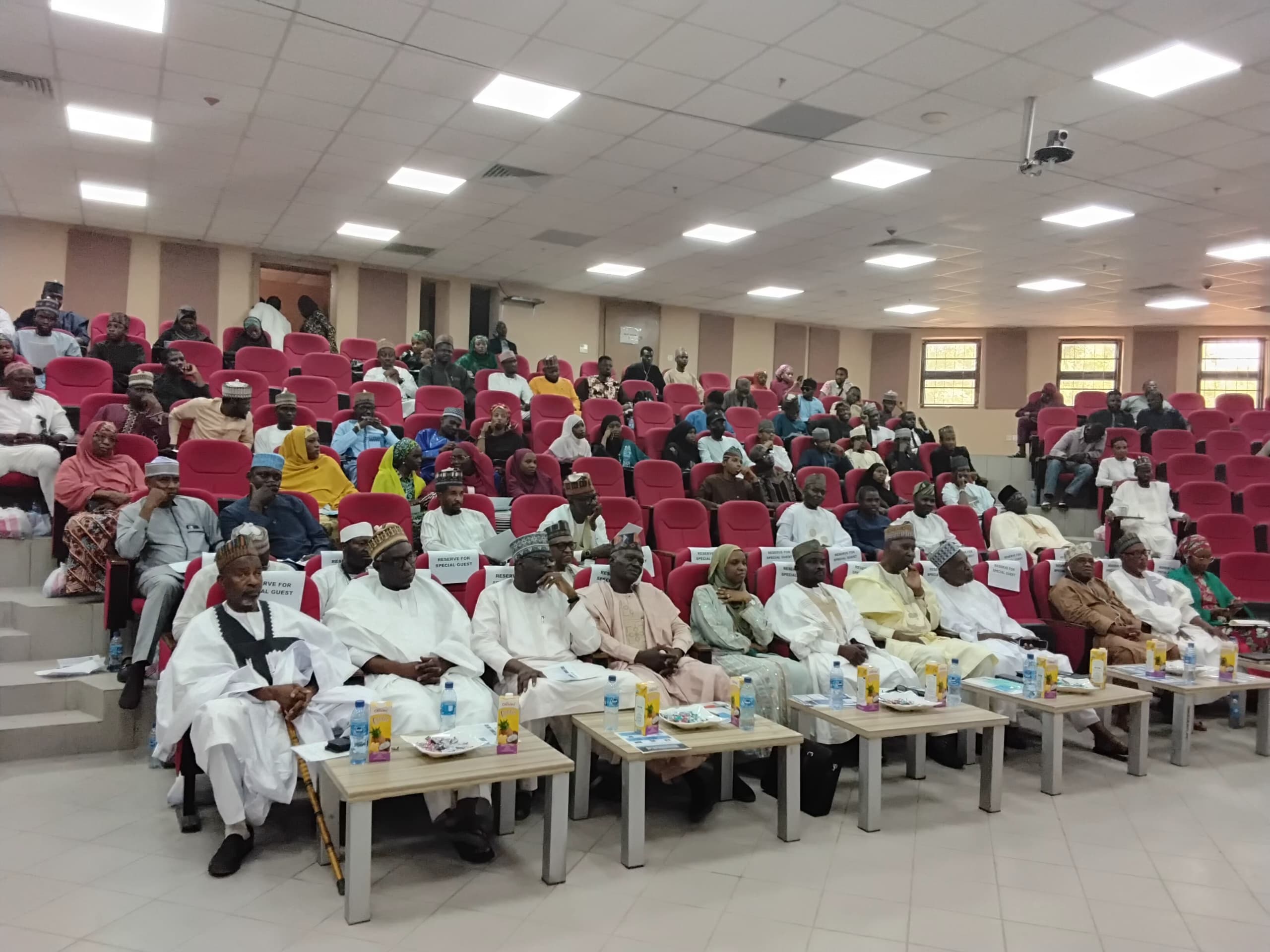
Against this backdrop, the Centre for Gender Studies (CGS), in collaboration with the Department of International Law and Jurisprudence, convened a high-level symposium at Bayero University Kano (BUK), bringing together scholars, diplomats, and policymakers to critically examine the theme: “Advancing Multilateralism and Diplomacy for Peace in a Fragmented and Fast-Changing Global Order.”
Multilateralism long seen as a platform where sovereign nations engage on equal footing is increasingly being challenged by unilateral actions and shifting alliances.
For many in the Global South, however, it remains a vital mechanism for ensuring inclusion, fairness, and representation in global decision-making.
The adoption of the UN resolution on December 12, 2018, marked a significant step in institutionalizing this vision. Championed during the 73rd session of the UN General Assembly under the leadership of María Fernanda Espinosa Garcés and carried forward by Tijjani Muhammad Bande, the initiative called on nations to actively promote peace through diplomacy and cooperation.
Yet, nearly a decade later, the global landscape tells a more complicated story.
At the symposium, Chairman of the occasion, Muhammad Tabi’u, described the theme as both timely and necessary. He painted a picture of a world shaped by rapid change, political rivalries, and increasingly complex transnational challenges.
“Abandoning multilateralism,” he argued, “is akin to challenging the very nature of our interconnected world.”
For him, the path forward lies in reinforcing the core pillars of diplomacy cooperation, dialogue, respect for international law, and above all, political will.
The event also highlighted the growing role of academic institutions in shaping global discourse.
The Centre for Gender Studies BUK, under the leadership of Safiya Nuhu, was commended for fostering research and dialogue on issues that intersect governance, peace, and international cooperation.
Read also: Nigeria Moves to Cut Air Travel Costs Through ECOWAS Reform
Representing the Vice-Chancellor of the university, Professor Haruna Musa, the Deputy Vice-Chancellor (Academics), Professor Ahmed Muhammad Tsauni, used the occasion to reaffirm the institution’s commitment to intellectual engagement on pressing global issues.
He noted that BUK continues to position itself as a hub for critical thinking and dialogue, particularly on themes that shape international peacebuilding and cooperation.
According to him, universities have a responsibility not only to educate but also to create platforms where complex global challenges can be interrogated and better understood.
He stressed that fostering knowledge on multilateralism and peace studies remains central to preparing students and researchers to contribute meaningfully to a rapidly changing world.
Adding a strong thematic dimension to the discourse, the Director of the Centre for Gender Studies, Ambassador Safiya Nuhu, delivered a presentation titled “The Intersection Between Gender, Peace and Multilateralism: Realities and Aspirations.” She highlighted the critical role of inclusive frameworks in advancing sustainable peace and strengthening global security systems.
Her presentation highlighted the reality that peace processes and diplomatic structures are most effective when they reflect diverse perspectives, particularly those of women and marginalized groups.
The HOD department of international law and jurisprudence Prof Dahiru Jafaru Usman emphasized that the university’s engagement reflects a broader commitment to nurturing ideas that influence policy and promote sustainable peace.
While the symposium provided a platform for intellectual exchange, its ambitions extended far beyond academic debate. Participants explored how Nigeria and Africa more broadly can contribute context-specific solutions to global peace and security challenges.
Discussions centered on the need to rethink strategies, strengthen institutions, and build partnerships capable of responding to emerging threats. For countries facing issues of sovereignty, economic instability, and security pressures, multilateralism offers not just a diplomatic tool, but a pathway to resilience.
Prominent voices at the event, including Prof. Muzammil Hanga,Prof. Murtala Sabo Sagagi, Prof. Aliyu Barau,Prof.Abdallah Uba Adamu,Prof.Habu Muhammed Fagge, and Amb. Hamisu Umar Takalmawa,reinforced the importance of aligning local realities with global frameworks.
Other distinguished guests included Engineer Sanusi Imran Abdullahi, former Executive Secretary of the Lake Chad Basin Commission, and Prof. Aminu Kabir, former Dean of the Faculty of Law.
Their contributions echoed a shared concern: that without renewed commitment, the rules-based international system risks further erosion.
At its core, the International Day of Multilateralism is more than a symbolic observance—it is a reminder that no nation can tackle today’s complex challenges alone. Whether confronting climate change, pandemics, or conflict, the solutions demand collective effort.
Read also: KIRCT Deepens Research into Vaccines, Breast Cancer
As the world navigates an uncertain future, the conversations in Kano reflect a broader global reckoning. The question is no longer whether multilateralism is necessary, but how it can be strengthened, reimagined, and made more responsive to the realities of a changing world.
In a time of fragmentation, the call from this gathering is clear: cooperation is not optional it is essential.