

The Nigeria Civil Aviation Authority (NCAA) has commenced a comprehensive review of personnel licensing examinations to strengthen assessment standards and align them with evolving aviation regulations, technology and operational requirements.
The review is aimed at ensuring that aviation personnel possess the requisite knowledge and technical competence to meet current industry demands and international safety standards.
Read also: Court Strikes Out FG’s Case Against Fake PFIPC DG
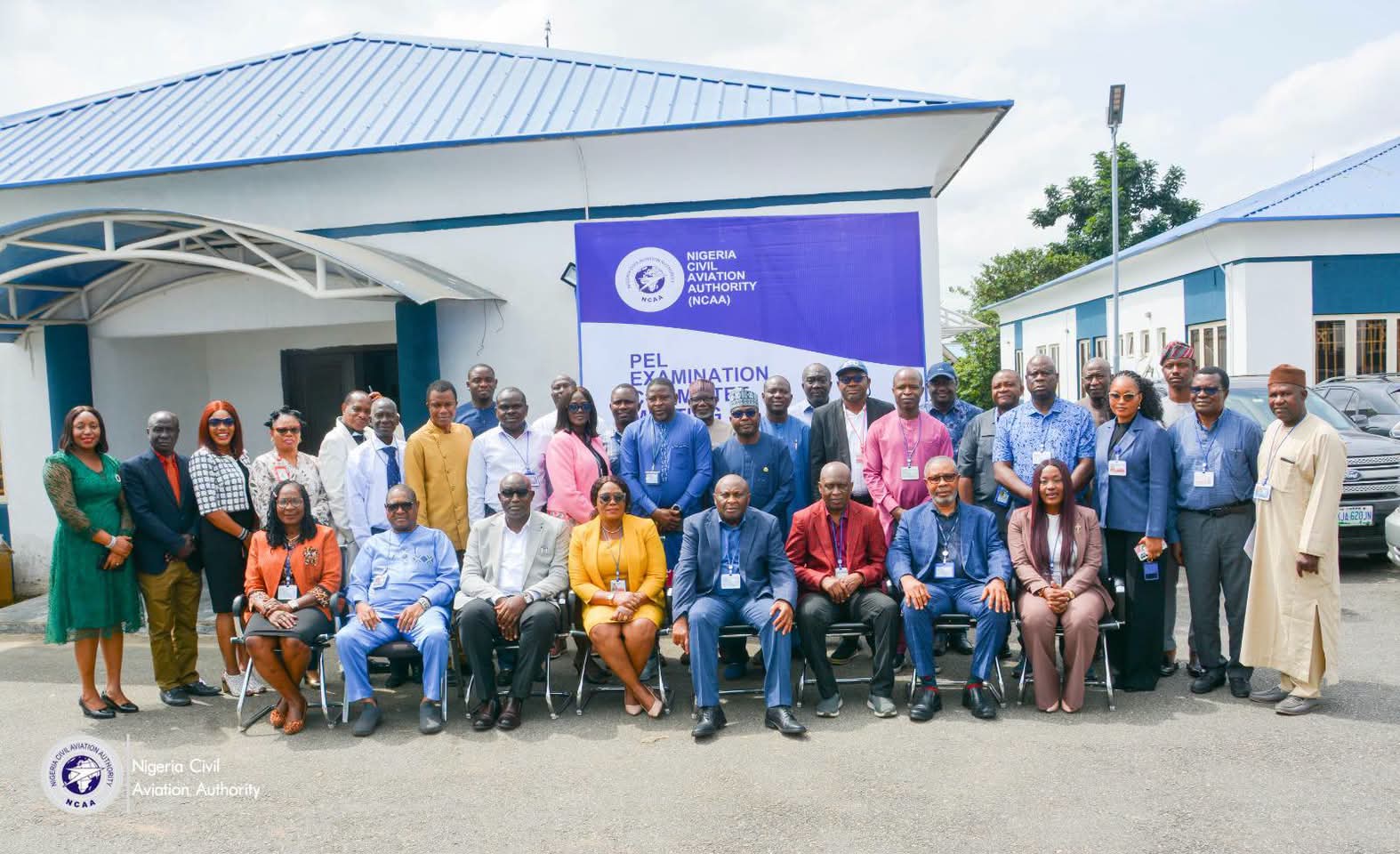
Director-General of Civil Aviation, Captain Chris Najomo, stated this while declaring open a five-day workshop organised by the NCAA Personnel Licensing (PEL) Examination Committee in Lagos.
Captain Najomo, who was represented by the Director of Operations, Licensing and Training Standards, Captain Donald Spiff, spoke at the workshop on Monday, October 12, 2026, themed “Transforming Personnel Licensing Through Computer-Based Testing.”
He identified three key priorities for the review: revising existing examination questions, developing new questions to address emerging aviation technologies and operational demands, and ensuring compliance with national regulations and international standards.
These include the International Civil Aviation Organization’s Annex 1 to the Convention on International Civil Aviation, which establishes standards and recommended practices for personnel licensing.
Read also: Respect Nigerians’ Right to Peaceful Protest-CITAD to Police
Captain Najomo explained that the PEL Examination Committee was established to support the Authority’s examination functions, including the development, administration and periodic revision of tests for issuing licences, certificates and ratings under Part 2 of the Nigerian Civil Aviation Regulations (Nig. CARs) 2023.
He emphasised that the committee’s responsibilities were critical to aviation safety, as personnel licensing examinations directly influence the competence of pilots, aircraft maintenance engineers and air traffic controllers.
According to him, the examination process requires technical expertise, integrity and a thorough understanding of aviation regulations to ensure that questions are accurate, objective, fair and consistent with approved training syllabi.
The Director-General noted that the expansion of Nigeria’s aviation industry, including the growth of operators, airports and training organisations, had increased the need for competent personnel and reliable assessment systems.
He urged committee members to use the workshop to improve examination standards and contribute to building a safer and more efficient aviation industry.
Read also: Retired Police Officers Give FG, PENCOM, IGP October 15 Deadline Over Pension Demands
The workshop brought together members of the Examination Committee, aviation safety inspectors, licence examiners, industry subject-matter experts and representatives of Approved Training Organisations.
The participants are expected to review and update examination questions across various licence categories and develop new assessment materials reflecting advancements in modern-generation aircraft, helicopters and unmanned aircraft.