


Hamman Abdulkareem
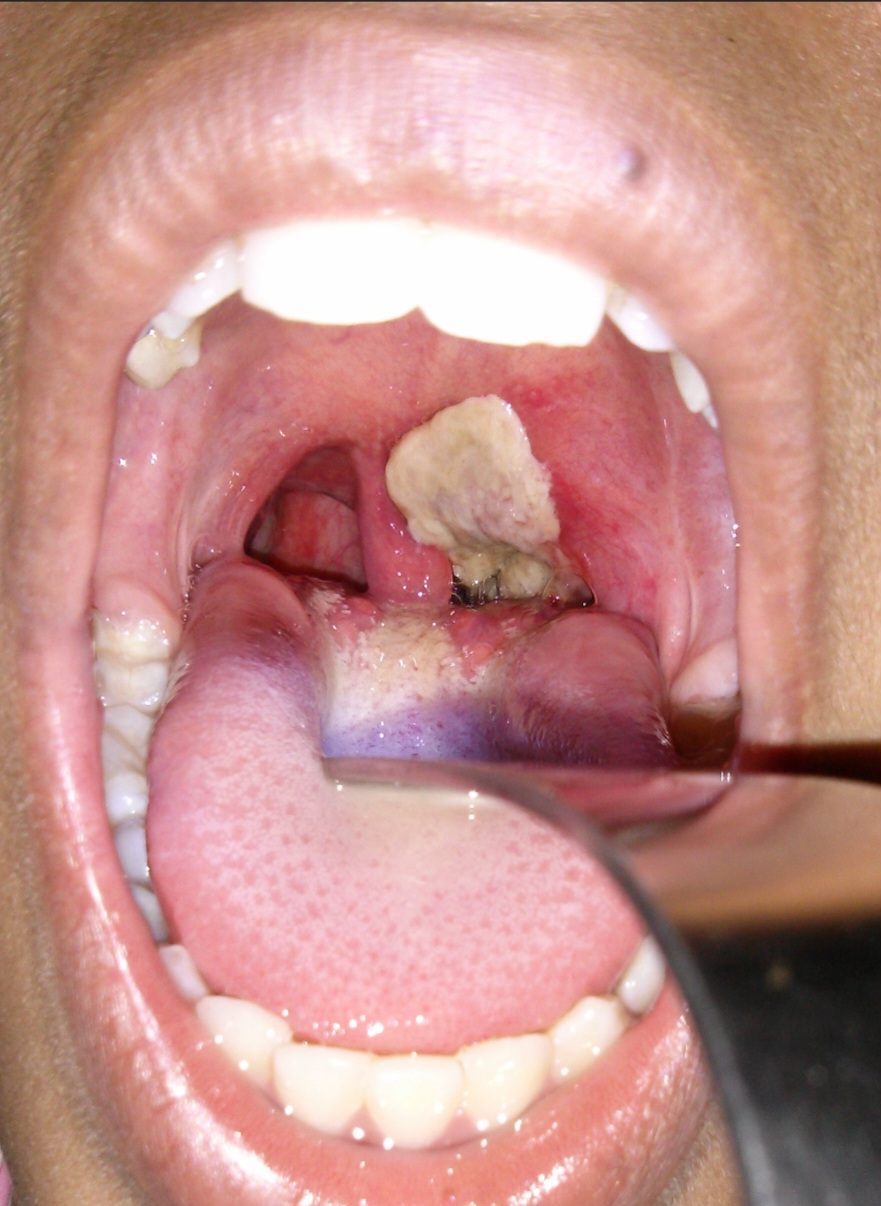
Reports of more than 50 children allegedly dying from diphtheria in parts of Kano have triggered a dispute over the actual death toll. While the Kano State Government has rejected the figure as unsupported by its surveillance records, it has now constituted a special committee to investigate reported cases and deaths.
Read also: Girls’ Education: Kano SUBEB, AGILE Distribute 11 Laptops
At the same time, the Federal Government has activated an emergency task force for Kano and Katsina and Kano has appealed for additional vaccines. Behind the conflicting figures is a more painful question: what happens to children in poor communities when a preventable disease meets poverty, inadequate access to healthcare and delayed intervention?
There is something deeply unsettling about the unfolding diphtheria situation in Kano.
It is not simply a disagreement over whether 50 children died or whether the number is lower.

It is a question of how quickly government can recognise a public-health emergency, establish the facts and act before families are forced to bury children whose lives might have been saved.
Reports emerged from Rano Local Government Area that more than 50 children had allegedly died from diphtheria, particularly in communities identified in the reports as Ridin and Sabuwar Kaura.
The claim was serious enough to attract the attention of the Kano State House of Assembly, where lawmakers called for urgent government intervention. One legislator also alleged that the disease was spreading towards neighbouring communities and that a family had lost two children within the same day.
The Kano State Government subsequently rejected the figure of 50 deaths.
The Director-General of the Kano State Centre for Disease Control, Professor Muhammad Adamu Abbas, described the figure as unverified and misleading.
According to the surveillance records cited by the KNCDC, Rano recorded two diphtheria-related deaths in 2026, while 29 deaths were recorded cumulatively between July 2023 and August 2026. The centre also reported 32 diphtheria cases in Rano, with patients receiving treatment at Rano General Hospital and the Infectious Disease Hospital in Kano.
That clarification is important.
A government has a responsibility not to allow an unverified death toll to become accepted as fact. Public-health figures must be based on surveillance, clinical assessment, laboratory confirmation and proper documentation.
But there is another side to the story.
If the figure of 50 is wrong, why has the government now established a special committee specifically to investigate reported diphtheria cases and deaths?
The Kano State Government announced the committee on August 29, saying it would investigate reported cases and deaths, strengthen disease surveillance and coordinate urgent measures to prevent further transmission. It also directed disease surveillance officers to submit daily reports.
That development should not be interpreted as proof that 50 children died.
Rather, it demonstrates that the allegations are serious enough to require formal investigation.
And that is where the conversation should move beyond the argument over numbers.
The bigger question is not only “How many died?”
For a parent who has lost a child, the difference between 29, 50 or another figure is not an academic exercise.
There is a family behind every confirmed death.
There is a mother who carried a sick child from one facility to another.
There is a father who may have borrowed money to pay for transportation, medicine or laboratory tests.
There is a household where the illness of one child can consume whatever little money was available for food.
And there are families who may delay seeking medical attention because they cannot afford transportation, consultation, medicines or other associated costs.
This is where poverty becomes more than an economic problem.
Poverty can become a health risk.
A disease that might be manageable when detected early can become devastating when a family waits because it has no money, when a health facility is too far away, when parents do not recognise the symptoms or when treatment is delayed.
That is why the discussion around Kano’s diphtheria outbreak must not be reduced to competing headlines.
It must reach the communities where these children live.
Government should verify before it denies — but verification must also be followed by action
The initial response to a report of mass deaths should be neither panic nor dismissal.
It should be verification.
The government must immediately deploy epidemiologists, surveillance officers, clinicians and other relevant health professionals to the affected communities.
They should determine:
– How many children became sick?
– How many were clinically diagnosed?
– How many were laboratory-confirmed?
– How many died?
– Where did those deaths occur?
– How many deaths occurred at home without reaching a health facility?
– How many suspected cases were never formally recorded?
– How many children have been vaccinated?
– How many remain unvaccinated?
– How far do families have to travel before accessing treatment?
– Are medicines and diphtheria antitoxins available?
– Are treatment centres adequately staffed and equipped?
– How rapidly are suspected cases being reported?
These are more important questions than a political argument over whether one figure is exaggerated.
Read also: Kano, NWDC to Harmonise Data for Rural Dev Projects
Indeed, the Kano Government’s decision to establish a special committee is an opportunity to answer them transparently.
The Federal Government’s response makes the situation impossible to dismiss
The seriousness of the outbreak is further underlined by the Federal Government’s response.
On August 28, the Federal Ministry of Health and Social Welfare announced that it had activated an emergency task force to respond to diphtheria outbreaks in Kano and Katsina.
The task force involves the Federal Ministry of Health, the Nigeria Centre for Disease Control and Prevention, the National Primary Health Care Development Agency, affected state governments and international health partners. Its responsibilities include strengthening surveillance, closing immunisation gaps and ensuring timely access to treatment.
Kano has also appealed to the Federal Government for additional diphtheria vaccines.
This is significant.
It means that even though the state government disputes the reported death toll of 50, neither the state nor the Federal Government is treating the disease as insignificant.
The argument over the number of deaths should therefore never become an excuse for slowing the response.
The children at the centre of this controversy have no voice
This is perhaps the most painful part of the story.
A child living in a poor community does not understand government statistics.
The child does not know the difference between a suspected case and a laboratory-confirmed case.
The child does not know whether a death has been entered into an epidemiological surveillance database.
The child only knows that breathing has become difficult, the throat hurts, the body is weak and something is terribly wrong.
And the parents may be desperately looking for help.
For vulnerable families, healthcare can become a race against time.
When money is unavailable, that race becomes even harder.
This is why public-health emergencies must be addressed from the perspective of the people most exposed to them — not only from offices where statistics are compiled.
Kano must turn this controversy into an opportunity for transparency
The government now has an opportunity to settle the controversy conclusively.
If 50 children did not die from diphtheria in Rano, the special committee should explain clearly what happened.
If some deaths were caused by other illnesses, the public deserves to know.
If some deaths occurred in communities but were never medically confirmed, that information should also be documented.
And if the investigation discovers that the original figure was closer to the reported number than the surveillance data initially suggested, the government should have the courage to publish the revised figure.
The truth should not belong to government or opposition. It should belong to the people.
Most importantly, the names and dignity of affected families must be protected while the investigation is conducted.
Beyond Rano: Kano needs a wider public-health response
The reported outbreak should also force a broader examination of childhood immunisation and healthcare access across Kano.
A recent report quoting the KNCDC Director-General said Kano had recorded more than 39,000 suspected diphtheria cases between December 2, 2022 and August 26, 2026, with more than 32,000 confirmed through laboratory, clinical and epidemiological confirmation. Those figures demonstrate that diphtheria is not a minor or isolated health concern in the state.
The scale demands sustained intervention.
Vaccination must reach children in remote communities.
Primary healthcare centres must be functional.
Health workers must be available.
Suspected cases must be detected early.
Families must receive clear information about symptoms and where to seek treatment.
And communities must not be left to discover the seriousness of an outbreak only after children begin dying.
The real tragedy would be learning the truth too late
Whether the final investigation establishes 50 deaths, 29 cumulative deaths, two deaths in 2026, or another figure, one lesson should remain clear:
Every unexplained child death is a warning.
The government is right to insist that public-health figures must be verified.
But verification should never become a shield against uncomfortable questions.
Likewise, those making claims about mass deaths must provide evidence and avoid inflating figures that could create unnecessary fear.
Both sides owe the public the truth.
And above all, they owe vulnerable children something greater than statistics:
early treatment, vaccination, accessible healthcare and a government response that arrives before illness becomes a death certificate.
The question Kano must now answer is not simply, “Did 50 children die?”
The deeper question is:
Read also: Kano Boosts Adolescent Healthcare with 743 Facilities
“How many children are currently at risk, and what is being done today to make sure their families do not have to wait until another child dies before help arrives?”
Hamman Abdulkareem
Publisher hammanmedia
www.hammanmedia.com.ng