


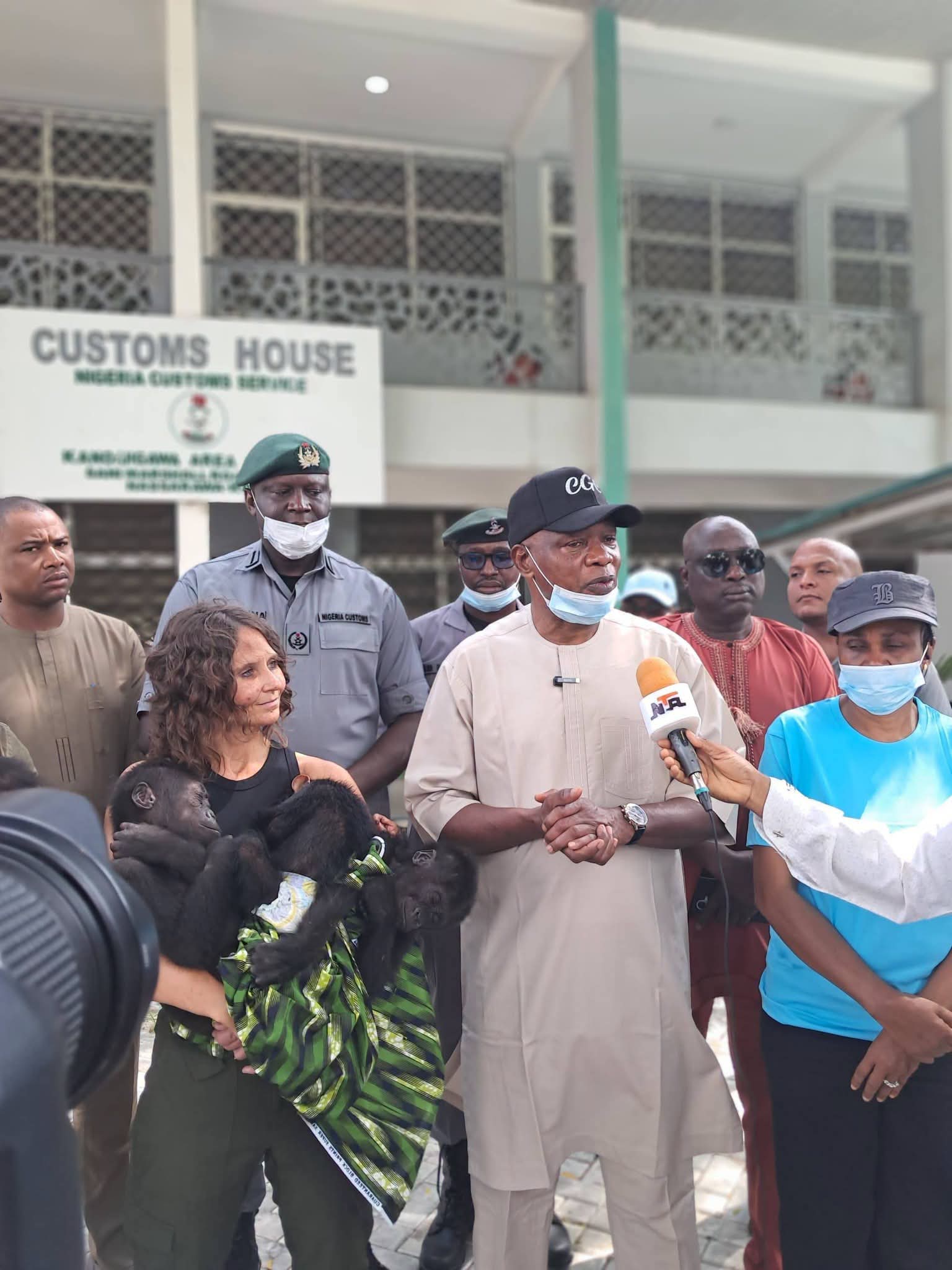
The Nigeria Customs Service, NCS, has warned individuals and criminal networks involved in wildlife trafficking that it will continue to deploy intelligence, inter-agency collaboration and international mechanisms to disrupt the illegal trade.
The Comptroller-General of Customs, Adewale Adeniyi, during his visit to the Kano/Jigawa Area Command.
Read also: Kano, NWDC to Harmonise Data for Rural Dev Projects
Adeniyi commended officers of the command for their professionalism, courage and commitment to protecting endangered species following the interception of 48 endangered animals and birds along the Daura-Kano axis on Tuesday, August 25.
He said the seizure demonstrated the commitment of the NCS to fulfilling Nigeria’s obligations under international conventions aimed at protecting endangered species.
“These conventions were established to ensure collective action in protecting endangered species, and the NCS is living up to this responsibility,” Adeniyi said.

According to him, the Service has specially trained officers working with personnel across various commands where wildlife trafficking has been identified as a major challenge.
The Comptroller-General described wildlife trafficking as an international criminal activity in which criminal networks exploit borders to transport endangered species to destinations where they are traded globally.
He said the NCS would strengthen its efforts through continuous training, collaboration with conservation organisations and partnerships with international agencies.
Read also: Girls’ Education: Kano SUBEB, AGILE Distribute 11 Laptops
Adeniyi, however, stressed that combating wildlife trafficking should not end with the arrest of suspects, noting that rescued animals require specialised care, rehabilitation and scientific assessment before they can be considered for release into their natural habitats.
“Beyond the arrest of suspects, we must ensure that the rescued animals remain alive and receive the necessary care. These animals cannot thrive in an office environment. They need natural surroundings where they can climb trees and exhibit their natural behaviour,” he said.
He commended conservation experts working with the Service, particularly Focus Conservation, for providing specialised care to the rescued animals.
Adeniyi also disclosed that some of the rescued species would require DNA testing to establish their origin and support future rehabilitation efforts.
Speaking on the condition of the animals, the Illegal Wildlife Trade Rescue and Rehabilitation Advisor at Focus Conservation, Lindsay Mace, described the gorillas and chimpanzees among the rescued animals as critically endangered species.
Mace warned that the survival of the animals was increasingly threatened by international wildlife trafficking networks.
Read also: Kano Boosts Adolescent Healthcare with 743 Facilities
She said the rescued chimpanzees were likely to be Nigeria-Cameroon chimpanzees, while the gorillas were suspected to be Cross River gorillas, regarded as one of the world’s most endangered gorilla subspecies.
She stressed the need for sustained collaboration between law enforcement agencies, conservation organisations and international partners to protect endangered wildlife and dismantle trafficking networks.