


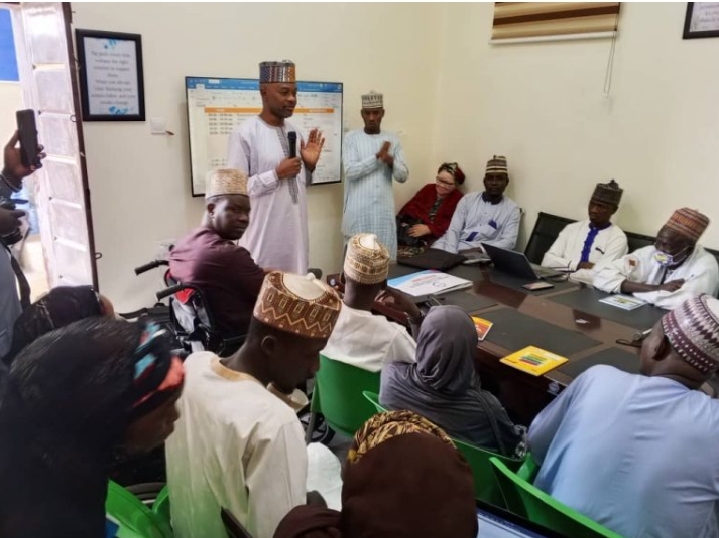
Kano, Nigeria – As part of efforts to promote inclusivity, the Non-Formal Development Education and Health Initiatives (NDEHI) has organized a one-day roundtable dialogue on the People with Special Needs (Disability) Law in Kano State.
The dialogue brought together representatives of the Joint National Association of Persons with Disabilities (JONAPWD) and various disability clusters, including persons with spinal cord injuries, the visually and hearing impaired, persons with physical disabilities, and persons with albinism, among others.
Read also: Renewable Energy Bill Scales Second Reading
NDEHI Convenes Stakeholders on Safe Schools, Improved Learning in Kano
In his remarks, the Technical Adviser of NDEHI and Country Chair of CSOs K-SAFE, Dr. Auwal Halilu, explained that the dialogue aimed to assess the level of awareness among Persons with Disabilities (PWDs) about the disability law and to identify key accessibility barriers.
He said discussions focused on critical issues affecting PWDs, including education, employment and livelihoods, healthcare, protection, and social services.
Dr. Halilu emphasized the need for sustained advocacy, the establishment of the Kano State Disability Commission, and the allocation of employment and education slots for PWDs.
He described cluster heads as key catalysts for change and urged them to strengthen collaboration and synergy.
However, he noted that despite advocacy for inclusion slots, some clusters had failed to provide the necessary inputs required for effective integration into government systems.
Read also: NMDPRA, Power Ministry Move to Improve Electricity Supply
Also speaking, Ambassador Rabi Yusuf Gezawa of the Gender and Disability Inclusion Advocacy Centre described the dialogue as timely, noting that it provided a platform for stakeholders to brainstorm on the disability law.
Ibzaar NDEHI Train 40 Teachers On Basic & Post literacy Materials
She disclosed that the state government had promised to fast-track the establishment of the Disability Commission.
She added that advocacy efforts would continue at both high and grassroots levels to ensure implementation of the law. Ambassador Gezawa also urged the state government to appoint desk officers and directors to drive inclusivity and provide essential infrastructure such as accessible staircases, toilets, and sign language interpreters.
The Chairman of the Kano Initiative of Persons with Disability (KIPSIN), Abdulrazaq Ado Zango, called on the state government to ensure inclusive budgeting, access to education and computer training, and provision of infrastructure to support PWDs during WAEC, NECO, and JAMB examinations.
He noted that although funds are often allocated for accessibility, PWDs are frequently excluded during implementation.
Read also: RMAFC Chairman Demands Accountability, Discipline
The Acting Chairman of the Vulnerable People Support and Development Initiative (V-PeSDI), Aftahana Dahiru Sarina, identified accessibility challenges, communication gaps, limited opportunities, and negative societal attitudes as major obstacles facing PWDs.
During the dialogue, participants were divided into groups to discuss implementation gaps in the Kano State Disability Law, propose practical solutions, and develop recommendations for improved inclusion.